
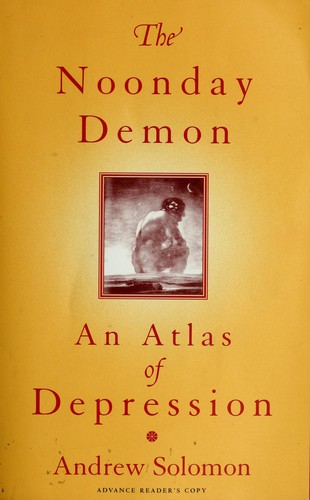
The Noonday Demon
An Atlas of Depression
Andrew Solomon examines depression as an illness, a lived ordeal, a cultural category, and a public problem. Beginning with his own severe depressive episodes, he moves outward through interviews with other sufferers, clinicians, researchers, policymakers, and people working within religious or traditional healing systems. The result combines memoir, reportage, medical history, social analysis, and philosophical inquiry. Rather than offering a single explanation, Solomon studies the interaction of biology, experience, poverty, stigma, treatment, family relationships, and individual will. He considers medication, psychotherapy, alternative approaches, suicide, addiction, political responses, and the unequal conditions under which people seek care. The book’s central achievement is its refusal to reduce depression either to ordinary sadness or to a purely chemical malfunction. It presents the condition as at once bodily and psychological, private and social—an experience that can erode…
Where to buy or borrow
Are you selling this book? Bookstores, publishers, authors and libraries can be listed here for free. Request a listing
About this book
The book is not a conventional medical manual or step-by-step self-help program. Its method is synthetic and literary, drawing different disciplines into conversation while preserving the uncertainty and variation surrounding depressive illness. The original edition won the 2001 National Book Award for Nonfiction and was a 2002 Pulitzer Prize finalist in General Nonfiction. A substantially updated edition appeared in 2015, but this profile concerns the original 2001 Scribner edition.
Deep Overview
He then broadens the inquiry beyond autobiography. Interviews with people living with depression demonstrate that no single narrative accounts for every case. Grief, trauma, heredity, social isolation, material deprivation, illness, and apparently unprovoked biological changes can overlap in different proportions. The book repeatedly resists a simple opposition between “real” chemical illness and distress caused by life circumstances. Solomon instead asks how predisposition and environment interact—and why an explanation of cause does not automatically dictate a cure.
Treatment is presented as similarly plural. The discussion encompasses antidepressant medication, psychotherapy, electroconvulsive therapy, lifestyle changes, religious practice, community support, and less conventional interventions. Solomon neither dismisses medicine nor treats it as a complete answer. He is interested in what allows treatment to become effective: access, persistence, trust, accurate diagnosis, tolerable side effects, supportive relationships, and the patient’s capacity to continue when hope itself has been impaired. Recovery often appears not as a decisive victory but as ongoing management involving multiple forms of care.
The atlas expands further into history, culture, and politics. Solomon considers older ideas of melancholy, evolving psychiatric categories, the growth of biological models, and the influence of pharmaceutical treatment. Cross-cultural encounters complicate assumptions about universal symptoms and acceptable cures. His reporting on poverty emphasizes that depression cannot be separated neatly from housing insecurity, dangerous environments, inadequate medical access, and chronic humiliation. The book thus treats mental health as both an individual condition and a question of social resources.
Suicide gives the inquiry its gravest dimension. Solomon addresses suicidal thought, loss, and moral judgment without suggesting that every experience has the same meaning. He also explores how depression can coexist with addiction, pregnancy, family strain, and political neglect. Throughout, love and will are portrayed carefully: neither is a magical cure, but both may help sustain the actions through which treatment and survival become possible.
The cumulative argument is that depression requires many languages at once—medical, psychological, social, ethical, and personal. No single map covers the whole territory, but multiple maps can make isolation less absolute and care more intelligible.
Key Themes
**Biology and circumstance:** The book rejects an either-or choice between biochemical and biographical explanations. Bodies, relationships, losses, social conditions, and inherited vulnerabilities interact.
**Identity under pressure:** Depression can make sufferers feel alien to their former selves. Treatment raises difficult questions about whether recovery restores an authentic identity or helps construct a workable new one.
**Treatment as combination and maintenance:** Improvement frequently depends on several supports rather than a single cure. Medication, therapy, practical assistance, intimacy, and perseverance may reinforce one another.
**Stigma and communicability:** Depression often remains hidden because its symptoms can be misread as weakness, ingratitude, or moral failure. Accurate description becomes an ethical act that may reduce isolation.
**Inequality and access to care:** Material deprivation can intensify suffering while restricting treatment choices. Mental health cannot be understood solely through private psychology.
**Love, will, and survival:** Human attachment and personal effort matter, but Solomon avoids presenting them as sufficient treatments or grounds for blaming those who remain ill.
Historical Context
Solomon places those contemporary debates within a longer history of melancholy and mental illness. Earlier religious, philosophical, literary, and medical interpretations treated profound despondency as sin, temperament, insight, bodily disorder, or madness. The modern term “depression” inherited parts of these traditions while acquiring a more formal psychiatric meaning.
The book also belongs to a tradition of literary writing about depressive illness associated with figures such as William Styron. Solomon extends that tradition through extensive reporting and cultural comparison. Readers should note that the profiled edition predates more than two decades of subsequent research, changes in diagnostic language, new treatments, and evolving debates over antidepressants and suicide risk.
Intended Audience
Readers who appreciate works that combine personal experience with broad research will find the approach particularly rewarding. It also offers material for those interested in medical ethics, disability, poverty, stigma, and the cultural history of mental illness.
It may be less suitable for someone who currently needs a concise treatment guide, immediate crisis support, or straightforward self-help exercises. The discussions of suicide, severe impairment, addiction, medical interventions, and family loss can be emotionally demanding. Because Solomon’s own experience anchors the book, readers should also approach it as one richly researched perspective rather than a universal account of depression.
Reading Difficulty
Medical terminology is usually explained in context, though sections on psychopharmacology, diagnosis, and treatment history require closer attention. The greater difficulty is emotional rather than technical: accounts of suicidal thinking, profound incapacity, bereavement, addiction, and inadequate care may be distressing or exhausting.
The book can be read selectively or in stages. Pausing between major sections may be more productive than treating it as a continuous survey. Anyone reading during an acute depressive episode may find its size and subject matter difficult, despite the recognition and companionship the book can also provide.
Helpful Background Knowledge
Readers may also benefit from knowing that psychiatric diagnoses are practical classifications rather than complete explanations of cause. Terms, criteria, and treatment evidence have changed since 2001, so current clinical guidance should be consulted for present-day decisions.
For the social chapters, it helps to keep in mind that illness and adversity can reinforce one another. Poverty may increase exposure to chronic stress and reduce access to care, while disabling depression may make employment, housing, and relationships harder to maintain. Finally, awareness that cultural communities describe distress through different bodily, moral, spiritual, and psychological vocabularies will clarify Solomon’s cross-cultural investigations.
Why Read It?
Its value lies in synthesis. Many books isolate one dimension—memoir, neuroscience, medication, psychotherapy, history, or policy. This one asks what becomes visible when those dimensions are considered together. That breadth can help readers replace reductive explanations with a more realistic understanding of why depression varies and why treatment so often requires experimentation.
The book also demonstrates what literary journalism can contribute to health writing. It makes suffering imaginable without turning individuals into case summaries, and it gives social conditions a place in a discussion too often confined to private emotion.
Reader Takeaways
The book encourages skepticism toward single-cause explanations and universal cures. Similar symptoms may emerge through different combinations of vulnerability and circumstance, while effective treatment may require medical, psychological, relational, and practical support.
Readers may also become more attentive to the language used around illness. Advice based on gratitude, toughness, or positive thinking can deepen shame when a person has lost the capacity to act on it. Listening, practical assistance, and sustained presence may matter more than dramatic reassurance.
Finally, Solomon’s social reporting makes clear that access is part of outcome. Treatment options that exist in theory are not meaningful when cost, geography, stigma, or instability place them beyond reach.
Strengths
His memoir sections give the investigation emotional stakes and help translate symptoms that outsiders often misunderstand. The many other voices prevent the narrative from remaining solely autobiographical and reveal substantial variation in how depression begins, feels, and responds to care.
Another strength is Solomon’s resistance to false binaries. He allows biological treatment and psychotherapy, individual agency and structural support, medical diagnosis and cultural interpretation to coexist in productive tension.
The organization also embodies the argument: depression is approached through overlapping maps rather than a single linear explanation. That structure makes the book useful not only as testimony but also as a broad inquiry into how societies recognize and respond to mental suffering.
Limitations and Cautions
Its breadth is also a limitation. Some topics receive sweeping treatment across history or cultures, and individual encounters cannot represent entire communities. Cross-cultural reporting can illuminate differences, but readers should remain alert to the distance between an outside observer’s interpretation and local understandings of distress.
Solomon’s social position and access shape the personal account. His treatment options and professional resources were not available to many people he interviewed, a disparity the book recognizes but cannot erase.
The work is descriptive and interpretive rather than a practical treatment manual. Its length, density, and detailed engagement with suicide and severe illness may be difficult for vulnerable readers. Professional or emergency support, not a book, is appropriate when immediate safety is at risk.
Important Concepts, People, and Institutions
**Major depressive disorder:** The principal diagnostic framework behind much of the discussion. Solomon explores both its usefulness in naming disabling patterns and the difficulty of drawing firm boundaries around diverse experiences.
**Melancholy:** A much older category than modern depression. Its changing religious, medical, artistic, and philosophical meanings demonstrate that societies do not interpret despair in fixed ways.
**Psychopharmacology:** The use and study of psychiatric medication. Antidepressants are examined as important tools whose effects, side effects, meanings, and limits vary among individuals.
**Psychotherapy:** A broad family of treatments conducted through structured therapeutic relationships. The book considers psychological treatment alongside biological intervention rather than treating the two as mutually exclusive.
**Electroconvulsive therapy:** A medical treatment for some severe or treatment-resistant depressive conditions. Its presence highlights the gap between its stigmatized public image and its continuing clinical use.
**Suicide:** Both a possible consequence of depression and a subject with distinct ethical, personal, and social dimensions. The book treats it through testimony, bereavement, risk, and questions of judgment.
**Poverty and social inequality:** Conditions that can intensify distress, increase exposure to trauma and insecurity, and make sustained treatment harder to obtain.
**Stigma:** The social conversion of illness into shame, secrecy, or presumed weakness. Stigma affects whether people disclose symptoms, seek help, or receive compassionate responses.
**William Styron:** The novelist and author of Darkness Visible, whose writing helped establish a prominent modern literary vocabulary for severe depression and forms part of the tradition surrounding Solomon’s work.
**Scribner:** The imprint that published the identified 2001 edition and is recorded by both award institutions and bibliographic sources.
Questions the Book Explores
How do heredity, neurobiology, personality, loss, trauma, relationships, and economic conditions interact in depression?
Can a treatment be effective even when its mechanism remains uncertain or its meaning differs between patient and clinician?
What does recovery mean when vulnerability remains and continued treatment may be necessary?
How does depression alter a person’s experience of identity, responsibility, desire, and time?
Why do stigma and moral judgment persist even when depression is understood medically?
How do poverty and unequal access to care change both the course of illness and the range of available choices?
What can love and will accomplish, and what is unfairly demanded of them?
How should cultural differences shape the interpretation and treatment of profound distress?
What language can communicate suicidal suffering without romanticizing, simplifying, or condemning it?
Reading Group Guide
Track the book’s resistance to either-or explanations. Groups might select passages involving medication, psychotherapy, poverty, religious healing, or willpower and ask what each lens reveals and conceals.
Compare the intimate chapters with the large social surveys. Does the movement outward from one person’s illness deepen understanding, or does the book sometimes move too quickly from individual stories to general claims?
Notice the metaphors used to describe depression. Consider whether images of invasion, darkness, disintegration, or captivity clarify the experience while also shaping expectations about treatment and recovery.
Allow participants to set boundaries around personal disclosure. Discussion can remain focused on the text, and no one should be expected to share a diagnosis, loss, or treatment history.
Conclude by separating enduring insights from time-sensitive material. Which arguments remain persuasive, and which medical or cultural discussions would require updating today?
Discussion Questions
2. How does Solomon’s personal experience strengthen his investigation? Where might it narrow his perspective?
3. Which account of depression in the book most challenges the idea that the condition has one typical form?
4. How does the book distinguish explanation from blame?
5. Does Solomon achieve a convincing balance between biological and social accounts of depression?
6. What roles do love and will play in recovery, and where does the book establish their limits?
7. How does economic inequality affect the meaning of “treatment choice”?
8. What ethical problems arise when a writer represents people experiencing severe mental illness?
9. Which metaphors for depression are most illuminating, and which risk distortion?
10. How does the book complicate the concept of an authentic self before, during, and after treatment?
11. Which parts of the original 2001 edition now seem most historically situated?
12. After reading the book, what responsibilities appear to belong to individuals, families, clinicians, and governments?
Sources and Verification
The profile distinguishes that original edition from the expanded 2015 edition, which added later material. Interpretive sections synthesize the verified scope and structure of the book rather than presenting current medical recommendations. Because research, diagnostic terminology, and treatment guidance have changed since 2001, readers seeking clinical advice should use up-to-date professional sources.
Comments
No published comments yet.
Available editions
Hardcover
First edition; hardcover
- Publisher
- Scribner
- ISBN-13
- 9780684854663