Category

Science & Medicine

Books explaining scientific discovery, medicine, biology, disease, research, and their human consequences.

3 published books 0 published articles

Books in this category

Primary category

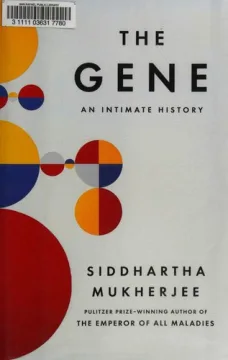
The Gene

An Intimate History

The Gene is a large-scale history of heredity as both a scientific problem and a consequential human idea. Mukherjee follows the subject from early speculation about reproduction and inheritance through Gregor Mendel’s experiments, Darwinian evolution, chromosome theory, the identification of DNA as hereditary material, molecular genetics, recombinant DNA, gene sequencing, cloning, the Human Genome Project, and early twenty-first-century genome editing. The chronology is interwoven with accounts of Mukherjee’s family history of mental illness and his clinical perspective as a cancer physician and researcher. This personal strand turns heredity from an abstract mechanism into a source of uncertainty about illness, identity, probability, and family responsibility. The book is therefore not simply a technical account of how genes work. It examines how societies have interpreted genetic knowledge, how eugenic programs converted claims about heredity into coercive policy, and how the abili…

View book

Primary category

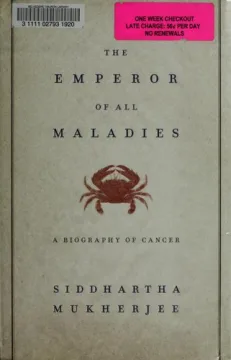
The Emperor of All Maladies

A Biography of Cancer

Siddhartha Mukherjee approaches cancer as though it were the subject of a biography: an entity with ancient appearances, changing identities, influential interpreters, periods of apparent defeat, and repeated transformations. The book moves from early descriptions of tumors through surgery, radiation, chemotherapy, epidemiology, prevention, genetics, targeted treatment, and the political campaign commonly called the War on Cancer. Rather than presenting medical progress as a smooth accumulation of discoveries, Mukherjee reconstructs a history shaped by experiments, rival theories, institutional ambitions, public advocacy, commercial interests, clinical failures, and patients willing to undergo uncertain treatments. A contemporary leukemia patient, Carla Reed, helps anchor the historical account in the realities of diagnosis and care. The result combines medical history, popular science, clinical narrative, and institutional history while repeatedly returning to a central biological in…

View book

Primary category

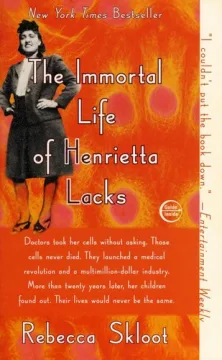
The Immortal Life of Henrietta Lacks

Rebecca Skloot combines biography, family history, science writing, medical history, and investigative reporting to reconstruct the life and legacy of Henrietta Lacks. In 1951, while Lacks was being treated for cervical cancer at Johns Hopkins Hospital, cells obtained from her tumor without her knowledge or consent became the source of HeLa, the first human cell line that could be continuously propagated in culture. The book explains why this development mattered to laboratory science, but its central purpose is to restore a person and family to a story that had often been told chiefly as scientific progress. The narrative moves among three interconnected histories: Henrietta's life and treatment; the development and expanding use of HeLa cells; and the later experiences of her children, particularly Deborah Lacks, as they tried to understand what had happened. Skloot also includes the process of her own reporting, showing that access to a family's history depends on trust, patience,…

View book

Articles in this category

No published articles are currently connected to this category in this language.