
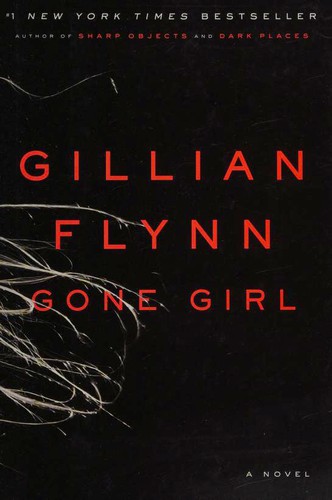
Gone Girl
A Novel
On the morning of Nick and Amy Dunne’s fifth wedding anniversary, Amy disappears from their Missouri home. The scene looks suspicious, Nick behaves badly under scrutiny, and Amy’s diary appears to document a marriage darkening into fear. Police evidence, family testimony, and televised speculation gradually turn the husband into a national suspect. Yet the case is also a contest over who gets to tell the marriage’s story—and which performance the public will accept as truth. Gillian Flynn builds this psychological thriller through competing accounts, withheld information, and major shifts in perspective. The mystery of Amy’s disappearance drives the plot, but the novel’s deeper target is intimate self-invention: the roles people adopt to attract a partner, retain power, and survive public judgment. Set against recession-era job loss and a struggling Midwestern town, Gone Girl joins marital warfare to anxieties about gender, class, celebrity, and media-made guilt.
Where to buy or borrow
Are you selling this book? Bookstores, publishers, authors and libraries can be listed here for free. Request a listing
About this book
Its marriage plot is embedded in the social aftermath of the Great Recession. Nick and Amy lose New York writing careers, move to fictional North Carthage, Missouri, and inhabit a landscape marked by failed development and shrinking opportunity. Flynn, herself a former magazine critic, also gives television commentary and public image unusual narrative importance. The result is not simply a search for a missing woman, but an examination of storytelling as evidence, weapon, alibi, and trap.
Deep Overview
Amy’s diary supplies a competing history. Its entries trace the couple from witty courtship in New York through unemployment, financial strain, relocation, family illness, and marital resentment. The alternating narratives initially appear to offer two sides of a deteriorating relationship. More importantly, they expose the labor involved in becoming someone’s desired partner. Nick and Amy have each sold an attractive version of the self; marriage becomes the setting in which those performances become exhausting, coercive, and increasingly impossible to sustain.
The novel’s central structural reversal transforms the question from who committed a crime into who can control its interpretation. From that point, clues, diaries, interviews, domestic spaces, and even facial expressions take on altered meanings. Flynn does not abandon suspense after revealing crucial information. Instead, she relocates suspense into a struggle over narrative authority. The person who can anticipate police procedure, news conventions, gender expectations, and a spouse’s weaknesses can shape what other people believe happened.
North Carthage is essential to this conflict. Nick has returned to his Missouri hometown after he and Amy lose magazine jobs in New York. He and his twin sister, Margo, operate a bar financed with Amy’s money, while the Dunne marriage occupies a rented house in a stalled development. These details connect private resentment to economic contraction: careers disappear, property loses its promise, parents decline, and identities built around professional and metropolitan success become unstable.
Public attention creates another arena of performance. Amy fits the culturally powerful image of the attractive missing white woman, while Nick becomes legible as the emotionally deficient husband. Ellen Abbott, a sensationalist television personality within the novel, turns ambiguous behavior into a simple moral story. Attorney Tanner Bolt understands that Nick cannot answer public suspicion with facts alone; he must learn to embody a persuasive version of innocence.
The final movement refuses the moral restoration expected from a conventional mystery. Truth does not automatically produce justice, freedom, or emotional clarity. Knowledge can deepen entrapment when both partners understand exactly what the other is capable of. Flynn ultimately presents the Dunne marriage as a mutually sustaining system of performance, punishment, recognition, and control—an intimate bond made monstrous without becoming wholly unfamiliar.
Key Themes
**Narrative power:** Diaries, police statements, television appearances, anniversary clues, and private confessions all compete to define reality. A convincing story may prove more powerful than an accurate one.
**Gender scripts:** Flynn explores expectations surrounding the agreeable girlfriend, perfect wife, grieving husband, endangered woman, and protective man. Characters exploit these scripts while also feeling trapped by them.
**Public judgment and spectacle:** The case becomes entertainment. News coverage compresses uncertainty into recognizable heroes and villains, rewarding emotional performances that fit the preferred plot.
**Economic and personal decline:** Lost media jobs, depleted money, family obligations, and a recession-damaged town strip away the couple’s earlier identities. Material insecurity intensifies blame and dependence.
**Intimacy as surveillance:** Nick and Amy know one another’s vanities, habits, fears, and weaknesses. Their knowledge produces neither trust nor compassion; it becomes tactical intelligence.
Historical and Cultural Context
The novel also belongs to an era of intensive cable-news coverage of missing-person and murder cases. Such coverage often converted private tragedy into continuous public entertainment, with viewers invited to interpret body language, family behavior, and partial evidence. Flynn uses this environment to show how rapidly suspicion can become a marketable narrative.
Within crime fiction, the book helped establish the modern prominence of the marriage-centered psychological thriller. Its unreliable dual narration, morally difficult central woman, and attention to gendered self-presentation influenced how publishers and readers discussed many later domestic-suspense novels. That influence should not obscure the older traditions it draws upon: marital noir, the unreliable narrator, sensation fiction, and stories of destructive couples all predate it.
Intended Audience
Readers seeking a comforting mystery, a conventional detective hero, or clearly admirable protagonists may find it deliberately abrasive. The book is also a poor fit for anyone who prefers relationship conflict to remain emotionally reassuring or expects wrongdoing to lead to orderly moral resolution.
Reading Difficulty
No specialized knowledge is required. The greater challenge is emotional rather than technical: the book contains sustained manipulation, domestic hostility, sexual material, violence, coercive control, and discussion of fabricated abuse allegations. Readers should expect cynical humor and intentionally uncomfortable shifts in sympathy.
Helpful Background Knowledge
Readers coming from the film adaptation should remember that the novel has more room for interior monologue, family history, financial resentment, and the detailed construction of Nick’s and Amy’s competing selves.
Why Read It
The book remains especially useful for thinking about public image. It shows how a person may be judged not merely for what happened, but for failing to perform the expected emotions afterward. Readers interested in modern crime storytelling will also encounter a major reference point for the domestic psychological thriller of the 2010s.
Reader Takeaways
The novel also encourages scrutiny of romantic self-fashioning. Compatibility can be built on performances that feel pleasurable at first but later become obligations. Flynn suggests that intimacy does not necessarily dissolve those performances; it may give partners more exact knowledge of how to enforce them.
Finally, the book complicates simple ideas about victimhood, agency, and justice. Knowing the truth is not the same as being able to prove it, and proving it may not be enough to escape the relationship or social system that produced the danger.
Strengths
Nick and Amy possess distinct, abrasive voices, and their observations are frequently funny even when the circumstances are grim. The humor prevents the marriage analysis from becoming solemn and sharpens the book’s social satire.
The setting also carries thematic weight. North Carthage’s stalled economy, empty properties, and diminished prospects mirror identities built for a more prosperous life. In addition, Flynn integrates media commentary directly into the plot: public perception does not merely accompany the investigation but changes what characters can do.
Limitations and Cautions
The handling of fabricated abuse and sexual-assault allegations has generated serious criticism because such plot devices can reinforce damaging myths about real complainants. Readers can recognize the novel’s interest in manipulative storytelling while still questioning the cultural consequences of this choice.
Some supporting characters function mainly as pressures on Nick and Amy or as embodiments of media, family, and gender expectations. The intense focus on the couple gives the book force, but narrows its social perspective. Its depiction of cable television also belongs recognizably to the early-2010s media environment, even though the dynamics of viral judgment remain relevant.
Important Concepts, People, and Places
**Amy Elliott Dunne:** Nick’s missing wife and the author of diary entries that shape the first account of the marriage. Her intelligence, discipline, anger, and relationship to constructed femininity drive the novel’s deepest questions.
**Margo “Go” Dunne:** Nick’s twin sister and closest ally. Her loyalty provides an important test of how accumulating evidence can strain even a foundational family bond.
**Rand and Marybeth Elliott:** Amy’s parents and the creators of the Amazing Amy children’s books, whose idealized heroine is based on their daughter. The fictional brand gives Amy a lifelong double against whom she is measured.
**Amazing Amy:** The perfected literary version of Amy created by her parents. She represents the burden of being turned into a public narrative before one can control one’s own identity.
**Detective Rhonda Boney:** The investigator who approaches the disappearance with more patience and ambiguity than the public commentators. She represents procedural inquiry under pressure from a rapidly hardening story.
**Tanner Bolt:** A defense attorney skilled in high-profile husband-suspect cases. He understands that legal strategy and media performance have become inseparable.
**Desi Collings:** A wealthy former boyfriend of Amy’s whose continued attachment becomes important to questions of rescue, possession, and control.
**Ellen Abbott:** A fictional cable-news host who packages the case as moral spectacle. She embodies the commercial conversion of ambiguity into outrage.
**North Carthage, Missouri:** The fictional Mississippi River town where the disappearance occurs. Its recession-damaged landscape connects the Dunnes’ private collapse to broader economic decline.
**The anniversary treasure hunt:** Amy’s yearly sequence of clues for Nick. What begins as a marital ritual becomes a measure of attention, resentment, and interpretive control.
**The “Cool Girl” ideal:** The fantasy of a woman who is attractive, undemanding, sexually accommodating, and enthusiastic about whatever men enjoy. The novel uses the concept to examine gender performance, desire, and retaliatory anger.
**Unreliable narration:** The technique through which narrators omit, manipulate, or misunderstand crucial information. In Gone Girl, unreliability is both a formal device and a theory of marriage.
Questions the Book Explores
When does romantic adaptation become deception, and when does compromise become coercion?
Why are audiences so willing to treat demeanor, attractiveness, and gender conformity as evidence?
Can factual truth prevail when a false account is more emotionally satisfying and easier to broadcast?
How do unemployment, money, family obligation, and lost status reshape a marriage?
What kinds of power become available to people who understand cultural stereotypes well enough to exploit them?
Does mutual recognition create intimacy if that recognition is founded on fear, hostility, and strategic dependence?
Reading Group Guide
Compare the private investigation with the televised case. Notice how Detective Boney, Tanner Bolt, and Ellen Abbott each use different standards for deciding what is believable.
Examine the novel’s economic spaces: the bar, the rented house, the abandoned development, and Amy’s parents’ financial circumstances. Consider how money changes the balance of affection, obligation, and control.
Spend time on Amazing Amy and the “Cool Girl” concept as two different idealized female identities. Ask who creates each ideal, who benefits from it, and what forms of resentment it produces.
For a final discussion, compare the novel’s opening and ending as portraits of Nick observing Amy. Consider what has changed in his knowledge, freedom, and willingness to perform.
Discussion Questions
2. Which of Nick’s actions are incriminating, and which merely violate expectations about how an innocent husband should behave?
3. How does Amy’s childhood as the model for Amazing Amy affect her relationship to achievement, identity, and failure?
4. Is the “Cool Girl” critique aimed primarily at men’s fantasies, women’s self-presentation, consumer culture, or all three?
5. How does the recession affect the marriage beyond creating financial stress?
6. What does Margo’s loyalty reveal about the difference between knowing someone and believing someone?
7. How do Detective Boney and Ellen Abbott represent competing ways of constructing truth?
8. Does the novel challenge gender stereotypes, exploit them, or do both simultaneously?
9. Why does the story remain suspenseful after its largest revelations?
10. What alternatives, if any, are genuinely available to Nick near the end?
11. Is the ending best understood as defeat, equilibrium, complicity, or another stage of conflict?
12. How would the story change if the public and media had no role in the investigation?
Sources and Verification
Comments
No published comments yet.
Available editions
Hardcover
First U.S. edition; hardcover
- Publisher
- Crown
- ISBN-13
- 9780307588364
- Publication date