
How Can You Tell Whether a Book Has Been Abridged Without Saying So Clearly?
How can I determine whether an edition quietly omits or shortens material from the original text?
Direct Answer Compare the edition with a known complete version using several clues: chapter sequence, table of contents, sample passages, word or page counts, publisher wording, and library catalog records. No single clue is conclusive, but missing chapters, shortened passages, or a substantially lower word count usually provide stronger evidence than page count alone. Introduction Books can differ in length and layout without losing any text. Type size, page dimensions, illustrations, introductions, notes, and typesetting all affect page count. A reliable check therefore compares the text and structure, not merely the thickness of the book. Begin with the title page and copyright page, then compare the table of contents and selected passages with a trusted complete edition. Catalog descriptions and publisher listings can support the comparison, although the book itself is the most direct evidence. Start with the edition statements Examine the title page, copyright page, cover, and p…
Direct Answer
Compare the edition with a known complete version using several clues: chapter sequence, table of contents, sample passages, word or page counts, publisher wording, and library catalog records. No single clue is conclusive, but missing chapters, shortened passages, or a substantially lower word count usually provide stronger evidence than page count alone.
Introduction
Books can differ in length and layout without losing any text. Type size, page dimensions, illustrations, introductions, notes, and typesetting all affect page count. A reliable check therefore compares the text and structure, not merely the thickness of the book.
Begin with the title page and copyright page, then compare the table of contents and selected passages with a trusted complete edition. Catalog descriptions and publisher listings can support the comparison, although the book itself is the most direct evidence.
Start with the edition statements
Examine the title page, copyright page, cover, and product description for qualifying language. Terms such as “abridged,” “condensed,” “adapted,” “retold,” “simplified,” “selected,” or “young readers’ edition” indicate that the contents may differ materially from the source work.
Wording such as “revised edition” or “edited by” is less decisive. It may refer to corrections, annotations, spelling changes, a new introduction, or substantive alterations. Look for an explanatory note describing what was changed.
- Check both the physical book and the seller’s listing; their descriptions may not match.
- Record the publisher, edition, publication date, format, and ISBN when available.
- Do not assume that “unabridged” guarantees identical front matter, notes, illustrations, or spelling.
Compare tables of contents and chapter structures
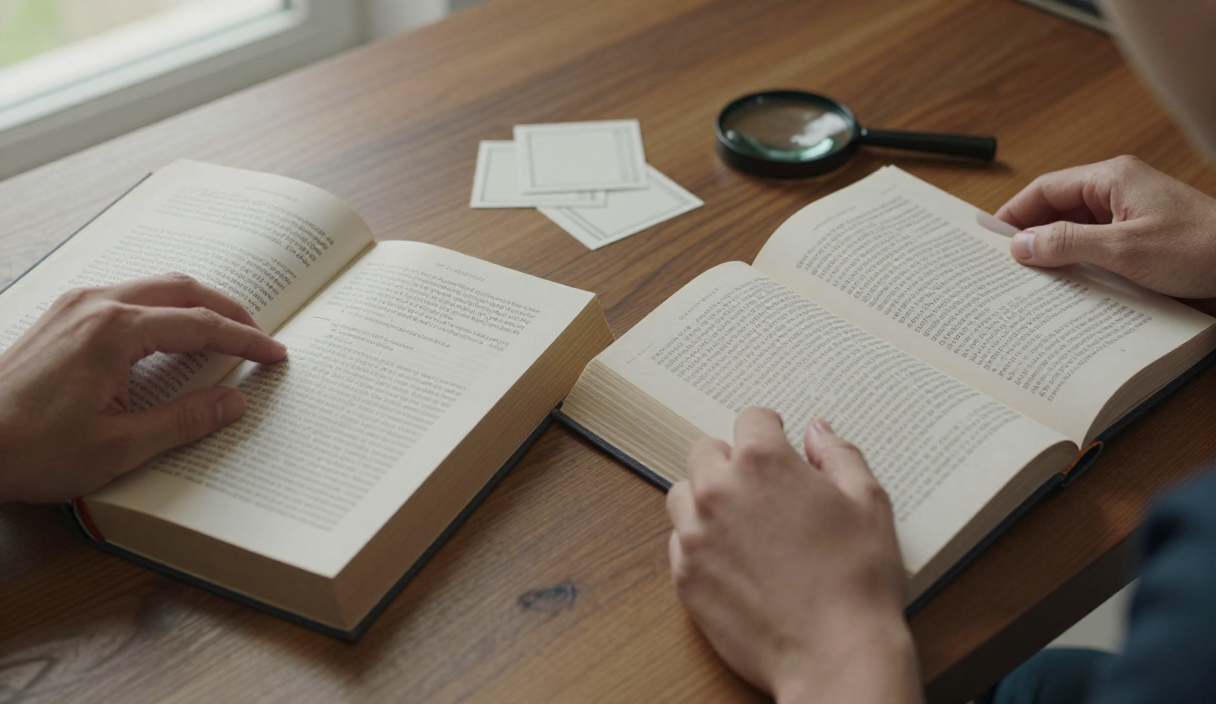
Place the suspected edition beside a version identified as complete. Compare the number, order, and names of chapters, parts, appendices, prologues, and epilogues.
Missing or merged chapter headings can indicate cuts, but structure alone is not proof. Some editions rename sections, omit headings while retaining the prose, or divide the same text differently. Confirm suspected omissions by comparing the passages around each structural difference.
- Check whether the opening and closing chapters match.
- Look for unexplained jumps in chapter numbering.
- Compare appendices and other material that belongs to the work rather than later editorial additions.
- Inspect transitions where chapters have been combined.
Use length comparisons carefully
A large word-count difference is more informative than a page-count difference. If searchable digital copies are legally available, compare their main-text word counts after excluding introductions, notes, indexes, and other added material.
Page counts are only a screening tool. A compact typeface, larger page, narrow margins, or two-column layout can fit far more words onto each page. Conversely, illustrations, annotations, and generous spacing can make the same text much longer.
- Compare like with like: main text against main text.
- Treat retailer page counts cautiously because listings can contain metadata errors or refer to another format.
- Account for illustrations, notes, indexes, blank pages, and supplementary essays.
- Use a substantially lower count as a reason to investigate, not as proof by itself.
Compare passages rather than isolated sentences
Select passages from the beginning, middle, and end, preferably including dialogue, description, and transitions between scenes. Compare them line by line with a complete edition. Undeclared shortening often becomes visible through omitted paragraphs, compressed descriptions, simplified dialogue, or abrupt transitions.
Differences in punctuation, spelling, capitalization, or paragraph breaks may reflect normal editorial practice rather than abridgment. Translations also require special caution: two complete translations can differ greatly in wording and length without either omitting content.
- Sample several parts of the book to avoid mistaking a local correction for a systematic cut.
- Check whether omissions remove whole scenes or repeatedly compress descriptive material.
- For translated works, compare chapter coverage and events before comparing sentence length.
- If possible, consult a critical or scholarly edition that explains textual variants.
Check publisher descriptions and library records
Search for records tied to the exact edition rather than the work in general. Publisher catalogs, library catalogs, and bibliographic records may identify the book as an adaptation, condensation, or abridgment. Notes about intended audience, contributing editors, original titles, or related editions can also explain discrepancies.
Catalog metadata is supporting evidence, not a substitute for textual comparison. Records may be incomplete, copied from another source, or attached to the wrong printing or format. Match identifiers and publication details before relying on a description.
- Match the ISBN when one exists.
- Confirm publisher, date, format, and named editor or adapter.
- Compare records from more than one library catalog when descriptions conflict.
- Distinguish the specific edition from audiobook, ebook, large-print, and classroom versions.
Distinguish the main kinds of alteration
Abridgment removes portions of a work while generally preserving its central narrative or argument. Condensation is a form of shortening that may compress wording and summarize material rather than only deleting passages.
Adaptation reshapes a work for a different audience, medium, reading level, or purpose. It may rewrite language, alter structure, or change content and is not simply a shorter copy of the original.
Ordinary editorial variation includes corrections, modernization of spelling or punctuation, differences among authorial versions, restored passages, and changes to notes or front matter. These differences can matter, but they do not automatically mean that the main text has been abridged.
- Abridgment: portions are removed.
- Condensation: content is shortened, often through compression or summary.
- Adaptation: content is reworked for a new context or audience.
- Editorial variation: presentation or textual details differ without necessarily reducing the work.
Reach a defensible conclusion
Use converging evidence. A much shorter main-text word count, missing chapters, and line-by-line omissions together support a strong conclusion. A page-count discrepancy by itself does not.
If evidence remains mixed, describe the edition as “possibly shortened” rather than declaring it abridged. State which differences you found and which explanations, such as translation, formatting, or an alternate authorized text, have not been ruled out.
- Strong evidence: verified missing passages or systematic compression.
- Moderate evidence: structural differences supported by reliable edition-specific descriptions.
- Weak evidence: page count, physical thickness, price, or reading level considered alone.
Conclusion
The most reliable test is direct comparison with a trusted complete edition. Start with edition language and bibliographic records, compare chapter structure, and then verify suspected cuts in several passages. Length data can guide the search, but only textual evidence can show that content was actually removed or compressed.