Deep Overview
The book is built in three parts, titled The Window, Time Passes and The Lighthouse. The first, which occupies roughly half the novel, takes place on one evening and its surrounding hours at the Ramsays' summer house. Mrs Ramsay promises her youngest son James that they may sail to the lighthouse the next day if the weather allows, and her husband, a metaphysician, flatly tells the boy it will not. That small collision carries the whole book: the wish for comfort set against the insistence on fact, the maternal against the paternal, the child's hope against adult disappointment. Around it Woolf arranges a dinner party, a half-understood engagement, a painter attempting a portrait she doubts she can finish, and a stream of private reflections that pass from one mind to another without warning.
Woolf rarely announces who is thinking. Perception slides between characters mid-paragraph, so the reader experiences the household as a web of impressions rather than as one authoritative account. Mrs Ramsay is at its centre, a gifted host who shapes the people around her, sometimes tenderly and sometimes with an overbearing certainty about what is good for them. Mr Ramsay, restless with a fear that his intellectual reach will fall short, demands sympathy. Lily Briscoe, a guest and amateur painter, resists both of them while still being pulled into their orbit, and her struggle with a canvas becomes the novel's running image of how order can be wrung from flux.
The short second part, Time Passes, is the structural gamble. The family departs, the house empties, and the narrative follows light, wind, damp and decay through the years of war. Crucial deaths, including that of Mrs Ramsay herself, arrive in brief bracketed asides, as if human events were minor weather in a larger indifferent process. Here Woolf tests how far a novel can go without a central consciousness.
In the final part, some of the survivors return to a house that has been rescued from ruin. A delayed voyage to the lighthouse finally takes place, while Lily, on shore, returns to her unfinished picture. The ending asks what remains of a person after she is gone, and whether art or ordinary memory can answer that loss. Woolf's method is to let the answer arrive through perception, not argument: a line drawn, a gesture noticed, a long-standing resentment softened.
What the author is trying to demonstrate is that an apparently ordinary domestic life contains as much drama as any public event, and that time acts on feelings differently than the clock acts on bodies. The book also tests, without settling, whether the vision of a single moment can be preserved against change.
Key Themes
Time and impermanence run through the whole design: moments feel complete while they last, then dissolve, and the novel's three-part form dramatizes that loss. Memory and grief form a second thread, since Mrs Ramsay's absence shapes the final section as strongly as her presence shaped the first. Gender is explored through the contrast between Mrs Ramsay's emotional management and Mr Ramsay's craving for validation, and through Lily's insistence on a vocation that marriage does not define. Creativity appears as a form of attention, with painting standing in for any effort to give lasting shape to experience. The book also examines the gap between private perception and spoken language, and how families can love one another while misreading each other persistently. Britannica describes the tension between feminine and masculine principles as a central motif, a reading that readers may accept or complicate.
Historical Context
The novel appeared in May 1927 from the Hogarth Press, the small publishing house run by Woolf and her husband Leonard. It sits in the high-modernist moment of the 1920s, when writers were reacting to the First World War, to Victorian certainties and to older conventions of plot and character. Its time scheme runs from 1910 to 1920, so it spans the shift from pre-war domestic order to a world marked by mass death. Woolf drew on her own childhood summers and on memories of her parents, which gives the Ramsays their Victorian household shape: large families, rigid gender roles, an eminent intellectual father and a socially skilled mother. The surrounding feminist debates of the interwar years, which she addressed directly in later essays, are useful background for Lily Briscoe's position as an unmarried woman artist.
Intended Audience
This novel suits readers who enjoy character-driven literary fiction, prose that rewards slow reading, and books that treat family life as serious subject matter. It is a natural choice for students meeting modernism for the first time, for readers who liked Mrs Dalloway and want a more intimate counterpart, and for anyone interested in how fiction can represent memory. People who depend on fast pacing, a clear external plot or tidy resolutions may find it frustrating, and readers expecting a conventional seaside family saga may be surprised by how much of the action occurs inside characters' heads.
Reading Difficulty
To the Lighthouse is short, but it takes longer to read than its length suggests. Woolf's sentences are long and rhythmic, often held together by semicolons and clauses that circle back on themselves. The point of view can move from one character's mind to another within a single paragraph, sometimes without any clear signal. The words themselves are rarely difficult. What makes the book demanding is keeping track of whose thoughts you are following, and noticing when a passage is memory, speculation or something actually happening in the room. Some major events are mentioned only briefly instead of being shown as full scenes, so a reader who skims can miss them.
The opening part is the slowest. Woolf builds the household through many overlapping minds, and it can take several sittings before the rhythm feels natural. The middle part is very short and almost impersonal, which some readers find strange or abstract on a first reading. The last part tends to feel easier, because by then the characters and the technique are familiar. You don't need any formal preparation. Still, an edition with an introduction or notes can help with period references and with the outline of the structure. Many readers also find that the book gets clearer on a second reading.
Helpful Background Knowledge
Little is essential, but a few pieces of context make the opening easier. A basic idea of stream of consciousness, the technique of rendering thought as it moves, will help. It is useful to know that Woolf modelled the Ramsays partly on her own parents and set the story in the years around the First World War. Familiarity with Mrs Dalloway is optional but shows how Woolf's technique developed. Some readers prefer to read a short biography of Woolf afterwards, to avoid imposing the autobiographical frame too heavily on first reading.
Why Read This Book?
Among classic novels to read, this one is unusual for how much emotional and philosophical weight it carries in so little space. It demonstrates what the novel can do beyond plot: capture the sensation of a room full of people, the drift of a mind during dinner, or the way a death rearranges a house. Its middle section is a genuine formal experiment that influenced later writers, and its portrait of Lily Briscoe remains one of fiction's most thoughtful treatments of the creative life. It also rewards rereading, since the family dynamics read differently once the later losses are known.
Reader Takeaways
A careful reader may come away with a sharper sense of how narrative point of view shapes sympathy, and how the same person can look generous in one mind and domineering in another. They may reconsider the idea that fiction needs dramatic events to be gripping, and notice how objects, weather and light carry meaning. The book also invites reflection on how families commemorate those they have lost, and on the small acts, such as finishing a task or crossing a bay, that stand in for reconciliation. For aspiring writers or artists, Lily's doubts offer a model of persistence without guarantee.
Strengths
The novel's chief strength is its architecture. The three-part structure turns an abstract theme, time, into something a reader feels in the pacing. Woolf's prose is controlled and sensory, and her characters, even minor ones, are distinct enough to be remembered after a single dinner scene. It is more accessible than some of her later experiments while still being formally ambitious. The treatment of marriage is notably balanced, giving real weight both to the pleasures of Mrs Ramsay's world and to its costs. Scholarly editions and critical introductions are widely available, which helps readers who want further guidance.
Limitations and Cautions
The novel's social range is small. Nearly everything is seen through the eyes of a comfortable, educated British household and its guests. Mrs McNab, who cleans the empty house, and Mrs Bast, who helps her, briefly hold the centre of the middle part, but the book never explores their lives in the depth it gives the Ramsays and their friends. Some descriptions also carry the assumptions of their time, such as the repeated racial wording used for Lily's eyes, and the narrative lets them stand without comment.
Much of the novel's meaning is left to interpretation. Critics still argue over whether Mrs Ramsay is meant to be admired, pitied or quietly questioned. The book's pairing of a nurturing feminine principle with an analytical masculine one can be read either as insight or as a limiting stereotype. The novel does not settle these questions, and readers who want a clear moral position may find that frustrating.
The First World War appears mainly through its effects. Combat and public events show up only as brief reports, so this is not a war novel in any usual sense.
The setting works as atmosphere but is not a reliable portrait of the Hebrides. Woolf's sense of the place came largely from the Cornwall coast she knew as a child, and readers who know Scotland may notice details that do not fit.
Finally, it is worth reading the Ramsays as invented characters rather than as Woolf's parents in disguise. She reshaped her memories freely, and treating every scene as family history can hide how deliberately the book is built.
Important Concepts, People, and Places
Mrs Ramsay is the household's emotional centre; her sudden absence in the second part defines the rest of the book. Mr Ramsay is a philosopher whose anxiety about the limits of his achievements shapes the family's atmosphere. Lily Briscoe is the painter whose unfinished picture links the beginning and end. James Ramsay, the youngest child, embodies the wound of the promised trip that is first refused and later fulfilled; his sister Cam travels with him in the final part. Other guests include Charles Tansley, a student who craves recognition, William Bankes, a gentle scientist and old friend, Augustus Carmichael, a poet, and the young couple Paul Rayley and Minta Doyle. The Isle of Skye in the Hebrides is the fictional setting, while the Cornwall summers Woolf spent in childhood are the emotional source. Stream of consciousness is the narrative technique that allows the book to move between minds. The First World War is the historical rupture that falls inside the second part. The Hogarth Press, run by Woolf and her husband, issued the first edition, and its cover was designed by her sister Vanessa Bell.
Questions the Book Explores
Can a fleeting moment of understanding be made permanent, and by what means? What does a person owe the people who rely on her emotionally, and what does that reliance cost her? How do the different kinds of knowledge represented by a philosopher, a painter and a hostess compare? What survives when a family's central figure dies, and what is merely replaced? Is truth something known through facts, or through patient attention to how things appear? And how far can a novel trust the world, rather than a single character, to tell its story?
Reading Group Guide
Because the pace is gentle, groups may benefit from reading the first part over two sessions and the second and third together. It helps to begin by asking members to name who they felt closest to and why, then to trace how that view changes by the end. Compare how different characters see Mrs Ramsay, noting passages where praise and criticism sit side by side. Consider reading the short second part aloud, since its rhythms are easiest to appreciate in sound. Groups may want to bring one passage each that they found difficult and puzzle over it together. Pairing the novel with a brief biographical essay on Woolf, or with Mrs Dalloway, provides contrast for a follow-up meeting.
Discussion Questions
1. How does the shifting point of view affect your sympathy for Mrs Ramsay and Mr Ramsay?
2. Why might Woolf have placed the deaths of major characters in brackets in the second part?
3. What does Lily's painting suggest about the relationship between art and daily life?
4. In what ways do the weather and the sea behave like characters?
5. How does the novel treat the pressure on women to marry, and does Lily offer a convincing alternative?
6. Is the final trip to the lighthouse a resolution, a compromise or something else?
7. How does the First World War register in a novel that barely depicts it directly?
8. Which scenes make the strongest case for the value of small, ordinary moments?
9. How much does knowing about Woolf's family change your reading, and is that knowledge necessary?
10. Would you want the novel to be longer, or does its compact form feel right?
Sources and Verification
General reference works and an academic reference overview confirm that this book is Virginia Woolf's 1927 novel. The same sources support what this profile says about the setting, the division into three parts and the first publication by the Hogarth Press. An academic publisher's catalogue page supports the novel's links to Woolf's childhood and family. A trade publisher's description was used only for general background, and none of its wording appears here.
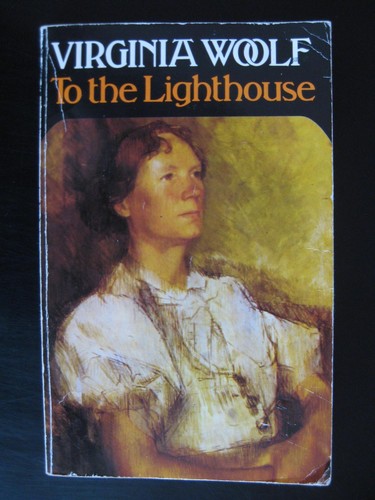
The edition linked to this profile has ISBN-13 9780586044506 and ISBN-10 0586044507. A library catalogue record matches this number to To the Lighthouse, published by Granada in 1977, with 191 pages. This is a later reissue, not the original edition, so its publisher, year and page count should not be confused with the novel's first publication in 1927. The catalogue gives only the year of this printing, not an exact date. Other printings differ in pagination and front matter. If you're using a different copy, check its own catalogue record or title page for exact details.
The discussion of themes, structure and characters is the editor's own reading of the novel. It draws on widely shared scholarly views, and critics still debate many of the interpretations it mentions.