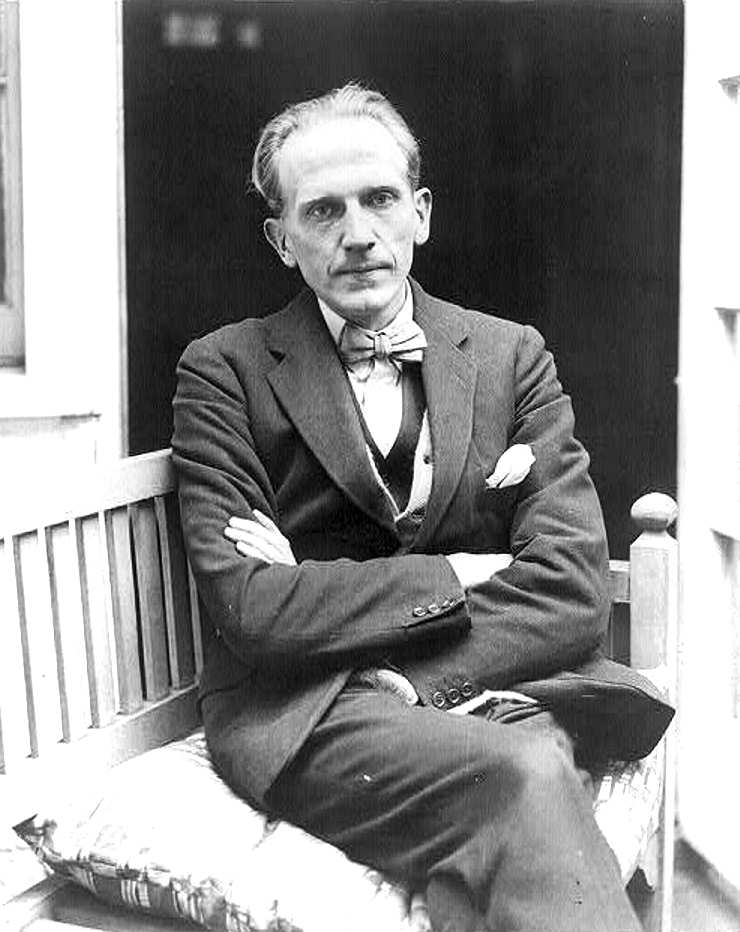
Alan Alexander Milne (1882-1956) was born in London and studied mathematics at Trinity College, Cambridge, where he edited the student magazine Granta. He moved into journalism, and by 1906 he was an assistant editor at Punch. The First World War took him into the Royal Warwickshire Regiment, and it was in the army that he began writing plays.
After the war he was known first as a dramatist. Mr. Pim Passes By and The Dover Road were his best-known stage comedies, and he also adapted Kenneth Grahame's The Wind in the Willows as Toad of Toad Hall. His one detective novel, The Red House Mystery, appeared in 1922, and his autobiography, It's Too Late Now, in 1939. The tone throughout is light and quick with wordplay, though his fanciful subjects usually rest on a real emotional footing.
The bear arrived in verse first, as Edward Bear in When We Were Very Young (1924). The first Winnie-the-Pooh story ran in the London Evening News on Christmas Eve 1925, and Methuen published the book on 14 October 1926, with drawings by E. H. Shepard, a fellow Punch contributor. Milne had a farm on the edge of Ashdown Forest in Sussex, and the Hundred Acre Wood grew out of that landscape. The books made him famous worldwide, which surprised him.
Start with Winnie-the-Pooh, the first collection of the bear's adventures, and read The House at Pooh Corner after it. Readers curious about the adult Milne could try The Red House Mystery, a country-house puzzle unlike anything else he wrote.