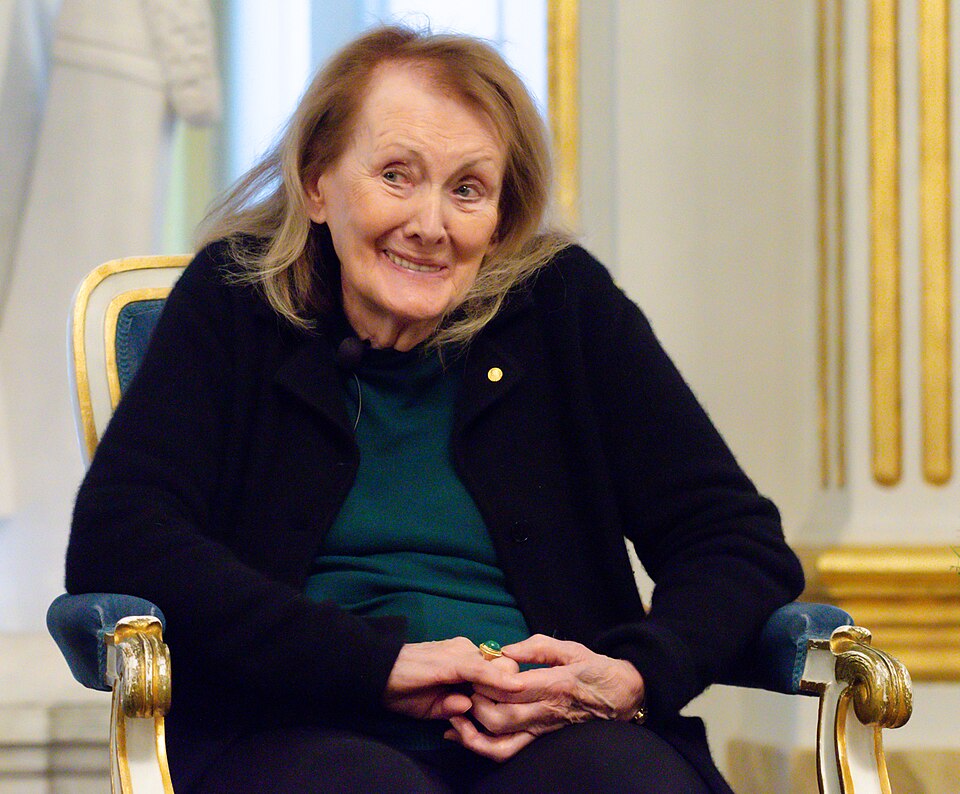
Photo of Annie Ernaux
Photo: Frankie Fouganthin · CC BY-SA 4.0 · via source

Author profile

Annie Ernaux

French writer Annie Ernaux turns personal memory into precise studies of class, gender, shame and social change. She received the 2022 Nobel Prize in Literature.

1 published book 0 published articles

Official website

About Annie Ernaux

Annie Ernaux is a French writer born in 1940 in Lillebonne, Normandy, and raised in Yvetot, where her parents ran a café and grocery shop in a working-class district. She later studied literature and taught French. Her movement through education into a different social class became one of the central tensions in her work.

Ernaux writes from lived experience, but her books reach beyond conventional memoir. In spare, controlled prose, she examines how private life is shaped by class, gender, language and collective history. A Man’s Place considers her father and the distance education created between them; Happening returns to her experience of illegal abortion; A Girl’s Story revisits a formative summer from her youth.

She received the Prix Renaudot for A Man’s Place and the 2022 Nobel Prize in Literature. The Years, first published in French in 2008, was shortlisted in Alison L. Strayer’s translation for the 2019 Man Booker International Prize and won the Warwick Prize for Women in Translation.

Start with The Years. Moving from 1941 to 2006 through photographs, slogans, songs, headlines and ordinary objects, it replaces the solitary autobiographical “I” with a shifting collective voice. It offers the fullest introduction to Ernaux’s distinctive project: preserving one life while showing how history speaks through it.

Published books

Author

The Years

Spanning 1941 to 2006, The Years joins one woman’s life to the transformation of postwar France. Annie Ernaux recalls childhood, education, marriage, motherhood, work, sexuality, illness, aging, and the desire to write, but she resists presenting these experiences as a conventional first-person memoir. Instead, photographs, family meals, slogans, songs, advertisements, political events, consumer goods, and changing habits accumulate into the memory of a generation. The intimate and historical repeatedly alter one another: class mobility changes family language; reproductive freedom changes women’s futures; television and digital technology reshape attention; public events survive as fragments of ordinary conversation. By moving between “she,” “we,” and broader collective voices, Ernaux asks how much of a supposedly private identity is composed from shared social time. The result is both autobiography and social record—a sustained attempt to preserve lives, objects, expressions, and ex…

View book