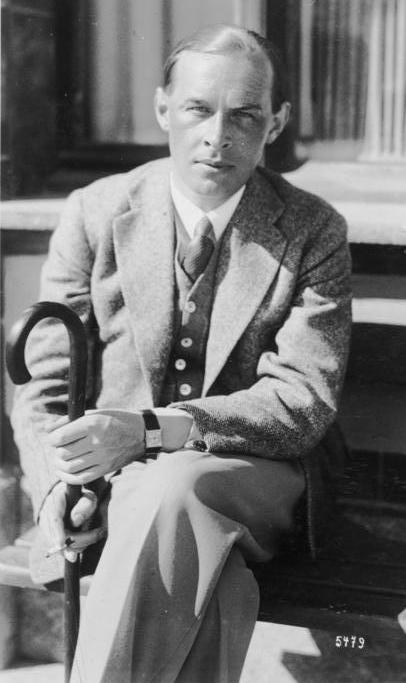
Erich Paul Remark was born in Osnabrück on 22 June 1898 and died in Locarno, Switzerland, on 25 September 1970. He fought as an infantryman on the Western Front and was wounded in combat. After the war he trained as a teacher, worked in libraries and newspapers, and gradually found his voice through journalism. He wrote in German his entire career. He left Germany in the early 1930s and settled in Switzerland, later also living in the United States.
His novels keep returning to the people a war or a regime pushes to the margins: young soldiers trying to make sense of what they saw, exiles watching a country turn on its own citizens, refugees rebuilding a life abroad. His prose is plain and direct. He lets a broken pair of glasses or a letter from home carry the emotional weight rather than telling the reader what to feel.
All Quiet on the Western Front ran as a serial in the Vossische Zeitung beginning in November 1928 and appeared as a book in 1929, selling well over a million copies in Germany in its first year. Edward Berger's 2023 German-language film adaptation won the Academy Award for Best International Feature. Remarque's final novel, Shadows in Paradise, was published posthumously in 1971.
Start with All Quiet on the Western Front. The narrator, Paul Bäumer, is a young German soldier, and the book stays close to his point of view through the mud and the silence between shells. You can read A. W. Wheen's 1929 English translation or the 1993 revision by Brian Murdoch. It is the book his later work is measured against.