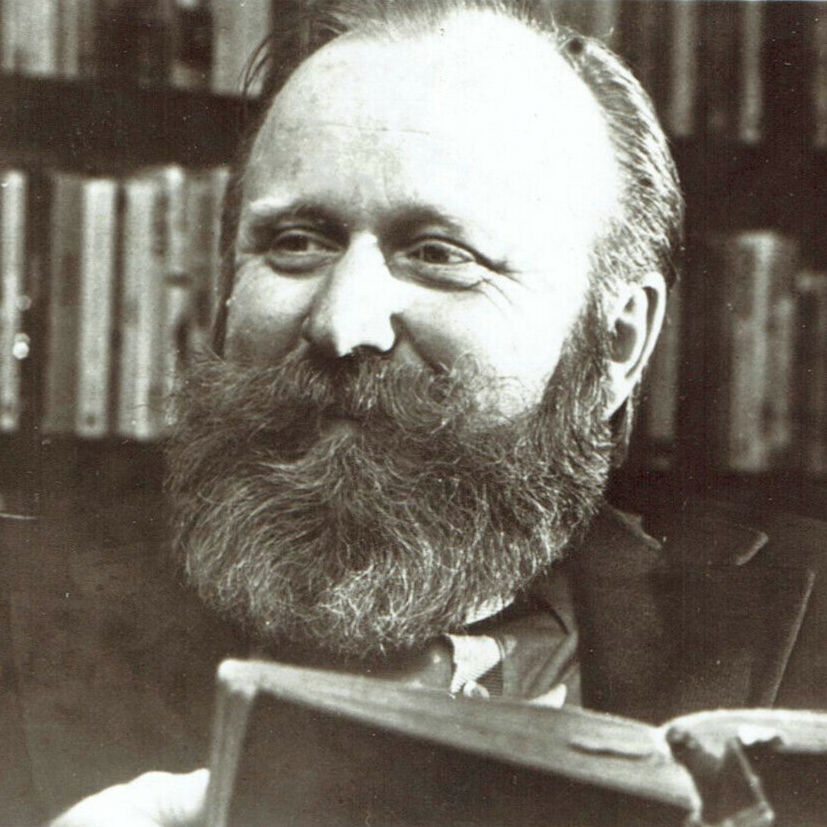
Photo of Frank Herbert
Photo: Unknown photographer · Public domain · via source

Author profile

Frank Herbert

Frank Herbert (1920–1986) was an American science-fiction writer best known for Dune, a far-future epic about ecology, political power, religion and the dangers of heroic leadership.

1 published book 0 published articles

About Frank Herbert

Frank Herbert was an American science-fiction author born in Tacoma, Washington, in 1920. Before writing full-time, he worked as a reporter and editor for newspapers on the West Coast. He began publishing science fiction in the early 1950s and wrote novels beyond the Dune sequence, including The Dragon in the Sea, The Dosadi Experiment and The White Plague.

Herbert built speculative societies rather than treating the future as mere scenery. His fiction examines ecology, political authority, religious belief and humanity’s attempts to control complex systems. Dune brings those concerns together on Arrakis, where scarce water, giant sandworms and the coveted spice shape every alliance. Its feudal intrigues and shifting viewpoints reward patient reading.

Published in 1965 after appearing in Analog in two parts, Dune won the inaugural Nebula Award for Best Novel and shared the 1966 Hugo Award. Herbert continued the story in five novels, ending with Chapterhouse: Dune in 1985. The original has inspired several screen versions, including David Lynch’s 1984 film and Denis Villeneuve’s two-part adaptation released in 2021 and 2024.

Start with Dune. It introduces Paul Atreides, the Fremen and the competing powers of Arrakis while remaining the fullest entry point to Herbert’s central ideas. Readers who want to see his apparent hero’s rise questioned should continue with Dune Messiah.

Published books

Author

Dune

On Arrakis, the only source of the consciousness-altering spice melange, control of ecology is inseparable from control of empire. When House Atreides receives authority over the desert planet, young Paul Atreides enters a trap shaped by imperial politics, family rivalry, economic dependence, and ancient schemes. Betrayal drives Paul and his mother, Jessica, into the desert, where the Fremen have built a demanding culture around water scarcity and dreams of planetary transformation. Paul’s unusual training and emerging prescience make him valuable to competing powers—and dangerous to himself. Dune combines dynastic conflict, survival adventure, religious mythmaking, and ecological speculation. Its deeper tension lies in Paul’s rise: the abilities that help him resist oppression may also create a leader whose legend unleashes consequences beyond his control. The novel asks readers to distrust simple heroic narratives even while constructing one of science fiction’s most influential exa…

View book