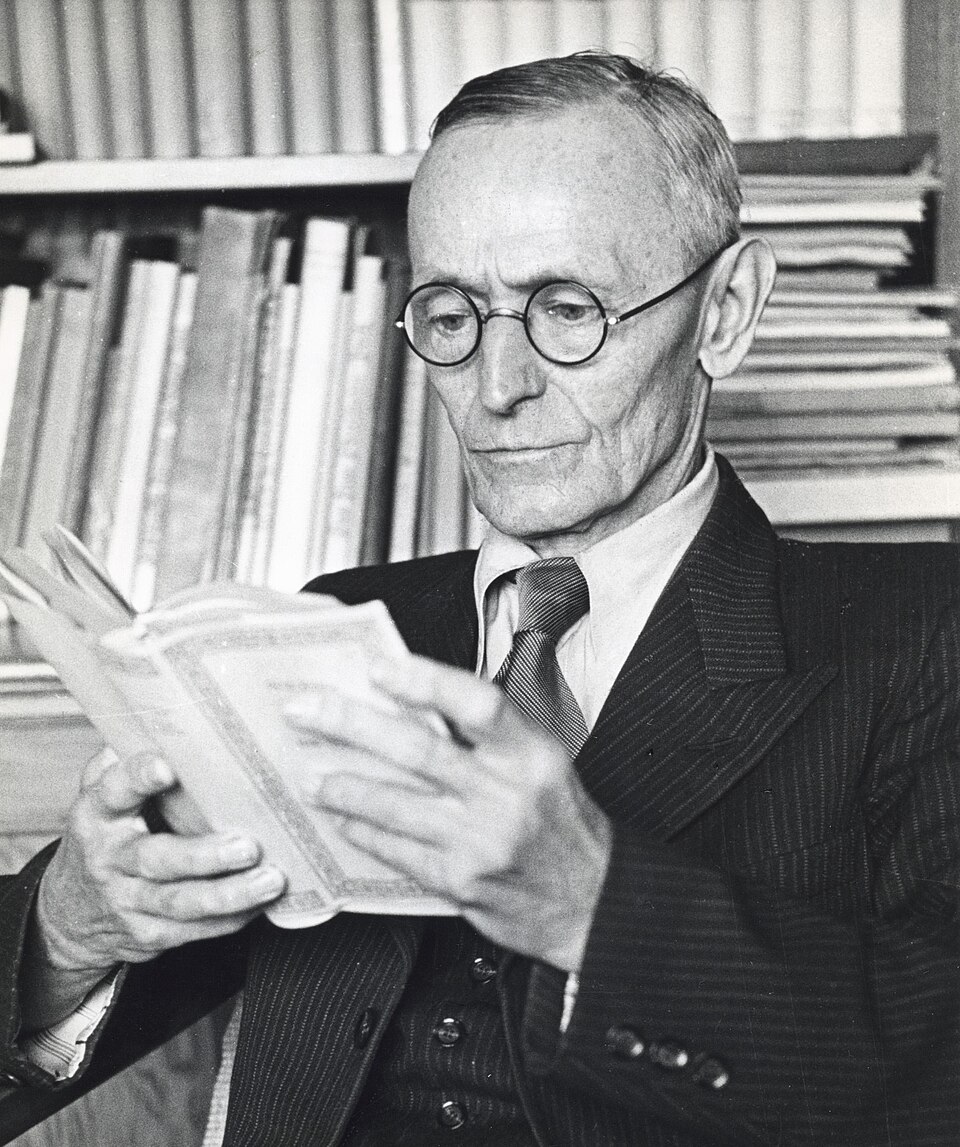
Hermann Hesse was born in 1877 in Calw, in the Kingdom of Württemberg, and died in 1962 in Montagnola, in Swiss Ticino. He was a German-Swiss novelist and poet, and he also painted. His unhappy schooling and apprenticeships fed Beneath the Wheel, and his first novel, Peter Camenzind, appeared in 1904. During the First World War he lived in Switzerland and spoke out against militarism.
Hesse's books keep asking how an individual can build an identity outside the norms of civilization. The settings change, but the crisis stays. Demian grew out of his encounter with psychoanalysis. Siddhartha reflects his interest in Eastern thought. The Glass Bead Game, published in 1943, imagines a utopian society organized around the synthesis of the sciences and the arts.
Steppenwolf, his tenth novel, came out in 1927 and draws on a deep spiritual crisis he went through in the 1920s. Its hero, Harry Haller, is a middle-aged man at odds with himself, and a woman named Hermine leads him toward a place called the Magic Theater. The scholar Steven Tracy has argued that the musician Pablo was inspired by the playing of Sidney Bechet, whom Hesse could have heard in Switzerland. Hesse later said the book had been largely misunderstood. In 1946 he received the Nobel Prize in Literature for writings that the Swedish Academy said showed boldness and penetration along with classical humanitarian ideals and high qualities of style.
Where to start: Steppenwolf is the book on WebToTell, and it is a fair place to begin if you want Hesse at his most raw and strange. The edition listed here is Basil Creighton's 1929 translation, revised by Joseph Mileck. If the novel's fever-dream turn loses you, Demian and Siddhartha are the next books to try.