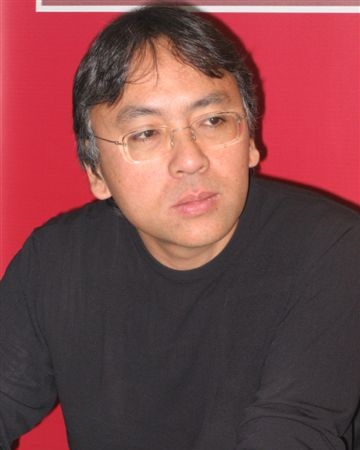
Photo of Kazuo Ishiguro
Photo: Mariusz Kubik, http://www.mariuszkubik.pl · CC BY 2.5 · via source

Author profile

Kazuo Ishiguro

Kazuo Ishiguro is a Japanese-born British novelist whose restrained, genre-crossing fiction explores memory, self-deception, duty and loss. He received the 2017 Nobel Prize in Literature.

2 published books 0 published articles

About Kazuo Ishiguro

Kazuo Ishiguro was born in Nagasaki, Japan, in 1954 and moved to Britain when he was five. After studying English and philosophy at the University of Kent, he completed a creative-writing course at the University of East Anglia. His first novel, A Pale View of Hills, appeared in 1982.

Ishiguro writes literary fiction that can borrow from historical drama, detective stories, science fiction and myth. His narrators often look backward, arranging memories that expose gaps between the lives they describe and the truths they can bear to acknowledge. The prose is controlled and understated; regret usually emerges through omissions, delayed recognition and carefully qualified speech.

The Remains of the Day follows Stevens, an English butler whose devotion to professional dignity has narrowed his moral and emotional vision. It won the 1989 Booker Prize and became a 1993 film directed by James Ivory. Never Let Me Go places Kathy, Ruth and Tommy in an alternative England shaped by biotechnology, using their years at Hailsham to examine friendship, mortality and the human habit of accepting imposed limits. It was shortlisted for the 2005 Booker Prize and later adapted for film. Ishiguro received the Nobel Prize in Literature in 2017.

Start with The Remains of the Day. Its country-house setting and measured first-person voice offer the clearest introduction to Ishiguro’s art of concealment. Choose Never Let Me Go first if speculative fiction appeals: its premise is darker, but its deepest concerns are love, memory and limited time.

Published books

Author

Never Let Me Go

In an alternative late-twentieth-century England, Kathy H. looks back on her childhood at Hailsham, an isolated school where students were encouraged to make art, guard their health, and accept rules they only partly understood. Her memories center on Ruth and Tommy, the two friends with whom she forms a tense, enduring triangle of loyalty, rivalry, love, and regret. As Kathy’s recollections move from school to early adulthood, ordinary incidents acquire a darker meaning: the students have been created to supply organs to others, and their futures are severely limited. Rather than making technological speculation its main attraction, the novel studies how people build meaningful lives while inhabiting systems they cannot—or do not know how to—resist. Its quiet treatment of memory, mortality, social conditioning, and medical exploitation makes it both an intimate tragedy and an unsettling work of dystopian social fiction.

View book

Author

The Remains of the Day

The novel follows Stevens, the longtime butler of Darlington Hall, during a motoring trip through the English countryside in 1956. Although the journey ostensibly allows him to visit Miss Kenton, the hall’s former housekeeper, it becomes an extended reconsideration of his professional ideals, his loyalty to Lord Darlington and the personal choices he has made. Stevens narrates through recollection rather than straightforward confession. His measured explanations gradually reveal discrepancies between how he wishes to understand his life and what readers can infer from the events he describes. The result is simultaneously a character study, a restrained love story and an examination of moral responsibility. Public history and private regret remain intertwined: Stevens’s emotional evasions resemble his reluctance to judge the political activities conducted at Darlington Hall before the Second World War.

View book