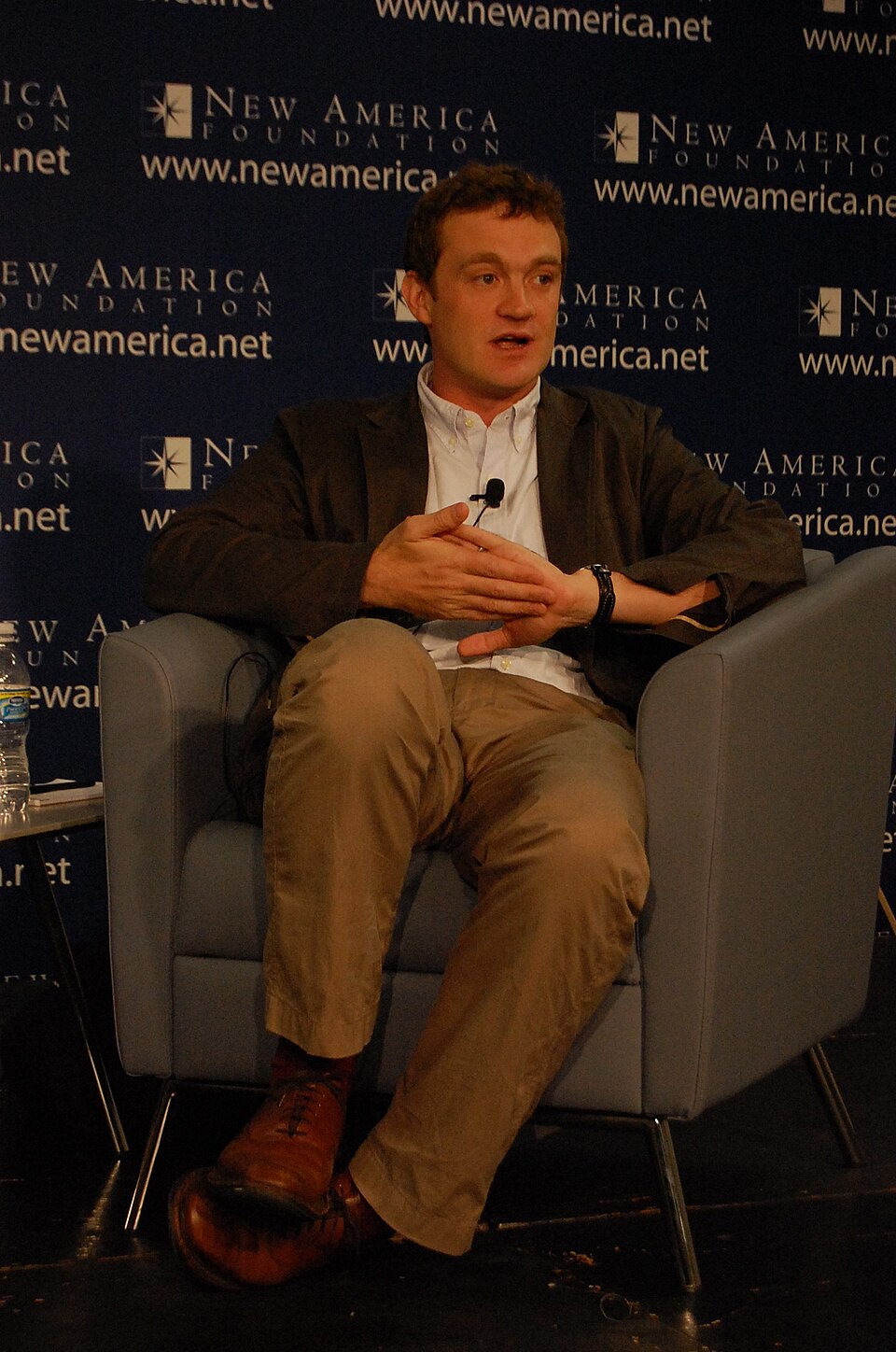
Photo of Patrick Radden Keefe
Photo: New America · CC BY 2.0 · via source

Author profile

Patrick Radden Keefe

American investigative journalist and New Yorker staff writer whose narrative nonfiction examines political violence, organized crime, secrecy and institutional power.

1 published book 0 published articles

Official website

About Patrick Radden Keefe

Patrick Radden Keefe is an American investigative journalist and a staff writer at The New Yorker, where he has contributed since 2006. Educated at Columbia, Cambridge, the London School of Economics and Yale Law School, he brings legal and historical scrutiny to long-form narrative reporting.

His books follow hidden systems of power through the people caught inside them. The Snakehead investigates a Chinese human-smuggling network; Empire of Pain traces the Sackler family and Purdue Pharma; and Rogues gathers profiles of criminals, fixers and other elusive figures. His reporting is extensive, but he shapes evidence into scenes and character-driven narratives rather than conventional case summaries.

Say Nothing begins with the 1972 abduction of Jean McConville, a widowed Belfast mother of ten, then expands into a history of the Troubles, the Provisional IRA and the burden of remembered violence. It won the 2019 National Book Critics Circle Award for nonfiction and the Orwell Prize for Political Writing. A nine-episode FX adaptation, on which Keefe served as an executive producer, later received a Peabody Award.

Start with Say Nothing. Its combination of murder investigation, political history and intimate portraiture offers the clearest introduction to Keefe’s method: patient research organized around secrecy, divided loyalties and the long consequences of violence.

Published books

Author

Say Nothing

Say Nothing is a work of investigative narrative nonfiction about the Troubles and their long aftermath in Northern Ireland. Its central case is the December 1972 abduction and killing of Jean McConville, a widowed mother of ten taken from her Belfast home. McConville’s disappearance gives the book a human-scale route into a much larger history of republican militancy, British security policy, sectarian division, clandestine intelligence, imprisonment, political negotiation, and unresolved grief. Rather than attempting a complete chronological history of the conflict, Keefe follows intersecting lives. These include members of the McConville family; republican activists Dolours and Marian Price; senior IRA figure Brendan Hughes; and Gerry Adams, whose alleged relationship to the IRA is treated as a major question in the narrative. The book also examines the Boston College oral-history undertaking commonly known as the Belfast Project. Interviews recorded for that archive promised parti…

View book