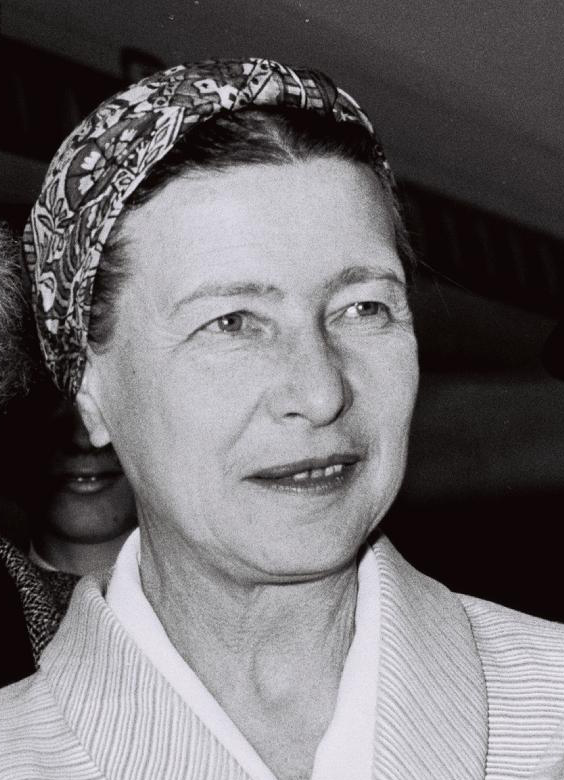
Photo of Simone de Beauvoir
Photo: Moshe Milner · CC BY-SA 3.0 · via source

Author profile

Simone de Beauvoir

French writer and philosopher Simone de Beauvoir wrote novels, memoirs and essays examining freedom, gender and the pressures society places on individual lives.

1 published book 0 published articles

About Simone de Beauvoir

Simone de Beauvoir (1908–1986) was a French writer, philosopher and feminist thinker whose work crossed fiction, memoir, social criticism and existentialist ethics. Born in Paris, she earned the agrégation in philosophy in 1929 and taught before establishing her literary career. She also helped found the journal Les Temps modernes with Jean-Paul Sartre and others.

Her writing repeatedly tests the distance between freedom in principle and freedom as people can actually live it. In novels and philosophical essays, she examines responsibility, dependence and the ways social conditions shape individual choices. Her autobiographical books, beginning with Memoirs of a Dutiful Daughter, bring the same analytical attention to education, ambition and intellectual life.

The Second Sex, published in French in 1949, studies how woman is made into society’s “Other.” Drawing on philosophy, history, literature and accounts of lived experience, Beauvoir argues that femininity is socially formed rather than fixed by destiny. The book became a major influence on feminist thought. Her other notable works include the novels She Came to Stay and The Blood of Others; The Mandarins received the 1954 Prix Goncourt.

Start with The Second Sex, the WebToTell selection and the clearest entry into Beauvoir’s central questions. It is long and demanding, but its movement from inherited myths about women to the conditions of everyday life shows the breadth and force of her method.

Published books

Author

The Second Sex

In The Second Sex, Simone de Beauvoir examines how women have been defined as secondary to men across philosophy, history, religion, literature, science, work, family life and sexuality. Her central concern is not simply prejudice but the production of “woman” as a social position: man is treated as the neutral human subject, while woman is cast as the dependent Other. Combining existential philosophy with historical inquiry and accounts of lived experience, Beauvoir considers how institutions, myths and everyday expectations restrict women’s freedom. The work moves from critical assessments of biological, psychoanalytic and materialist explanations to analyses of childhood, marriage, motherhood, sexual life, aging and economic independence. First published in French in 1949, it became a foundational text for modern feminist thought. Its claims remain influential, though its treatment of race, class, sexuality and non-Western lives also invites substantial criticism and revision.

View book