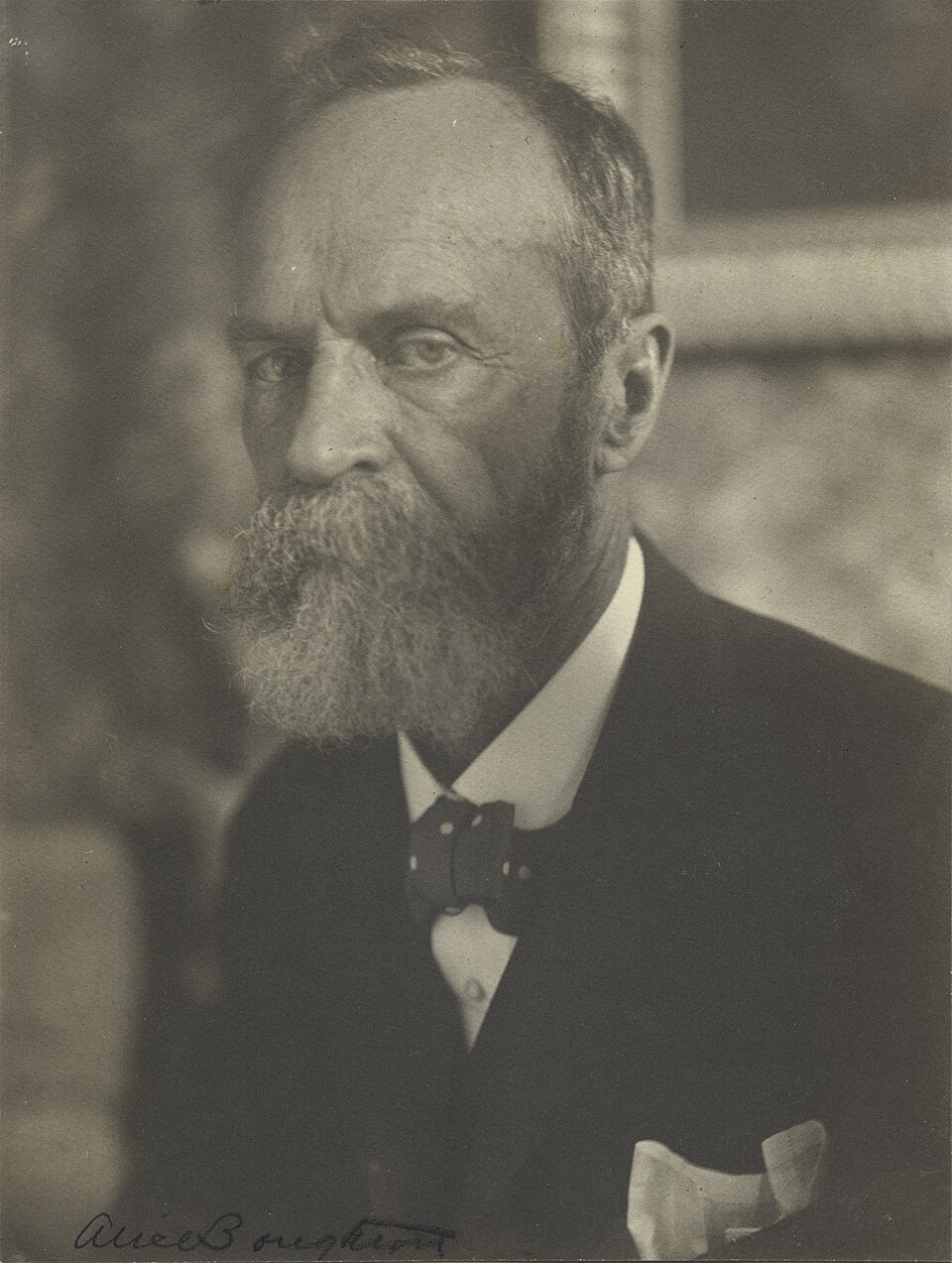
Photo of William James
Photo: Alice Boughton · Public domain · via source

Author profile

William James

American psychologist and philosopher William James wrote about consciousness, belief, religious experience and pragmatism, bringing close observation to large questions about how people think and live.

1 published book 0 published articles

About William James

William James (1842–1910) was an American psychologist and philosopher whose career was closely tied to Harvard. Trained in science and medicine, he began teaching physiology there in 1872 and later helped establish psychology as an academic field at the university. He also became a leading figure in American pragmatism.

James wrote at the meeting point of psychology, philosophy and religion. He preferred lived experience to rigid systems, asking what beliefs do in a person’s life and how consciousness works from moment to moment. His prose moves between careful distinctions, vivid examples and an unusually personal intellectual voice.

The Principles of Psychology, published in two volumes in 1890, was his major synthesis of the emerging discipline. Later books included The Will to Believe, Pragmatism and A Pluralistic Universe. The Varieties of Religious Experience grew from twenty Gifford Lectures delivered at the University of Edinburgh. It examines conversion, saintliness and mysticism, concentrating on individual experience rather than religious institutions.

Begin with The Varieties of Religious Experience. It offers the broadest introduction to James’s curiosity and method: he compares the optimistic “healthy-minded” temperament with the troubled “sick soul,” then considers divided selves, conversion and the defining features of mystical states. The cases are historical, but the central question remains immediate: what can private experience tell us about belief, truth and human nature?

Published books

Author

The Varieties of Religious Experience

In The Varieties of Religious Experience, psychologist and philosopher William James examines religion through the reported experiences of individuals rather than through creeds, institutions, or proofs of doctrine. Drawing on autobiographies, conversion narratives, mystical testimony, devotional writings, and psychological case material, he compares contrasting forms of religious life: confident spiritual optimism, profound awareness of sin and suffering, sudden or gradual conversion, saintliness, prayer, and mysticism. James asks where such experiences come from, how they alter personality, and whether their consequences justify treating them as meaningful. He rejects both automatic religious belief and automatic medical dismissal, arguing that an experience should not be judged solely by its psychological or bodily origins. Its practical effects—what it enables a person to become and do—also matter. Published in 1902 from his Gifford Lectures, the book helped establish the psycholo…

View book