
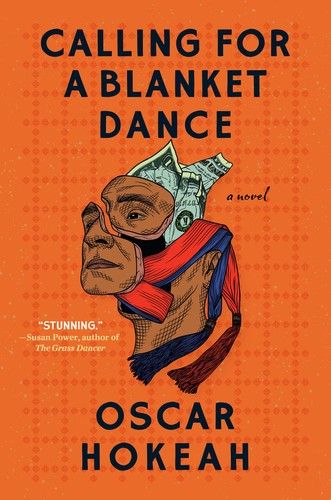
Calling for a Blanket Dance
Oscar Hokeah's first novel follows Ever Geimausaddle, a young man of Kiowa, Cherokee and Mexican heritage, from a traumatic infancy in Oklahoma through a turbulent adulthood. Ever never narrates his own early life. Relatives tell it instead, each from a different generation and with a different stake in who he becomes: grandmothers, a grandfather, cousins, aunts and others. Together they show how a family absorbs harm and tries to answer it with care, ceremony and practical help. The title comes from a powwow custom in which a community gathers to support someone in need. Among the notable debut novels of 2022, this work of literary fiction won the PEN/Hemingway Award for Debut Novel. It is a good choice for readers drawn to family stories, Indigenous life in the present day and multi-voice storytelling.
Where to buy or borrow
Are you selling this book? Bookstores, publishers, authors and libraries can be listed here for free. Request a listing
About this book
Hokeah ties the structure to his theme. No single narrator holds the whole story, so the book makes the reader assemble Ever's life from partial, sometimes conflicting views, much as a family does. The book opens with a family tree so readers can place the speakers. Ever's own voice arrives only near the end.
Hokeah has called the book a decolonization narrative. He worked for years in Native child welfare and youth services, and he began drafting the book in 2008 while studying at the Institute of American Indian Arts. Among recent debut novels from Native writers, it stands out for putting intertribal and binational family life at the center rather than treating it as background. Kirkus compared its method to Rachel Cusk's Outline and its communal feel to the work of Louise Erdrich and Tommy Orange.
Deep Overview
What follows is a sequence of chapters, each told by a different relative at a different stage of Ever's life. As he grows up, they watch him drift toward anger and poor decisions. In the plot, as summarized by critics, he marries badly, serves in the Army, becomes a father and takes work at a youth shelter. He also struggles with his temper. Each narrator brings an agenda, a history and a way of speaking. Some want him to reconnect with Kiowa traditions such as gourd dancing. Some worry about money, housing or work. Others carry their own unresolved injuries and see Ever partly through them. The result is less a conventional plot than a portrait assembled from angles, in which the reader often learns about Ever through what others notice, fear or misunderstand.
The title points to the book's central image. In powwow culture, a blanket dance is held for a person in need. The drum sounds, people come forward and offer gifts, and the offering is both material help and a public statement that the person is not alone. Hokeah has written that the novel grew into a story about family and how relatives show up for one another. The structure follows that idea: the book itself is a blanket that the chapters collectively spread for Ever.
The novel keeps two things in view at once. One is the damage: alcohol, domestic strain, racism, poverty, the legacy of institutions that separated Native families, and the cycles of violence that follow. The other is the repair, which tends to be small and practical, such as a ride, a place to sleep, a job, a teaching or a song. Hokeah does not make repair automatic. The final chapter, narrated by Ever, offers hope rather than a tidy redemption.
The Mexican side of the family adds a further dimension. Ever's identity is not a single tribal one, and the book shows how Kiowa, Cherokee and Mexican belonging can pull in different directions or reinforce each other. The novel treats this layered heritage as ordinary life, not as a puzzle to be solved.
Key Themes
Community as the unit of identity. Ever is never an isolated protagonist; the multi-narrator form insists that a person is partly made by those who raise, judge and defend him.
Multicultural Indigeneity. Kiowa, Cherokee and Mexican ties coexist in one household, complicating any single definition of what it means to be Native or to belong.
Culture as practical medicine. Ceremony, dance, language and teaching are presented as tools people use to survive, not as museum pieces.
Masculinity and anger. Ever's temper and the examples of the men around him raise questions about how aggression is learned and what alternatives are available.
Obligation and reciprocity. The blanket dance and the Kiowa concept the author links to showing up for family frame help as a duty and a gift, not charity.
Historical Context
The contemporary setting also matters. Hokeah draws on years of work in Native child welfare and with at-risk youth, and the novel reflects a present in which tribal governments, social services and community networks are central to family survival. A reviewer in The New York Times Book Review described the book as a reflection on the intergenerational nature of cultural trauma, and that frame fits well.
Literarily, the book belongs to the recent flowering of Native American fiction that includes Louise Erdrich and Tommy Orange, with whom Kirkus compared it. Its distinct contribution is a regional, intertribal and border-crossing perspective rather than a pan-Indian or urban one.
Intended Audience
Readers who want a single, fast-moving protagonist with a conventional plot arc may find the structure more indirect than they expect. The book also contains violence, alcohol-related harm and family dysfunction, so it may be a hard read for those who prefer lighter fiction or who are sensitive to those topics.
Reading Difficulty
Pacing is steady and episodic rather than propulsive. Emotional intensity can be high because of scenes of violence and personal crisis. No special background knowledge is required. The hardcover runs to a little under three hundred pages, and an audiobook edition with multiple narrators also exists, which may suit a book built from many voices; its production details were not checked for this profile.
Helpful Background Knowledge
Readers may also enjoy reading the author's short essay on the novel's title and the Kiowa idea of family obligation, which explains the blanket dance clearly. A general understanding of how historical trauma is discussed in Native communities will make the family dynamics easier to read, though the book supplies enough context on its own.
Why Read This Book?
For readers who seek out debut novels, it is a strong example of a first book with a clear idea behind it, recognized with the PEN/Hemingway Award for Debut Novel, and a finalist for the Aspen Words Literary Prize and the Los Angeles Times Art Seidenbaum Award for First Fiction. Its author also writes from long experience in child welfare work, which gives the family scenes a lived texture. It is a good pick for anyone who wants literary fiction that treats healing as collective labor.
Reader Takeaways
It may prompt you to reconsider easy categories of identity, since Ever belongs to more than one community at once. And it may change how you think about recovery: not as an individual triumph but as something made possible by people willing to show up repeatedly.
Strengths
Limitations and Cautions
Important Concepts, People, and Places
Lena: Ever's Cherokee grandmother, who narrates the opening chapter and interprets his early exposure to violence in spiritual terms, setting up the book's concern with protection and harm.
The blanket dance: a powwow tradition in which a community offers gifts to someone in need; it gives the novel its title and its model of collective care.
Gourd dancing: a Kiowa dance tradition that relatives offer Ever as a route back to heritage and discipline.
Kiowa Tribe of Oklahoma and Cherokee Nation: the two nations whose cultures and histories shape the family; the author is a citizen of both.
Mexican family and the border: Ever's father's relatives and the trip that opens the story, which bring a transnational dimension to his identity.
Tahlequah and Oklahoma: the Cherokee Nation's capital and the wider regional setting in which the family moves and works; Tahlequah is also where the author lives and works.
Intergenerational trauma and decolonization: the frameworks the author and reviewers use to understand the harms the family inherits and the cultural practices through which they respond.
Institute of American Indian Arts: the Santa Fe college where Hokeah began drafting the book in 2008.
PEN/Hemingway Award for Debut Novel: the prize that recognized the book.
Questions the Book Explores
Reading Group Guide
Discussion Questions
2. Which narrator did you trust most, and which did you question? What led you to those judgments?
3. How does the opening incident in Mexico echo in later chapters?
4. What forms of help do the relatives offer, and which seem to work best?
5. How does the novel portray the relationship between tradition and the demands of modern work, housing and family life?
6. In what ways do Ever's Kiowa, Cherokee and Mexican connections support or complicate one another?
7. How does the book portray masculinity, and what alternatives to anger does it suggest?
8. What does the title ritual suggest about giving and receiving, and where do you see it enacted outside the literal dance?
9. Do you find the ending hopeful, and what evidence in the story supports your view?
Sources and Verification
Comments
No published comments yet.
Available editions
Hardcover
First edition
- Publisher
- Algonquin Books
- ISBN-13
- 9781643751474
- Publication date
- Pages
- 272