
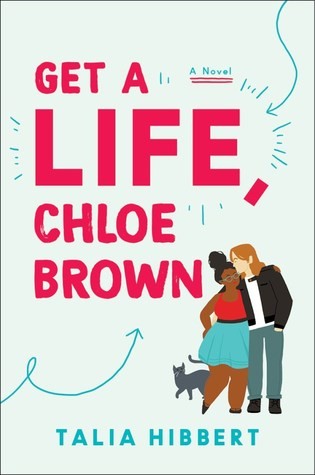
Get a Life, Chloe Brown
A Novel
After a frightening brush with death, Chloe Brown decides that managing her fibromyalgia has allowed caution and isolation to define too much of her life. She moves out of her family home and creates a list of experiences intended to make her more adventurous. Help arrives from an unlikely source: Redford “Red” Morgan, the motorcycle-riding superintendent of her apartment building, whose warmth and artistic talent complicate Chloe’s dismissive first impression of him. Their mutually beneficial arrangement develops through sharp exchanges, physical attraction, and increasingly vulnerable conversations. Yet both characters carry wounds that affection alone cannot erase. Chloe must distinguish necessary self-protection from emotional withdrawal, while Red confronts the damage left by an abusive former relationship. Their romance becomes a story about pleasure, autonomy, disability, trust, and the difficult work of being understood without surrendering one’s boundaries.
Where to buy or borrow
Are you selling this book? Bookstores, publishers, authors and libraries can be listed here for free. Request a listing
About this book
The novel combines recognizable romance structures—including antagonistic first impressions, forced proximity, and a practical bargain—with subjects that romantic comedy has often marginalized. Chloe’s chronic pain affects her routines, relationships, and decisions without reducing her to a lesson about illness. Red’s history of intimate-partner abuse likewise shapes his behavior without making romantic love a substitute for recovery. The book is distinguished by its insistence that care requires attention, communication, accountability, and respect for each person’s agency.
Deep Overview
Redford Morgan, the building’s superintendent, initially reads Chloe’s reserve as arrogance. Chloe, in turn, mistakes Red’s informality and physical confidence for simplicity. Their mutual misjudgments are intensified by class assumptions: Chloe comes from an affluent, protective family, while Red reacts strongly to the social world associated with his wealthy former partner. When circumstances bring Chloe and Red together, they strike an exchange—his assistance with her adventures for her professional help in presenting his artwork online.
The arrangement permits each character to approach a feared possibility indirectly. Chloe wants pleasure, independence, and intimacy but does not want to be treated as fragile or burdensome. Red wants to return to art and public ambition, but an abusive former relationship has undermined his confidence in his own talent and judgment. As attraction grows, the novel repeatedly tests whether they can replace assumption with curiosity. Their conflicts do not arise simply because they fail to announce their feelings; they emerge from the deeper problem of interpreting another person through the lens of past injury.
Chloe’s family, especially her sisters Dani and Eve, supplies affection, comic disruption, and a counterweight to Chloe’s isolation. Their concern is sincere, though Chloe sometimes experiences it as another reminder that her body is being monitored. Red’s friendship with Vik provides a different support structure and helps establish a life beyond the central romance. These relationships reinforce the book’s larger argument that independence is not the absence of need. It is the ability to participate in care without losing authority over one’s own life.
The romance therefore develops alongside two individual recoveries. Chloe experiments with risk while learning that an adventurous life need not imitate an able-bodied ideal. Red begins reclaiming his artistic identity while recognizing the continuing effects of emotional abuse. Hibbert does not present either protagonist as a cure for the other. Instead, the novel asks whether love can become a place where healing work is respected, truth is spoken, and pleasure remains possible amid pain.
Key Themes
• **Chronic pain and full personhood:** Fibromyalgia influences Chloe’s energy, mobility, and planning, yet she remains ambitious, irritable, funny, desirous, and sexually confident. Disability is part of her life rather than the whole explanation for it.
• **Recovery from emotional abuse:** Red’s damaged confidence shows how coercive relationships can alter a person’s view of talent, worth, and conflict. His recovery requires recognition and deliberate work, not merely a new partner.
• **Misjudgment and class perception:** Chloe and Red initially interpret each other through stereotypes connected to wealth, labor, appearance, and personality. Intimacy grows as they learn to question those interpretations.
• **Risk on one’s own terms:** Chloe’s list begins as an attempt to perform a culturally recognizable version of excitement. Her deeper challenge is to determine what a meaningful life looks like for her rather than proving herself against someone else’s standard.
• **Communication as a practice:** Attraction creates urgency, but sustainable intimacy depends on listening, apology, self-examination, and the willingness to communicate needs directly.
Literary and Cultural Context
The book also participates in a broader development within twenty-first-century romantic comedy: using the genre’s promise of emotional satisfaction while taking trauma, disability, therapy, and unequal power seriously. Its treatment of a male survivor of intimate-partner abuse challenges assumptions that abuse is always visibly physical or that men cannot be subjected to coercive emotional control. At the same time, the novel retains the humor, eroticism, heightened encounters, and optimistic resolution expected of its genre.
Intended Audience
Readers who favor closed-door romance should know that the novel includes explicit sexual material. Those seeking low-conflict escapism may also find portions emotionally heavier than the comic premise suggests. Conversely, readers who want romance grounded in communication, self-knowledge, and mutual care are likely to find the serious elements integral rather than distracting.
Reading Difficulty
The primary difficulty is emotional rather than technical. Readers encounter chronic pain, medical dismissal, social isolation, and the psychological consequences of an abusive relationship. The romantic and comic pacing makes the novel approachable, but understanding certain reactions may require attention to what the characters cannot yet say directly. British vocabulary and social references may be mildly unfamiliar to some international readers, though context generally makes their meaning clear.
Helpful Background Knowledge
Readers may also benefit from recognizing that intimate-partner abuse can include belittling, manipulation, control, and sustained attacks on self-confidence. The absence of visible injury does not make such abuse insignificant. The novel treats these subjects through characterization rather than formal medical explanation, so it should not be read as a clinical guide.
Why Read This Book?
The book is especially valuable for readers interested in how romantic comedy can remain playful while refusing easy cures. Chloe is not rewarded for overcoming disability, and Red does not become whole simply because someone new loves him. Their relationship matters because it challenges them to become more honest and accountable while preserving the genre’s humor, warmth, and sensuality.
Reader Takeaways
The story also encourages readers to reconsider the idea of “getting a life.” A meaningful life is not measured by completing a fashionable list of risks. It may instead involve making choices that reflect one’s actual desires, asking clearly for accommodation, returning to abandoned creative work, and allowing trusted people to offer care without granting them authority over one’s identity.
Strengths
Hibbert also gives practical behavior emotional significance. Website design, painting, apartment management, planning, rest, and transportation all become ways of revealing class expectations, self-image, and care. The alternating perspective clarifies why each protagonist misreads the other while preserving enough uncertainty to sustain tension. Chloe’s family relationships further enlarge the emotional world and lay a natural foundation for the later Brown Sisters novels.
Limitations and Reader Considerations
The novel offers a personal representation of chronic illness rather than a comprehensive account of fibromyalgia or disability. Chloe’s relative financial security and ability to work independently shape the options available to her; other disabled people may face substantially different economic, medical, or caregiving conditions. The story also contains explicit sex and discussions of emotional abuse, medical invalidation, chronic pain, and anxiety.
Important Concepts, People, and Relationships
• **Redford “Red” Morgan:** Chloe’s building superintendent and a talented painter who has withdrawn from his artistic career. His history with an abusive former partner affects his confidence and his reactions to wealth and conflict.
• **Dani Brown and Eve Brown:** Chloe’s sisters. Their teasing and protectiveness reveal both the strength of the Brown family and Chloe’s discomfort with being treated as vulnerable. They later become the protagonists of their own Brown Sisters novels.
• **Vikram “Vik” Jha:** Red’s close friend and an important source of support. His presence emphasizes that Red’s recovery and identity extend beyond the romance.
• **Fibromyalgia:** The chronic condition affecting Chloe’s pain, fatigue, routines, and social life. The book portrays accommodation and planning as necessary forms of self-management rather than personal weakness.
• **Intimate-partner abuse:** Red’s former relationship illustrates how emotional manipulation and degradation can damage a person’s judgment and sense of worth. This history explains several of his fears without excusing harmful choices.
• **The “Get a Life” list:** Chloe’s list is both a plot mechanism and a symbol of controlled experimentation. It gradually raises the question of whether growth means completing prescribed adventures or defining fulfillment for oneself.
• **Art and web design:** Red’s painting and Chloe’s digital expertise create the basis for their bargain. Their creative work also reflects different relationships to visibility: Chloe has professional confidence, while Red fears exposing his art to judgment.
• **The Brown Sisters series:** This novel begins a trilogy centered on Chloe, Dani, and Eve Brown. Each book follows a different sister’s romantic and personal development.
Questions the Book Explores
• How can someone accept help without feeling that control of their life has been transferred to another person?
• What forms can emotional abuse take, and how does its influence continue after the relationship has ended?
• How do class background and outward appearance distort first impressions?
• Can adventure be defined in ways that respect disability rather than treating the able-bodied experience as the universal standard?
• What responsibilities do romantic partners have when past injuries shape present conflict?
• How do apology, changed behavior, and professional support differ from grand romantic gestures?
Reading Group Guide
Compare Chloe and Red’s creative identities. Chloe is professionally established but personally guarded; Red is socially open but reluctant to expose his art. Discuss how visibility creates a different kind of risk for each of them.
Groups may also trace moments when care becomes complicated by assumption. Notice who asks what another person needs, who decides without asking, and how the consequences differ. Finally, consider how Dani, Eve, and Vik prevent the central romance from becoming the characters’ only source of emotional support.
Discussion Questions
2. Which of Chloe’s habits are necessary responses to chronic illness, and which have become connected to emotional avoidance?
3. How do Chloe and Red’s assumptions about wealth and class influence their early hostility?
4. What does the novel suggest about the difference between caring for someone and managing them?
5. How does Red’s former relationship affect his view of his artwork, his judgment, and his capacity for conflict?
6. Why is the exchange of web-design assistance and adventurous experiences an effective foundation for their relationship?
7. How does humor alter the reader’s experience of the book’s more painful subjects?
8. What roles do Dani, Eve, and Vik play that the central couple cannot play for each other?
9. Does the novel resolve its major conflicts through conversation, action, or both? Which form of repair is most convincing?
10. How does the book resist the idea that romantic love cures disability or trauma?
11. Which first impression proves most damaging, and why is it difficult for the character holding it to reconsider?
12. By the conclusion, what seems more important: completing the list or understanding why Chloe wrote it?
Sources and Verification
The public profile distinguishes the identified 369-page trade paperback from digital, audiobook, large-print, mass-market, and international editions, whose pagination and identifiers differ. Interpretive discussion of the novel’s themes is original editorial analysis rather than publisher copy or a claim of medical expertise.
Comments
No published comments yet.
Available editions
Paperback
First edition, paperback
- ISBN-13
- 9780062941206
- Publication date
- Pages
- 369