Deep Overview
The book opens in the voice of a fifteen-year-old who writes about the concerns of many teenagers: whether she is liked, whether she is too heavy, how to deal with boys, and how to live up to parents she both loves and resents. The diary form lets the reader watch these anxieties build. A move to a new town, a sense of not belonging and a hunger to be accepted make her receptive to experimentation. Drugs then enter her life, first as a social and emotional escape and soon as a consuming habit.
The dates and places the diary gives locate the action between 1968 and 1970, in California, Colorado, Oregon and New York City. Over that stretch the diarist swings between hope and ruin. She resolves to quit, falls back, runs away from home, drifts through other cities, comes into contact with other users and dealers, and suffers sexual exploitation and a number of frightening episodes. Several times she gets clean and imagines a normal future. Her recoveries are real in the story but fragile, and the book's tension comes from the repeated collapse of her best intentions.
The ending is where the book's design is most apparent. The diary stops on a note of renewed optimism, and then a short unsigned epilogue states that the writer died weeks later. That final page turns a personal story into a warning and gives the book its moral shape. It also strengthens the claim that these were real pages, since a cautionary tale feels heavier if it is presented as a document rather than an invention.
Understanding the book now means keeping two stories in view. The first is the diarist's story as told. The second is the story of the book as a publishing event. It was released as an anonymous diary with Beatrice Sparks as editor, and Sparks's credentials and account of how she obtained the diary were later questioned. The librarian and scholar Alleen Pace Nilsen interviewed Sparks in 1979, and subsequent researchers and fact-checkers concluded that the text could not have been written by a teenage girl as it stood. Sparks's other "real diary" books, produced later on subjects such as Satanism, pregnancy and AIDS, reinforced the suspicion that this was a formula rather than a one-off find. Some accounts also name additional contributors, but the details are unresolved.
What the book tries to show is that drug use can destroy a young person quickly, that isolation and family strain make teenagers vulnerable, and that adults often miss the signs. What it actually demonstrates is a style of 1970s moral persuasion, in which the authority of a supposedly true document was used to alarm readers into caution. Reading it today is as much an exercise in media literacy as in empathy.
Key Themes
Recurring ideas include the pressure of fitting in, the fragility of adolescent identity, and loneliness that persists even among peers. The diary repeatedly links drug use to emotional need rather than to simple rebellion. It also explores the way secrecy damages family relationships, the gap between a teenager's inner life and what parents see, and the difficulty of escaping a habit when friends, places and routines all stay the same. A further theme, built into the book's form, is authenticity: what makes a story feel true, and who benefits when readers believe it. Finally, the book embodies a cautionary-tale logic in which consequences are swift and total, a feature worth examining critically.
Historical Context
The book emerged from the late-1960s counterculture and the alarm adults felt about it. Psychedelic drugs, the hippie scene and teenage runaways were prominent public concerns, and political and media figures sought ways to reach young people. The television host Art Linkletter, who was publicly campaigning against youth drug use after the death of his daughter Diane in 1969, is part of this story. Reporting on the book's origins says that Sparks knew him through ghostwriting work and that this connection helped her find an agent. Rumors that Diane Linkletter had been under the influence of LSD circulated widely, although the autopsy found no drugs in her system.
The book also belongs to a wave of American young adult publishing that moved toward frank, issue-driven stories about the problems teenagers face. A 1973 television film adaptation and a printing history that reached dozens of printings within a decade show how large its audience became. Later sales are reported at nearly six million copies. Nilsen's 1979 investigation helped begin the public scrutiny of its authorship. In the following decades, school and library challenges, including a 1993 removal from a New Jersey school library and a challenge to its use as required reading in a New York high school, kept it in debates about what teenagers should read.
Intended Audience
Readers aged roughly fourteen and up who can handle frank portrayals of addiction, sexual exploitation and despair may find it compelling, particularly in a classroom or supervised setting. Teachers, librarians, parents and youth workers will find it useful as a historical artifact of drug-prevention literature. Students of media, publishing history, American cultural history or literary hoaxes will get the most out of the authorship story. Readers looking for a realistic, clinical or current account of addiction and recovery may be disappointed, as may anyone currently struggling with substance use or self-harm, for whom the book's fatalism could be distressing.
Reading Difficulty
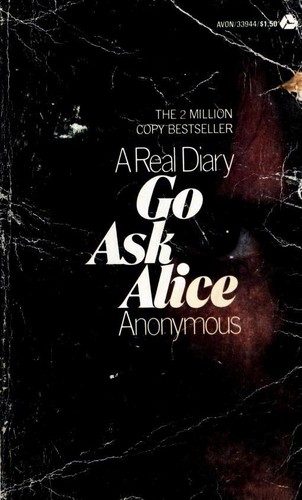
The prose is easy to read. Sentences are short, the vocabulary is everyday, and the diary entries are brief, so the book can be finished in a few sittings. The emotional difficulty is higher than the reading level suggests, because of its depictions of drug use, assault, running away and death. Some period slang may need explaining, and the dated entries sometimes skip over weeks or months without explanation. The Avon paperback is a compact mass-market format with small type, which some readers may find tiring. No technical or academic prerequisites are needed, although some critical distance helps when reading it as a document of its time.
Helpful Background Knowledge
A little knowledge of the late 1960s helps: the rise of youth counterculture, widespread public fear of LSD and other drugs, and the runaway phenomenon. It also helps to know that the book's claims of authenticity are widely doubted, so that the reader can treat the diary as a constructed text. Readers may wish to look briefly at the history of teen problem novels and at Nilsen's 1979 interview with Sparks. The song "White Rabbit" and Lewis Carroll's Alice stories explain the title, which was devised by an editor rather than by the diarist.
Why Read This Book?
Few books show so plainly how a cultural moment can shape a text, and how a text can shape a cultural moment. It lets a reader experience the emotional pull that made it popular and then examine, with hindsight, the devices that produced that pull. It is also an unusually clear case study in the line between fiction and false documentary, which gives it lasting relevance for anyone interested in memoir controversies, misinformation or the history of young adult publishing. As a short book, it is easy to assign or revisit, and it generates conversation across ages.
Reader Takeaways
A careful reader may come away better able to identify the techniques of the cautionary tale: the authentic-seeming voice, the escalating consequences, the epilogue that seals the moral. They may reconsider how much a claim of truth changes the experience of a story, and how publishers' packaging can influence belief. They may also notice what the diary leaves out, such as the complexity of treatment, the role of mental health, and the many routes people take through drug use and recovery. Finally, readers may understand better why the book remained both beloved and controversial across several generations.
Strengths
The diary format creates intimacy and pace, and the progression from small insecurities to crisis is easy to follow. The book is concise, accessible and emotionally direct, which helps explain its reach. It captures, if not necessarily a real teenager's voice, the anxieties adults of its time attributed to teenagers. Its history provides rich material for discussing authorship, authenticity and censorship. Its use of an anonymous, ordinary protagonist makes it easy to project onto, which is both an effective storytelling device and an example of persuasive technique.
Limitations and Cautions
The central limitation is that the work's claim to be a genuine diary is not credible, and the exact authorship remains unresolved. Sparks's own credentials and account were questioned, and some sources name possible co-contributors without settling the matter. As an account of addiction it is dated and schematic: consequences are extreme, and the account of drug effects and recovery does not reflect current medical understanding. Its tone is moralizing, and some readers find its portrayal of sex, religion and the counterculture heavy-handed. The content includes sexual exploitation, drug use and a death, and may be upsetting. Critics of attempts to remove the book argue that censorship is not the answer, while others have objected to its language and content. Both positions can be examined in discussion. Readers should treat the book as a historical and literary artifact rather than as evidence.
Important Concepts, People, and Places
Beatrice Sparks (1917–2012): the Utah-based writer who presented herself as the editor of the diary. Copyright records and later research indicate she was the main author of her "real diary" books. Anonymous: the credited author, a device that suggested a real but protected teenage voice. Prentice-Hall: the original publisher in 1971, and Kathy Fitzgerald, the editor there credited with the final title in place of Sparks's original choice. Avon Books: the paperback publisher of the edition profiled here, which carried the book to a mass audience. Alleen Pace Nilsen: the librarian and scholar whose 1979 interview with Sparks opened public scrutiny of her credentials and sources. Art Linkletter: the television personality and anti-drug advocate linked to the book's route to publication. Linda Glovach: a writer named in some sources as one of the people who helped prepare the text; her exact role is not settled. "White Rabbit": the Jefferson Airplane song that gave the title its allusion. Epistolary or diary fiction: the format used here. Cautionary tale: the genre of moral warning that frames the story. Fake memoir or literary hoax: the category into which reference works now place the book. California, Colorado, Oregon and New York City: the places where the diary's events are set. American Library Association: lists the book among frequently challenged young adult titles.
Questions the Book Explores
The text raises questions about why a seemingly ordinary teenager becomes vulnerable to drugs and how much responsibility lies with peers, family or circumstance. It asks whether recovery is a decision or a continuing process, how parents and young people fail to understand one another, and how a person's sense of self is shaped by acceptance and rejection. Through its history, it also asks what readers owe to a story presented as true, how a book's framing alters its moral force, and whether fear is an effective way to educate.
Reading Group Guide
Start by separating the diary from its packaging: read the story first, then discuss what changed when the group learned of the authorship dispute. Consider reading alongside a short account of Nilsen's 1979 interview, or comparing the book with a more recent novel or memoir about addiction. Groups that include teenagers may want to agree beforehand on how to handle the book's difficult material, and to share support resources if the discussion touches on personal experience. These book discussion questions work best when participants are encouraged to disagree about what the book gets right, what it distorts and whether it deserves its place on school shelves.
Discussion Questions
1. Which moments in the early entries make the diarist's later choices easier to understand, and which feel less convincing?
2. How does the diary form shape what we learn and what we cannot know?
3. What role do parents, peers and place play in the diarist's decline and attempts at recovery?
4. Does knowing the book is probably not a genuine diary change its emotional effect or its value?
5. What is the function of the epilogue, and what would the book be like without it?
6. Is it ethical to present a constructed story as a true document in order to warn young readers?
7. How does the book portray sex, religion and the counterculture, and what attitudes does that reveal?
8. How would a contemporary story about addiction differ in tone, content and message?
9. What are the arguments for and against restricting this book in schools and libraries?
10. What do you make of the contrast between the book's popularity and its contested origins?
Sources and Verification
This profile draws on bibliographic listings and library-style records to confirm the title, author attribution and the ISBN of the Avon paperback, together with reference articles on the book and on Beatrice Sparks, a fact-checking article, a historical essay on the book's publication, a bookseller's description of the first edition, and the American Library Association's pages on challenges to the book. The publication date and page count of this specific Avon printing vary between sources and are not given. Some details of the book's authorship, including the part played by any co-writers, are unresolved. The plot details are described in general terms.