Deep Overview
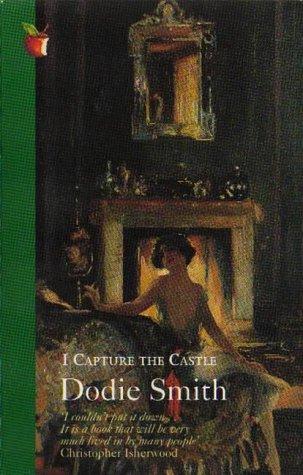
The book opens with Cassandra Mortmain writing in the kitchen sink, and the image sets the tone. She uses whatever corner of a poor, shabby household offers a little light and privacy. The Mortmains live in a leased castle on an estate in Suffolk, in a Britain that has little room for gentility without income. Her father, James Mortmain, became famous with a book called Jacob Wrestling and has produced nothing since. His second wife, Topaz, a former artists' model, tries to hold the household together with a kind of theatrical cheer. Cassandra's older sister Rose is beautiful and impatient with poverty, her younger brother Thomas is a schoolboy, and Stephen Colly, a hired boy who has become a devoted family member, quietly loves Cassandra. The family survives by selling furniture and books, and by borrowing.
The plot starts moving when the neighbouring estate, Scoatney Hall, passes to Simon Cotton, a wealthy American, who arrives with his brother Neil and their mother. The Mortmains' landlord is now a young, eligible man, and Rose sees an opportunity. Cassandra and Topaz help her pursue it. Much of the comedy comes from their scheming, but Smith lets the consequences grow. Cassandra, who has been an amused observer of the romance, finds herself falling for Simon. The two sisters' feelings, and her own guilt, turn what began as a game into something much more costly. Other strands run alongside: Stephen's proposal and his unexpected path towards modelling and film acting, a rapid change in how the Mortmains look to the outside world, and a plan devised by Cassandra and Thomas to jolt their father out of his writer's block by shutting him in a medieval tower. The novel keeps its eventual resolutions in reserve, and readers new to the book may prefer to arrive at them unspoiled.
The central relationship is between the narrator and her own text. Cassandra wants to learn to capture a scene accurately, and the book repeatedly shows her discovering that description alone cannot settle what people feel. Her father's long silence stands as a warning about what art can cost a family. Her own diary becomes a different kind of project, one that records her mistakes and embarrassments and makes use of them. By the end, Cassandra's account has become less a record of a charming household and more a record of her own change.
The novel is organised around the notebooks she fills over roughly six months, a structure that gives it a seasonal rhythm and a sense of closing circumstances. Smith's achievement is to let a seventeen-year-old's voice carry comedy, sorrow and social observation at once, and to treat the family's eccentricity as something both lovable and costly.
Key Themes
Writing and self-knowledge: Cassandra's diary is both practice and discovery, and it records her growing ability to describe other people's inner lives more fairly. Creative paralysis is its counterpart. James Mortmain's silence shows how artistic reputation can become a trap for the people who depend on the artist.
Money and class: poverty here is mostly genteel, a matter of lost furniture and missing meals rather than destitution. The novel looks at how money shapes marriage prospects, family loyalty and dignity, and at the awkward relationship between an impoverished old household and its rich new landlords.
Love in different forms: first love, infatuation, duty and affection are all distinguished from one another. Rose's frank wish for security is treated with more sympathy than a conventional romance would allow, and the novel shows how a plan for a good match can collide with real feeling.
Growing up: Cassandra's education comes through embarrassment, guilt and revised judgments of the adults around her. She learns that her parents, siblings and friends are more complicated than she first recorded.
Place and nostalgia: the castle is a romantic setting that is also cold, damp and impractical. The book is affectionate about English countryside eccentricity while staying aware of how uncomfortable such a life can be.
Historical Context
The story is set in the 1930s, in the years between the wars, when many once-comfortable English families were struggling to keep up appearances on shrinking means. Smith wrote it in the early 1940s, after she and her husband, Alec Beesley, a conscientious objector, left England for the United States during the Second World War. Several commentators connect the book's affectionate picture of English rural life with her homesickness at the time. The 1930s setting therefore carries a double distance: the period was already over, and the author was far from the country she described.
Before this novel Smith was known as a playwright. She wrote early plays under the pseudonym C. L. Anthony, and Dear Octopus (1938) was one of her best-known stage successes. The novel was published in the United States by Little, Brown in 1948, and in Britain by William Heinemann in 1949, according to the standard reference record. It reached the New York Times top ten fiction list. In the BBC's 2003 Big Read survey it was voted number 82 among the nation's best-loved novels, and a film adaptation was released the same year. The Virago Modern Classics edition belongs to a later period of rediscovery and reissue, when publishers were returning twentieth-century women's writing to readers.
Intended Audience
The novel is a good match for readers who like a distinctive narrative voice and a character-driven story more than a fast plot. It suits adults and older teenagers, and people exploring coming of age books will find an early and unusually witty example. Readers who enjoy domestic comedy, English country settings, diary or letter formats, and stories about young writers are particularly likely to enjoy it, as are those who like the work of authors such as Jane Austen or the Brontës and want something lighter and more modern in tone.
It may be less suitable for readers who want high drama, elaborate plotting or historical detail about the 1930s. Some readers may find the family's inability to deal with money, and the father's behaviour in particular, frustrating rather than endearing. Those who prefer a contemporary voice may find the period diction and the narrator's deliberate naivety slow going at first.
Reading Difficulty
The prose is clear and conversational, and the diary format keeps chapters short and easy to pick up. Vocabulary is largely accessible, though period references (household economy, social etiquette, some British idiom, and references to literature and music) may need a little patience for readers unfamiliar with them. The pacing is gradual. The first section establishes the household with comic episodes before the romantic plot takes hold, and the emotional weight increases as the book progresses. Conceptually it is undemanding, though its ironies reward attention, since Cassandra's account is not always as reliable as she believes. Page counts vary by edition and printing, so a reader planning a schedule should check the copy in hand. This Virago paperback is a standard-length novel.
Helpful Background Knowledge
No specialist knowledge is needed. A general sense of interwar England will help, especially the decline of the landed and genteel classes and the social weight of marriage and inheritance. Some familiarity with the idea of a writer's reputation resting on a single celebrated book is useful, because Jacob Wrestling is a presence in the story even though it is never part of the plot's action. Readers who know the novel's reputation as a cherished favourite may want to set aside expectations of a flawless fairy tale. It is a better book when read as a comedy with real emotional consequences. If you plan to see the 2003 film adaptation, it is worth reading the novel first, since the film compresses its structure.
Why Read This Book?
Several features make this book worth choosing over other classic novels to read. It has one of the more memorable first-person narrators in twentieth-century English fiction, a young woman whose honesty and comic timing are both genuine strengths and whose limitations are part of the design. It treats a young person's writing apprenticeship seriously and shows a diary being used as a way to learn how to see people. Its humour is affectionate rather than cynical, but the plot is willing to let characters hurt each other. It also provides a lively view of how class, money and romance interacted in a Britain between the wars, as imagined by a writer looking back from another country. Finally, its long life with readers, including a BBC survey placement and a screen adaptation, makes it easy to discuss with others who know it.
Reader Takeaways
A careful reader may come away with a clearer sense of how an unreliable-but-sincere narrator works, and of how irony can be built from a young person's earnest descriptions. They may reconsider how the novel balances romance with a critique of marrying for money, and notice that Rose's pragmatism is treated more generously than that of a stock figure. They may also notice how the book treats creative work: as a source of pride, a form of avoidance, and a burden for those who live with the artist. Finally, readers may find themselves paying more attention to the difference between writing about a feeling and understanding it.
Strengths
The strongest element is the narrative voice, which is funny, observant and consistent. The setting is vivid and specific, from the practical difficulties of living in a decaying building to the neighbouring estate's contrast. The supporting cast is distinctive: Topaz, Stephen, Thomas and the Cotton family each have their own comic and emotional logic. The notebook structure gives a clear sense of time passing, and the story moves from comedy to real emotional stakes without losing coherence. The book's portrait of a young writer learning her craft remains one of its most original features.
Limitations and Cautions
The novel is told from one perspective, so the other characters are seen mostly through Cassandra's observations, and some readers may want more depth for them. The class and social attitudes are those of an English middle-class setting in the 1930s, and the book rarely looks beyond the world of the gentry and their immediate neighbours. Some readers find the Mortmain household's financial helplessness and the father's selfishness difficult to enjoy. The romantic plot depends on conventions that some contemporary readers may find dated, and the ending has divided opinion among readers. Descriptions of the book's reception are mostly informal reader and critic commentary, so claims about its status as a cultural touchstone should be read as general impressions rather than measured facts.
Important Concepts, People, and Places
Cassandra Mortmain: seventeen-year-old narrator and diarist, whose development drives the book.
James Mortmain: her father, author of the celebrated Jacob Wrestling, whose writer's block is the source of the family's money problems.
Topaz: Mortmain's second wife, a former artists' model, who is eccentric but loyal to the family.
Rose Mortmain: Cassandra's older sister, determined to escape poverty through marriage.
Thomas: Cassandra's younger brother, who becomes involved in her scheme concerning their father.
Stephen Colly: a hired hand who is devoted to the family and to Cassandra in particular.
Simon Cotton and Neil Cotton: American brothers who inherit Scoatney Hall and change the Mortmains' prospects.
Godsend Castle: the leased, decaying castle where the family lives, according to commentators on the book.
Scoatney Hall: the neighbouring country house whose new owners drive the plot.
Suffolk: the novel's countryside setting, according to the reference record and several critics.
Dodie Smith: the playwright and novelist who wrote the book in the United States during the Second World War.
Virago Modern Classics: the series in which this paperback appeared.
Questions the Book Explores
How does writing change what a writer sees, and what does it leave out? What does an artist owe the people who depend on them? Is marrying for security a betrayal of love, or a reasonable response to circumstance? How does a person tell infatuation from affection? What does it take to move from observing other people's lives to making real choices in one's own? How far can a family's eccentricity be treated as charming when it comes with real cost?
Reading Group Guide
The book suits groups that enjoy discussing voice and character. A useful way to start is by comparing first impressions of the Mortmain household with later impressions, to see how the book changes sympathy for each member. Groups may also want to look at the structure: the notebooks, the seasonal pacing and the choice of a diary. Some readers prefer to read the book in three sittings, matching the notebooks, which makes for natural discussion breaks. If time allows, groups could compare the novel with the 2003 film adaptation, noting what the screen version emphasises and what it leaves out. Be aware that some details of the plot are best left undisclosed for members who have not finished.
Discussion Questions
1. How does the diary format shape your sense of what Cassandra knows and does not know?
2. In what ways does James Mortmain's writer's block affect each member of the family?
3. Is Rose's determination to marry well presented as admirable, foolish, or both?
4. How does the novel use humour, and when does it stop using it?
5. What do the Cottons represent in relation to the Mortmains, and how does the book treat the contrast between them?
6. Why do you think Stephen is given the role he has in the story?
7. How reliable do you find Cassandra as a narrator, and where does her account feel incomplete?
8. What does the novel suggest about the relationship between nostalgia and the place it describes?
9. Which scenes feel most dated, and which still feel fresh?
10. How do you read the novel's final pages, and what do you think Cassandra has learned?
Sources and Verification
This profile draws on bibliographic databases and bookseller listings to confirm the title, author and ISBN of the Virago edition, and on reference sources, including encyclopedia entries and a literary magazine essay, for the author's biography and the novel's reception. Plot and character details come from reference summaries and several independent reader and critic discussions, and they were cross-checked against one another. Sources disagree on the page count of this edition and give no exact publication day, so those details are not stated. Some commentators place the castle in Suffolk and others in Sussex, and this profile follows the reference record.