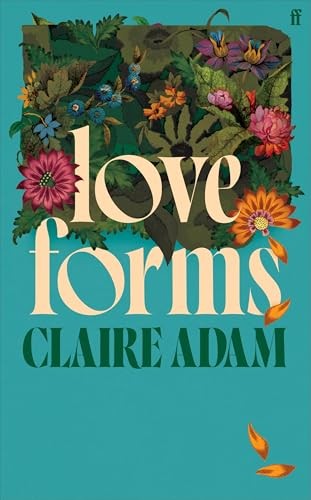
Deep Overview
Love Forms operates on two temporal planes that are not simple past-and-present. The 1980 sequence—Dawn's pregnancy, the boat crossing to Venezuela, the four months with nuns, the return to Trinidad as if nothing happened—is rendered with a cold, procedural clarity that mirrors the family's own wish to contain and dispose of the event. The present-day narration, set in London and in the online world of adoption forums, is where the emotional weight accumulates. Adam does not lay the two timelines side by side; instead, memories surface through triggers, half-remembered sensory fragments, and the gradual erosion of the family's agreed-upon silence. The structure mimics how trauma actually functions in memory: not as a coherent story but as recurring, unbidden impressions that reshape one's sense of self over time.
The novel's central argument is that a family's decision to protect its social standing by silencing a teenage mother's experience does not eliminate the wound; it merely redistributes it across generations. Dawn's parents, her brothers, her ex-husband, and her two sons all carry the echo of the daughter who is absent from the family table. Adam shows how the
Key Themes
The novel's title encodes its two central preoccupations. First, love in its many forms: the conditional love of a family that protects its reputation, the absent love of a mother separated from her child at birth, the performative love of a marriage that fractures under unspoken pressure, and the slow, unglamorous love a woman feels for her grown sons. Second, love as a process of formation—the way emotional bonds solidify, deform, or remain unmet over decades.
Family silence and its long-term costs run through every chapter. The Bishop family's
Historical Context
Understanding Love Forms benefits from familiarity with several overlapping historical and cultural contexts. Trinidad in the late 1970s and early 1980s was in the grip of an oil-boom prosperity that created a visible upper class while leaving deep social hierarchies intact. The Bishop family's fruit-juice business places them in that stratum, and the scandal of a teenage pregnancy among such a family carries a specific weight that would not apply in a less class-conscious setting. The novel does not shy from the racial and ethnic textures of Trinidadian society—its Indian, African, and European混血 communities—but its primary focus is on class and gender.
The adoption practices of the 1980s, particularly in Caribbean and Latin American contexts where religious institutions played a central role in placing children, form the ethical backdrop of Dawn's story. The nuns in Venezuela are not villains in Adam's telling; they are part of a system that treated a sixteen-year-old's body and baby as a problem to be managed. This resonates with broader conversations about the politics of adoption, the privileging of some mothers' rights over others', and the long-term psychological impact on both birth mothers and adopted children.
The novel is also situated within a wave of Caribbean and postcolonial literary fiction that interrogates the private consequences of public respectability, drawing on the literary heritage of writers like Jean Rhys and the broader tradition of Caribbean emigration to the United Kingdom. Adam's own background—born in Port of Spain, educated at Brown University, and now based in London—gives her a dual vantage point on the immigrant experience that the novel draws on without reducing it to a single narrative of loss or triumph.
Intended Audience
This book will resonate with readers who enjoy literary fiction that works through emotion and memory rather than plot mechanics. Readers with personal connections to adoption, family secrets, emigration from the Caribbean, or the complexities of motherhood will find the novel's specific situations immediately familiar, while those without those experiences can still engage with its universal questions about silence, identity, and the choices that define a life. The 2025 Booker Prize longlist exposure will attract book club members and general fiction readers looking for a quietly powerful novel to discuss. Fans of Claire Keegan, Louise Erdrich, or the family-drama tradition in British and Caribbean fiction will recognise the register. Readers who prefer fast-paced, plot-driven narratives or who are looking for a straightforward reunion story may find the novel's deliberate, cumulative pacing a slower experience than they want. The book is not a thriller or a mystery; its tension is emotional and retrospective rather than suspenseful.
Reading Difficulty
The vocabulary is accessible, and Adam's prose is clear and unadorned. The main difficulty is structural: the novel does not proceed in strict chronological order, so readers must keep track of which timeline they are in and how each new memory reframes what they thought they understood. There are no footnotes, no jargon, and no prerequisite academic knowledge required. The pacing is deliberate and sometimes slow in its middle sections, where Dawn's search yields false leads and the narrative lingers on her internal state rather than advancing the plot. Readers who are comfortable with interior, memory-driven fiction will find the rhythm natural; those who need a strong forward-moving plot may experience the middle stretch as flat. The novel is a single-volume, single-voice narrative, so the commitment is to one perspective and one emotional register for the full length. No prior knowledge of Caribbean history, adoption policy, or the specific cultural setting is required; Adam provides enough context for the story to be self-contained.
Helpful Background Knowledge
No formal preparation is necessary, but a few points of context will enrich the reading. A general sense of how Caribbean class and family structures operate—particularly in older, established Trinidadian families—will help readers appreciate the specific pressure Dawn's parents feel and the logic (however flawed) of their decision to send her to Venezuela. Familiarity with the broader phenomenon of emigration from the Caribbean to the United Kingdom, and the way second-generation immigrants navigate belonging in both places, will deepen the London sections. Readers who have read Claire Adam's debut Golden Child will recognise the Bishop family and the Trinidadian setting, though Love Forms stands entirely on its own. An interest in the ethics of adoption, the psychological research on birth mothers and adopted children, or the history of religious institutions in child-placement will add a layer of resonance, but the novel does not depend on that knowledge. Knowing that the 2025 Booker Prize longlist is a mark of critical recognition in literary fiction may set appropriate expectations for the book's ambition and register.
Why Read This Book?
Love Forms occupies a specific niche: it is a novel about adoption, family, and motherhood that refuses the easy emotional payoffs those subjects often invite. Where many books in this space build toward a reunion scene that resolves the central tension, Adam's novel is about what happens when realisation and reunion are complicated, late, or incomplete. That restraint gives the book a credibility that more overtly sentimental treatments lack. The Trinidadian and Venezuelan settings are rendered with a specificity that readers of Caribbean literature will value, and the London sections ground the story in a recognisable present-day immigrant experience. The Booker Prize longlist signal, combined with the critical reception that highlights Adam's control of character and dialogue, makes this a strong choice among the literary fiction titles of 2025. For book club readers, the novel's layered family dynamics, its ambiguous moral landscape, and its refusal to villainise any single character generate the kind of sustained discussion that makes book club books worthwhile. If you are looking for a novel that earns its emotional weight through structure and voice rather than spectacle, this is one of the most carefully constructed family stories of the year.
Reader Takeaways
A careful reader will come away with a more nuanced understanding of how family silence operates—not as a single act of suppression but as a web of mutual protection that each member both benefits from and is wounded by. The novel challenges the assumption that a parent's decision to relinquish a child is a simple moral failure; it shows how class pressure, gender expectations, and the genuine (if misplaced) belief that a different life would be better for the child can drive a decision that still causes lifelong harm. Readers will notice how memory is not a recording but a living process: Dawn's recollections shift, sharpen, and contradict themselves, and the novel treats those shifts as truthful rather than as errors. The book also invites reflection on how professional identity (Dawn's career as a GP, her later retreat to a receptionist role) intersects with personal identity and how a single life event can reshape a person's relationship to work, partnership, and motherhood. Finally, the novel leaves the reader with the unsettling sense that the search for a lost person is never purely about finding them; it is about confronting the version of oneself that was left behind in the silencing.
Strengths
Adam's command of a single, sustained first-person voice is the novel's most notable technical achievement. Dawn's narration is consistent in its register—warm, slightly wry, self-aware without being self-pitying—and the voice never slips into melodrama even when the material is deeply painful. The structure, which layers memory over present action without explicit chapter breaks or date headers, creates a sense of lived time that linear narratives cannot replicate. The family dynamics are drawn with psychological specificity: each Bishop family member has a distinct voice, a particular way of deflecting or confronting, and a history that the novel implies rather than explains. The Caribbean settings are rendered with sensory detail that avoids the tourist-postcard mode, and the Venezuela sections carry a genuine sense of place and history. The novel's moral complexity—its refusal to cast Dawn's parents as simple antagonists, or Dawn as a simple victim, or the nuns as villains—gives it a depth that straightforward moral narratives lack. The dialogue, particularly in the family scenes, captures the rhythms of Trinidadian and British English without becoming a study in dialect.
Limitations and Cautions
The novel's middle section, in which Dawn's search encounters multiple false leads, can feel repetitive to readers who prefer accelerating tension. The contemporary London scenes, particularly around Dawn's workplace and her relationship with a friend named Niall, are less vividly realised than the Caribbean sections and sometimes read as functional rather than fully imagined. The novel is told entirely from Dawn's perspective, which means the adopted daughter's experience is present only as an absence or as the object of Dawn's hopes; readers seeking a dual-voice adoption narrative will not find that here. The 1980s Trinidad setting, while richly drawn, is filtered through Dawn's memory and her family's social position, so the broader political and economic context of the era is implied rather than explored. Some readers may find the novel's restraint in the final third—its refusal to deliver a clean resolution—frustrating, though this is clearly a deliberate artistic choice. The book is also a product of its 2025 moment; the adoption forums, DNA testing, and online communities it depicts reflect current technology and would not be accessible to readers without some familiarity with those tools.
Important Concepts, People, and Places
Dawn Bishop is the novel's narrator and protagonist, a fifty-eight-year-old former general practitioner in London who was sent to Venezuela at sixteen to give birth and relinquish her baby. Her voice and her unresolved grief are the organising force of the entire book.
The Bishop family, a Trinidadian fruit-juice dynasty, represents a specific stratum of Caribbean upper-class society. Dawn's parents, her brothers Warren and Ryan, and the family's collective decision to silence the pregnancy are central to the novel's exploration of how class and respectability shape family bonds.
Venezuela, and specifically the unnamed convent where Dawn gives birth, functions as the novel's emotional and geographical wound. The physical landscape—boat crossings, the rickety planes, the ruined house Dawn returns to—carries the weight of a memory the family has tried to erase.
Trinidad and Tobago, particularly the Port of Spain setting and the Carnival scene that precedes Dawn's pregnancy, provides the cultural and social backdrop against which the family's shame operates.
London, where Dawn lives in the present-day narrative, is the site of her search and her emotional isolation. The contrast between her privileged Trinidadian past and her modest London present underscores the novel's theme of self-invention.
The 2025 Booker Prize longlist, on which Love Forms was named, situates the novel within a broader conversation about literary fiction and the recognition of Caribbean and diasporic voices in mainstream British and international prizes.
Golden Child, Adam's 2019 debut novel, shares the Trinidadian setting and the Bishop family, and its critical success (Desmond Elliott Prize, McKitterick Prize, BBC's 100 Novels list) provides the context for Adam's status as an established voice when Love Forms appeared.
The concept of relinquishment—both as a legal and social process in 1980s adoption practice and as an ongoing emotional act that Dawn performs in her silence—threads through the novel's title, its structure, and its moral questions.
Questions the Book Explores
What does it mean to love a person you have never held? The novel asks whether the bond between a mother and a child she gave up at birth is a real psychological force or a narrative a grieving parent constructs for herself, and it refuses to settle the question definitively.
Can a family protect a member by silencing an event, or does the silence become a second wound that no one is allowed to name? Dawn's parents' decision is framed as an act of protection, yet the novel shows it as the origin of every subsequent difficulty in the family.
How does class shape the way a society handles an unintended teenage pregnancy? The novel does not moralise; it shows the specific social machinery—wealth, connections, the ability to arrange a secret journey—that made the Bishop family's solution possible and that would have been unavailable to a less privileged family.
What happens to a person's sense of self when a foundational memory is suppressed? Dawn's search is not only for her daughter but for the sixteen-year-old girl she no longer recognises.
Is it possible to forgive someone—yourself, a parent, a family—for a decision made under pressure that caused lasting harm, and does forgiveness require the other person's acknowledgment?
How do adopted children and birth mothers experience the same event from opposite sides, and what does it mean that the novel can only show one of those sides?
Reading Group Guide
Love Forms is well suited to a book club setting because its moral ambiguities and layered family dynamics resist easy consensus. Before the discussion, it helps to have read the novel in one or two sittings so that the cumulative emotional weight lands; the structure rewards a continuous reading rather than a chapter-by-chapter pace. Because the novel is told in a single voice and does not follow a strict timeline, readers may have very different impressions of which scenes are pivotal. A useful starting point for the group conversation is to identify the moment in the novel where the balance shifted for each reader—the scene that moved them most or that they found most unsettling. The novel's title,
Discussion Questions
1. Dawn's parents send her to Venezuela under the guise of a family arrangement, and they make a pact to forget. Does the novel present their decision as cruelty, misguided protection, or something more complicated? Can a person be both wrong and acting in love simultaneously?
2. The novel is told entirely from Dawn's perspective. What do we not learn about the baby girl's life, her adoptive family, or her experience of growing up without her birth mother? Does the absence of her voice strengthen or weaken the story?
3. Dawn's search involves online adoption forums, DNA tests, and letter-writing. How does the novel treat the technology and logistics of the search? Do these practical details feel integral to the emotional story, or do they risk reducing a profound loss to a procedural problem?
4. The title Love Forms works on two levels: the many forms love takes, and the process by which love forms in the body and the mind. Which of these readings do you think the novel privileges, and does the ending resolve the ambiguity or deepen it?
5. Dawn's relationship with her two sons is shaped by her secret. How does the novel show that a parent's unspoken past can become a kind of inheritance for their children, and is that inheritance a burden, a gift, or both?
6. The Venezuela setting is described through Dawn's fragmented, shame-laden memory. How does Adam use the physical landscape—the boat, the convent, the ruined house—to externalise what the characters cannot say? Does the geography feel like a character in its own right?
7. The novel was longlisted for the 2025 Booker Prize. What do you think its longlist judges were responding to—its subject matter, its structure, its voice, or its moral complexity? Does it feel like a book that could have been shortlisted, and why or why not?
8. If you could add a scene to the novel—a conversation, a letter, a moment that never happens—what would it be, and what would it reveal about a character or a relationship the novel leaves open?
Sources and Verification
The bibliographic details of Love Forms—title, author, publisher (Faber & Faber), ISBN-13, first-edition format, and 2025 publication year—were confirmed through the author's and the novel's Wikipedia entries, which cite the Faber & Faber imprint and ISBN. The Booker Prize 2025 longlist status is corroborated by multiple independent sources, including The Guardian, The Irish Times, and retailer listings. Plot details, character names, and the novel's structure were drawn from the Wikipedia article on the novel, critical reviews in The Guardian and The Irish Times, and reader commentary on independent book blogs. The author's biography, including her education at Brown University and Goldsmiths and the awards received by her debut Golden Child, is sourced from her Wikipedia page and corroborated by the Unabridged Books and Chapters Bookstore listings. No exact publication date (day and month), page count, or ISBN-10 was available in the consulted sources, so those fields are left blank. All prose in this profile is original; no publisher descriptions, jacket copy, or review text has been reproduced.