
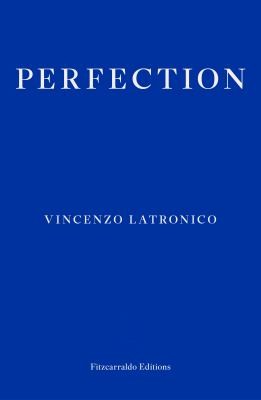
Perfection
Perfection is a short, cool-toned novel about Anna and Tom, a couple from southern Europe who move to Berlin in the 2010s and work as freelance designers. They build an enviable life of good taste, travel and online visibility, then slowly find that the life they curated no longer feels like their own. Vincenzo Latronico, writing in Italian and translated by Sophie Hughes, treats the couple as a case study in millennial aspiration, digital work and the gap between how a life looks and how it feels. It is a quick read but a pointed one, and it works well as translated fiction for readers who like their literary fiction brief, ironic and socially observant. It was shortlisted for the 2025 International Booker Prize.
Where to buy or borrow
Are you selling this book? Bookstores, publishers, authors and libraries can be listed here for free. Request a listing
About this book
The book is widely read as a tribute to Georges Perec's 1965 novel Things, which also follows a young couple whose desires are shaped by consumer culture. Latronico updates that template for the age of freelance creative work, remote labour and social media. Instead of building suspense or intimate character study, he keeps a steady narrative distance, so the couple function as both individuals and a representative generation. Its sociological bent, brevity and Berlin-to-Lisbon setting set it apart from conventional relationship fiction. For readers exploring translated fiction, it is an accessible entry point.
Deep Overview
The book's main movement is erosion rather than plot. Work that once felt flexible turns repetitive. Friends drift away, often back to their home countries or into family life, which exposes how provisional the community around the couple really was. Their sense that they ought to be doing something meaningful leads to an attempt at political engagement, but their principles turn out to be mostly lifestyle preferences, and the effort goes nowhere. Anna and Tom are never villains and rarely fools. The novel's irony comes from the fact that they have done what their milieu told them a good life consists of, and the formula has not delivered what it implied.
Latronico's method matters as much as his subject. The narration observes the pair from a slight remove, summarising years at a time and letting small domestic details carry emotional weight, such as the way a showpiece apartment is shadowed by dust, wear and routine. This distance has a double effect. It is satirical, since the reader sees patterns the characters cannot, but it is also sympathetic, since the same patterns are plainly common to a whole cohort. Perfection becomes less a story about two people than a portrait of a social type shaped by the internet, cheap travel, the gig economy and the cultural capital of cities like Berlin.
The story eventually moves beyond Berlin, and the shift of setting, including a later stay in Lisbon, tests whether dissatisfaction belongs to a place or to the way of living the couple carry with them. The novel resists a tidy answer. It suggests that the search for a more authentic life can itself become another curated product, and that nostalgia, restlessness and envy of others' images are built into the system.
The book is short and designed to be read quickly, but its structure rewards a slower second look. Its power lies in accumulation: lists of objects, habits and compromises that slowly add up to a diagnosis of a generation's unease. Readers who know Perec's Things will recognise the debt, while newer readers can take the book as a standalone, contemporary social novel about aspiration and its limits.
Key Themes
The gap between image and experience: the couple's online presentation of an ideal life contrasts with fatigue, routine and doubt.
Consumer politics: Anna and Tom's ethics are largely expressed through purchases and small lifestyle rules, which the book treats as an inadequate substitute for collective action.
Precarious creative work: freelance, screen-based labour offers freedom and mobility but also repetition, insecurity and diminishing meaning.
Generational drift: friendships and communities proved more temporary than they seemed, as peers change their lives, move away or take on family responsibilities.
Migration without displacement: the couple are expatriates by choice and privilege, and the novel explores how a cosmopolitan life can become strangely insulated.
The pursuit of authenticity: the desire to find something more real is shown to be shaped by the same market forces that produced the dissatisfaction.
Historical Context
Literarily, the book stands in a tradition of novels that analyse consumer society through a couple's possessions and aspirations. Its closest ancestor is Georges Perec's Things: A Story of the Sixties (1965), which depicted young Parisians shaped by advertising and affluence. Latronico transposes that critique to a world in which the advertisements are partly their own photographs.
The novel appeared in Italian in 2022 and in English in 2025, after the pandemic had changed attitudes to remote work, housing and travel. Latronico's own background as a Rome-born, Milan-based critic and translator, and as the author of a memoir about Berlin, informs the setting, though the book is a novel and not an autobiography.
Intended Audience
It is also a good fit for people who are interested in translated fiction but want a brief, contemporary starting point, and for reading groups that like a text they can finish in one or two sittings and then argue about.
It may be less satisfying for readers who want a plot-driven story, extended dialogue, or deep emotional access to the characters. Those who find detached, observational narration cold may also struggle.
Reading Difficulty
No specialist knowledge is needed. Familiarity with contemporary cultural references, such as design trends, online platforms and freelancing, helps in catching the satire. The UK paperback is a compact edition. Page counts vary across retailers, so readers should not rely on a specific number when planning their time.
Helpful Background Knowledge
Readers curious about the literary lineage may wish to skim a summary of Georges Perec's Things, since Latronico is in conversation with it. It also helps to know that the book is a translation. Sophie Hughes rendered it from Italian, and the original title, Le perfezioni, is plural, which hints at the book's interest in many small versions of the ideal rather than a single one.
Why Read This Book?
It is also a revealing example of how a mid-twentieth-century French experiment can be reworked for the present. Reading it alongside Perec, or simply as a novel of its moment, shows how the question of what we want, and whether we want it freely, remains open. Its recognition on the International Booker Prize 2025 shortlist signals strong critical interest, and Hughes's translation is a significant part of that story.
Reader Takeaways
It also invites attention to how narration shapes sympathy: the same flat, descriptive voice can be read as mockery or as tenderness. Readers may find themselves reflecting on their own routines, spaces and digital habits, and on what would count as a good life if it could not be shown to anyone.
Strengths
Limitations and Cautions
Important Concepts, People, and Places
Vincenzo Latronico: the Italian author, born in Rome in 1984, also an art critic and translator, whose earlier novels include Ginnastica e rivoluzione and La cospirazione delle colombe.
Sophie Hughes: the translator of the English edition, whose work on the novel was recognised through the 2025 International Booker Prize shortlist.
Georges Perec and Things: the French writer and his 1965 novel, which the book is widely seen as paying tribute to and updating.
Berlin: the city where the couple settle, and which the book treats as a symbol of 2010s creative and cosmopolitan promise.
Lisbon: a later setting, relevant to the question of whether a change of place resolves dissatisfaction.
Digital nomadism and the creative gig economy: the working conditions that define the couple's mobility, income and insecurity.
The International Booker Prize: the award for fiction translated into English, for which the book was shortlisted in 2025.
Fitzcarraldo Editions and Bompiani: the UK and Italian publishers of the English and original editions.
Questions the Book Explores
Reading Group Guide
Group members might compare how closely they recognise themselves or people they know in Anna and Tom, and whether that recognition feels flattering, uncomfortable or both. If anyone has read Perec's Things, they could briefly compare the two. It may also be worthwhile to talk about the experience of reading in translation and what the group notices about tone and register. Bring along any views on the ending, since it tends to divide readers.
Discussion Questions
2. Which details of the couple's home and routines struck you as most revealing, and why?
3. The novel suggests that the couple's political efforts are limited by their way of life. Do you agree with that assessment?
4. What role do their friends play, and what does the group's gradual dispersal say about the kind of community they had?
5. Does moving away from Berlin offer any real change? What does the book imply about place and dissatisfaction?
6. How does the novel treat the relationship between online image and daily life, without relying on much explicit talk of technology?
7. To what extent is the couple's situation a generational one, and to what extent a matter of class and privilege?
8. What do you gain or lose by reading the novel as a response to Perec's Things?
9. Is the title ironic, sincere, or something else? What might the plural of the original Italian title add?
10. How satisfying did you find the ending, and what would a more conclusive ending have changed?
Sources and Verification
Comments
No published comments yet.
Available editions
Paperback
First English-language edition (UK), translated from the Italian by Sophie Hughes
- Publisher
- Fitzcarraldo Editions
- ISBN-13
- 9781804271049
- Publication date