
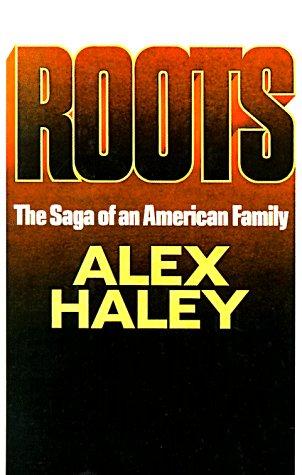
Roots: The Saga of an American Family
Alex Haley's Roots follows one family across roughly seven generations. It begins with Kunta Kinte, a young Mandinka man from the Gambian village of Juffure who is seized in 1767 and shipped to the Americas. It then follows his descendants through slavery, the Civil War and Reconstruction, to Haley's own family in twentieth-century Tennessee. Haley blended documented history, family oral tradition and invented scenes, a method he called "faction". Published in 1976, the book became a publishing phenomenon and the basis of a landmark 1977 television miniseries. It won special citations from the Pulitzer Prize board and the National Book Awards. It also changed how many Americans thought about slavery, African heritage and family history. Its research and its borrowings from other writers have been seriously disputed, so it is best read as both a cultural event and a contested work of historical fiction.
Where to buy or borrow
Are you selling this book? Bookstores, publishers, authors and libraries can be listed here for free. Request a listing
About this book
Deep Overview
The second movement is the capture and the Middle Passage. Kunta is taken, held in chains aboard a slave ship, and sold in the colonies. Haley's sustained, physical rendering of the voyage is among the most discussed parts of the book. It also marks the point where invention is heaviest, because no first-person record of such a voyage exists for this particular person.
The third movement follows Kunta's life in Virginia, where he resists his enslavement and pays for it. His descendants then carry the story forward. His daughter Kizzy is sold away from her parents and taken to a new owner in North Carolina. Her son, known as Chicken George, becomes a cockfighter and gains a measure of independence. Later generations include a blacksmith and craftsman, and the family finally settles in Henning, Tennessee. Through these figures Haley shows the particular pressures slavery put on families: sale, separation, sexual exploitation, and the effort to keep memory and identity alive through stories passed from elders to children.
The device that holds the whole structure together is oral tradition. Each generation hands on fragments of the African ancestor's name, words and history, and those fragments are what eventually lead the narrator back to Africa. The final chapters shift from fiction to personal account. In them Haley describes how a grandmother's stories led him to archives, to linguists and to a griot in the Gambia, and he presents this as confirmation of the family tradition.
It is this claim of confirmation that has drawn the most debate. Critics, including genealogists and historians, have argued that Haley's documentary chain does not hold up at several points. Haley also settled a copyright suit brought by the novelist Harold Courlander, who said that passages of Roots came from his novel The African. Defenders point out that the book never claimed to be a sourced scholarly history, and that its main achievement was emotional and cultural. It gave millions of readers a human, family-scale way into the history of slavery, and it encouraged many Americans to ask about their own ancestry. A reader gets the most from Roots by holding both facts at once: a powerful, widely influential story, and a research record that scholars have questioned.
Key Themes
Family as a form of historical knowledge is the book's organizing idea. Haley writes national history through one lineage instead of through institutions, politics or statistics.
Identity under dispossession is a second major theme. Enslaved characters have names changed, languages suppressed and families broken, and the book asks what survives of a person after that and how.
Resistance takes many forms, from escape attempts to quiet preservation of tradition, craft skill, literacy and kinship.
The book also explores the relation between fact and imagination. Haley's blend of documented material and invented scenes raises questions about what historical storytelling can legitimately claim, and the later controversies keep that question open.
Historical Context
The story's historical frame is the transatlantic slave trade of the eighteenth century and the slave system of the American South, followed by emancipation and the decades after the Civil War. Most earlier general-audience fiction about slavery had been written from outside the experience, and the book's national reach marked a change in that landscape.
In January 1977 ABC broadcast a miniseries adaptation over consecutive nights, which brought the story to a very large television audience. The same year the Pulitzer Prize board gave Roots a special citation, and the National Book Awards gave it a special citation for history. The book's reputation was then complicated by the Courlander lawsuit, which was settled out of court in 1978, and by challenges to Haley's genealogical research from scholars, among them the genealogists Gary B. Mills and Elizabeth Shown Mills.
Intended Audience
It will also interest readers who know the television adaptation and want the longer source text.
It may be less suitable for readers who want a rigorously documented history or a strictly accurate genealogy. Those readers should use the book alongside the scholarship that has examined its claims. The depictions of violence, sexual exploitation and the Middle Passage are frank and can be distressing.
Reading Difficulty
Dialect and period speech appear in the American sections, and Mandinka names and terms appear in the African ones. Some scenes are brutal and may need pacing. The book can be read straight through, but its three-part feel (Africa, passage, America) also makes it easy to read in stages.
Helpful Background Knowledge
It is also worth knowing before you start that the book is a blend of research and imagination, and that its factual claims have been disputed. Reading a short account of the Courlander case and the genealogical criticism will let you take the book's strongest scenes as storytelling and keep the question of evidence in view. If you have seen the miniseries, expect differences in emphasis and detail.
Why Read This Book?
It rewards reading for its distinctive structure, which uses one family line to cover an unusually long stretch of history, and for the way its ending turns the narrative into a search for its own sources. It is also a useful case study. Because the book is both admired and criticized, it invites readers to think about how popular narratives become accepted as history, and about what is gained and lost when an author merges evidence and invention.
Reader Takeaways
They may notice how often the book presents separation of families as a central injury of slavery, and how the characters respond.
They may also reconsider how they judge historical storytelling. The book is a prompt to ask which parts of a narrative are documented, which are reconstructed, and which are invented, and why that distinction matters.
Finally, readers may be prompted to find out what is known about their own family history, and how oral and documentary sources differ in what they can establish.
Strengths
It is strongly paced and readable, and its main characters are vivid enough to carry readers through a very long story.
It gives sustained attention to African life before enslavement, which many earlier popular treatments omitted.
Its closing section is unusual and engaging, because it lets readers see the author searching for the story and describes how a family's spoken memory prompted a major research project.
Its cultural impact is also part of its value. It remains an important document of 1970s American attitudes to history and race, and it helped create a wider public interest in genealogy.
Limitations and Cautions
Haley settled a plagiarism lawsuit brought by Harold Courlander over passages from The African, and another novelist, Margaret Walker, brought a suit over Jubilee that was dismissed. Readers should know these cases exist and judge for themselves how much they affect their view of the book.
The dialogue and many scenes are reconstructed, so they should not be read as testimony. The book also reflects the tastes and conventions of the 1970s, which show in some characterizations and in its approach to sexuality and violence. Finally, its long family chronicle form means that later generations receive less depth than the opening sections.
Important Concepts, People, and Places
Kizzy: Kunta's daughter, whose sale away from her family marks the story's turn into later generations.
Chicken George: Kizzy's son, whose life as a cockfighter and later efforts to secure his family's freedom make him one of the best-known figures after Kunta.
Alex Haley: the author, and also the final descendant in the line. He appears in the closing chapters as a researcher and narrator.
Juffure and the Gambia: the village and country in West Africa where the story starts and where Haley said he found confirmation of the family tradition.
The Lord Ligonier: the ship that, according to Haley's research, carried Kunta to the Americas.
Griot: a West African oral historian. A griot in the Gambia, Kebba Kanji Fofana, is the person Haley says confirmed the story of Kunta's capture. Later critics have questioned how this encounter should be understood.
Harold Courlander and The African: the novelist and his 1967 novel, whose passages were found to have been used in Roots, leading to the 1978 settlement.
Faction: Haley's own term for the blend of fact and fiction in the book.
Henning, Tennessee: the town associated with the family's later generations and with Haley's own roots.
The 1977 ABC miniseries: the television adaptation that vastly enlarged the book's audience.
Questions the Book Explores
Can a family's story serve as a way of telling a nation's history?
How do people under slavery maintain dignity, community and hope, and what do their different forms of resistance look like?
What is the value of oral tradition compared with written records, and how can the two be reconciled?
How much invention can a narrative contain before it stops being history?
What does the search for ancestors tell us about the present?
Reading Group Guide
It is helpful to agree beforehand how the group will treat the book's disputed status. One approach is to discuss it first as a story and then, in a second session, to look at the questions about its research and sources. If members have seen the miniseries, comparing it with the book can be productive.
Given the difficult subject matter, groups should allow time for responses to the violent and distressing scenes. The book discussion questions below are intended as starting points and can be taken in any order.
Discussion Questions
2. Which character's experience affected you most, and what does the author do to make that character memorable?
3. How does the book portray the passing of stories, names and customs between generations? What do those things accomplish for the family?
4. The book blends documented history with invented scenes. Where did you find that blend most effective, and where did it raise doubts?
5. How should a reader weigh the book's cultural importance against the criticisms of its research and its borrowing from other writers?
6. Why do you think the book and its television adaptation reached so large an audience in the 1970s? Would it do so today?
7. How does the closing section, in which Haley describes his own search, alter your sense of the preceding narrative?
8. What does this book suggest about the relationship between family history and national history?
Sources and Verification
Comments
No published comments yet.
Available editions
Hardcover
First edition
- Publisher
- Doubleday
- ISBN-13
- 9780385037877