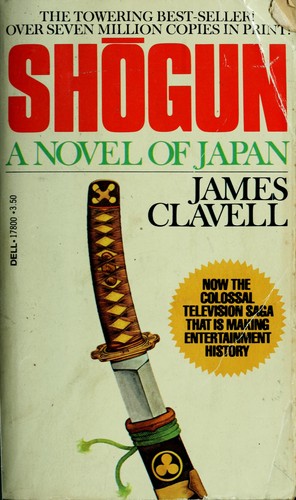
Deep Overview
The novel works on two levels. On the surface it is the story of Blackthorne, a pilot who arrives as an outcast and a prisoner. He is educated, almost against his will, in the manners, language and moral logic of a society that regards him as a barbarian. Underneath is a second story about Toranaga, the powerful lord at the head of the Council of Regents. Toranaga is boxed in by rivals led by Ishido. Much of the book shows him moving people around like pieces on a board, with promises he does not mean, retreats that are really traps, and sacrifices that are really investments.
Blackthorne is useful to Toranaga for several reasons. He has knowledge of ships and guns. He is also an enemy of the Portuguese traders and Jesuit missionaries who have a hold on Japanese trade and on some Japanese lords. Clavell uses that rivalry to show Catholic Portugal, Protestant England and the Japanese warlords all competing at the same time for influence, with religion and commerce hard to separate. Blackthorne's growing closeness to Mariko, the Christian noblewoman assigned to interpret for him, gives the book its emotional centre. Through her he sees how duty, obligation and a code of honour can pull on a person harder than personal desire.
The structure helps the book move despite its length. The story follows 1600 in chronological order, with flashbacks that fill in earlier events. Each of its six divisions closes on a turn in Blackthorne's education or in Toranaga's plan. Recurring images, especially falconry and chess, suggest that nobody in this world is acting independently. A person may be a hunter, a bird or a piece, and the roles can swap quickly.
Because Blackthorne starts out ignorant, readers learn about Japan alongside him, and this is a main reason the book was so widely read. It also shapes how Japan is presented, as a place that looks strange at first and then gradually more rational and in some ways more attractive than Blackthorne's own world. Whether that picture is fair is one of the main questions critics have raised. The novel works best when read as a dramatised, partly invented version of real events, built around a European viewpoint character, and not as a record of how things were.
Key Themes
Power and strategy are the central concern. The book keeps asking what it takes to win a political contest, and it answers with patience, concealment and a willingness to lose small things for large ones.
Cultural encounter and misunderstanding run through almost every scene. Blackthorne's assumptions about cleanliness, loyalty, death, sexuality and religion are tested repeatedly, and the book shows the Japanese characters misreading him in turn.
Duty and personal desire are set against each other, especially through Mariko, whose obligations conflict with her feelings.
Religion and trade are shown as tangled together. Catholic missionaries, Protestant interlopers and Japanese rulers all use faith and commerce to pursue their own ends.
Deception and appearance matter throughout. Characters often say one thing, mean another and act on a third, so that readers must keep asking who is really in control.
Transformation is the personal thread. Blackthorne changes under pressure, and the novel asks how far a person can adopt another culture's values without losing himself.
Historical Context
The story is set in 1600, near the end of a century of civil war in Japan. The real turning point was the Battle of Sekigahara, which Adam Clulow, writing in Time, describes as the event that finally ended more than a hundred years of near-constant warfare. Out of that conflict came the Tokugawa shogunate, which went on to govern Japan for over two centuries.
The novel's characters stand in for real people. According to Smithsonian Magazine, Blackthorne is modelled on William Adams, the English navigator who became a trusted adviser to Tokugawa Ieyasu and who is known mainly from a handful of letters he sent to England. Toranaga stands in for Ieyasu. The Christian noblewoman Mariko is loosely based on Hosokawa Gracia, though the romance between Blackthorne and Mariko is generally regarded as invented. The rival Ishido corresponds, with large changes, to Ishida Mitsunari.
The European background matters too. Portuguese traders and Jesuit missionaries held a privileged position in Japanese trade at the time, and Protestant Dutch and English newcomers were challenging that position. Clavell's novel, published in 1975, also reflects its own era: Western readers in the 1970s were increasingly curious about Japan, and Clavell himself had spent time as a prisoner of war of the Japanese earlier in his life, an experience that informed his interest in the subject.
Intended Audience
The book suits readers who like long, immersive novels and are happy to follow a political plot over many hundreds of pages. Fans of the 1980 miniseries or the 2024 adaptation will find a different texture in the text, with more interior thought, more manoeuvring behind the scenes and more commentary by the narrator. Readers who like sweeping historical sagas, military and political intrigue, or stories about someone adapting to a strange new society will find a lot to engage with.
It is less well suited to readers who want a short, fast read or a scrupulously accurate account of Sengoku-period Japan. People who are uncomfortable with a European protagonist acting as the lens for another culture may find the framing frustrating. The book contains violence, executions and sexual content, so it is not appropriate for younger readers.
Reading Difficulty
The prose is direct and the plot is easy to follow in the moment, so the main challenge is size rather than style. Reports of the original text put it at more than 1,200 pages and around 400,000 words, and this mass-market paperback has small type and a tight binding that will suit some readers more than others. A large cast of Japanese, Portuguese and English characters, with unfamiliar names and titles, can be confusing at first, particularly in the opening chapters. Clavell usually explains terms in context, and readers are expected to pick up vocabulary as Blackthorne does. Pacing is uneven: stretches of cultural education and court politics alternate with sudden action. No specialist knowledge is required.
Helpful Background Knowledge
None is required, but a little preparation makes the opening easier. A short outline of the Sengoku period, the unification of Japan under Oda Nobunaga, Toyotomi Hideyoshi and Tokugawa Ieyasu, and the role of a shogun will help. It also helps to know that Portuguese Catholic missionaries and traders were active in Japan before the Dutch and English arrived, and that Protestant and Catholic Europe were hostile to each other at the time. Reading the real William Adams's story afterwards, or an article that sorts out the fictional characters from their historical models, is a good way to see what Clavell changed. Readers should treat the novel's customs and language as dramatised, not as dependable guides.
Why Read This Book?
Shōgun is one of the most influential popular novels about Japan in English, and reading it explains a good deal about how generations of Western readers first imagined samurai-era Japan. It is also a rare example of a novel that makes a political manoeuvre suspenseful, because the reader gradually learns that Toranaga's apparent weaknesses are part of his strategy. For those who know the television versions, the book offers a fuller sense of the plotting and of the narrator's commentary. The novel is also an interesting case for anyone who wants to think about the difference between an engrossing story and an accurate one, and about how popular fiction shapes ideas of another culture.
Reader Takeaways
A careful reader may come away with a clearer sense of how late-sixteenth and early-seventeenth-century Japan was organised politically, and how personal loyalties could determine the course of national events. They may notice how Clavell structures suspense around concealment, so that information is the main source of power. They can also reconsider the book's own limits: how a Western viewpoint character shapes what is shown, how some customs are exaggerated for contrast, and why renamed historical figures matter. Reading it alongside historical writing about the period is a good exercise in separating invention from record.
Strengths
The novel is ambitious in scale and well organised, and its chronological structure with six divisions keeps a large plot manageable. Toranaga is a memorable study in strategic thinking, and the contest between him and Ishido gives the book a strong spine. The use of an outsider as protagonist is an effective way to introduce an unfamiliar world without lengthy lecturing. The relationship between Blackthorne and Mariko gives the political plot emotional stakes. Its popularity and the several adaptations it has inspired also make it useful for readers interested in how a story travels across media.
Limitations and Cautions
Historians and critics have noted that the book idealises, simplifies and sometimes distorts Japanese values, in part to contrast them with European ones. A History Today essay by a historian makes this point and observes that practices belonging to one segment of society are often presented as universal. A critique at Unseen Japan goes further, calling the novel exoticising and inaccurate, a view not everyone shares. Some commentators also object that the story centres on a European who becomes a samurai. The romance and many of the political details are inventions. Because the characters have different names from their historical models, readers should not assume that events happened as shown. The book is also long, and some readers may find parts repetitive.
Important Concepts, People, and Places
John Blackthorne is the English pilot at the centre of the novel, modelled loosely on William Adams, the first Englishman in Japan and an adviser to Tokugawa Ieyasu.
Lord Toranaga Yoshi is the dominant Japanese figure, president of the Council of Regents and a fictional counterpart to Tokugawa Ieyasu, who became the first Tokugawa shogun.
Lady Mariko is Blackthorne's teacher and interpreter, a Christian noblewoman partly inspired by Hosokawa Gracia.
Ishido is Toranaga's chief rival and the principal obstacle to his ambitions, based loosely on Ishida Mitsunari.
Vasco Rodrigues is a Portuguese pilot, and Father Alvito is a Jesuit priest; both represent the Catholic powers whose position in Japan Blackthorne threatens.
The Council of Regents is the body of powerful lords whose uneasy balance drives the political plot.
Osaka Castle is the stronghold where much of the central political tension plays out.
Sekigahara is the real 1600 battle that decided who would rule Japan, and it forms the historical horizon of the story.
The shogunate is the military government that Toranaga aims to lead.
The Asian Saga is Clavell's series of novels on Western involvement with Asia, of which this book is the one most closely tied to the earliest period.
Questions the Book Explores
How does a person who is powerless gain influence in a society whose rules he does not know? What is the relationship between honour and survival when the two seem to conflict? Can a political leader be trusted if his strategy depends on deceiving allies as well as enemies? How do trade, faith and imperial ambition interact when different nations compete for position? How far can someone cross into another culture, and what is lost or gained? And, more broadly, how does fiction shape our impressions of a foreign place when it is told through an outsider's eyes?
Reading Group Guide
Because of its length, groups may want to divide the reading by the book's six sections and meet more than once. Consider asking members to say early on what they already know about the period, either from the television versions or from other reading, so that the discussion can separate the novel from its adaptations. A short session comparing the real William Adams and Tokugawa Ieyasu with Blackthorne and Toranaga can help make the line between history and invention visible. The ending contains major developments, so groups should agree how much to reveal before everyone has finished. Members who want context can bring a historian's review of the book's accuracy and discuss whether it changes their enjoyment.
Discussion Questions
1. How does Clavell use Blackthorne's ignorance to shape what readers learn about Japan, and what is lost by seeing it through his eyes?
2. Toranaga rarely states his real goals. How does the narrative keep readers guessing, and did you trust your own reading of him?
3. In what ways are Blackthorne and Mariko each caught between two worlds?
4. How do the rivalries between Catholic and Protestant Europeans affect the political events in the book?
5. The novel renames its real-life models. Does that change how you judge its accuracy?
6. Which cultural contrasts in the book feel illuminating, and which feel exaggerated?
7. Falconry and chess recur as images. What do they suggest about power and free will?
8. How does knowing the television adaptations affect your experience of the characters and their choices?
9. Does the novel treat its Japanese characters as fully independent people, or mainly in relation to Blackthorne?
Sources and Verification
The book's identity, publisher and ISBN were checked against retailer and bookseller listings, a library-style catalogue and Google Books, and the author's work was confirmed through reference works such as Britannica and an author entry. Descriptions of the plot, structure and historical background draw on an encyclopedia study guide, a research overview, a Smithsonian Magazine article, a Time piece by a historian, a History Today essay and a critical blog, all written up in original language. Sources disagree on when this Dell printing appeared (1980 or 1986) and on its page count, so this profile does not state either. Some details of the book's real-life models are simplified here and should be checked against specialist history if they matter to you.