
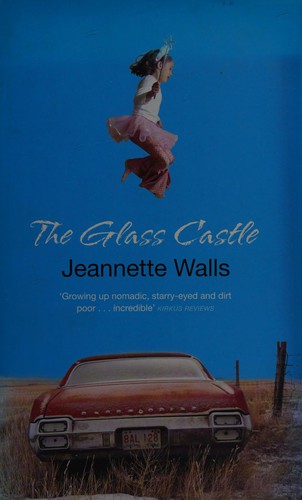
The Glass Castle
A Memoir
In The Glass Castle, Jeannette Walls recounts a childhood shaped by poverty, frequent moves, parental neglect, and fierce family loyalty. Her father, Rex, is intelligent, charismatic, and full of magnificent plans, but his alcoholism repeatedly turns promise into instability. Her mother, Rose Mary, prizes artistic freedom and self-reliance while resisting the ordinary responsibilities of parenthood. Their children consequently learn to find food, manage danger, protect one another, and imagine lives beyond the family’s worsening circumstances. The memoir moves from the American Southwest to Welch, West Virginia, and eventually to New York City, where Jeannette builds an independent adult life. Rather than offering a simple story of villainous parents and heroic escape, Walls examines how love can coexist with anger, shame, admiration, and betrayal. The result is both a family narrative and an inquiry into resilience, memory, poverty, and the difficult work of defining home.
Where to buy or borrow
Are you selling this book? Bookstores, publishers, authors and libraries can be listed here for free. Request a listing
About this book
Deep Overview
Walls answers by returning to childhood. The early desert chapters depict a family in motion, often leaving towns suddenly when bills, jobs, or authorities catch up with them. Rex Walls turns instability into adventure through stories, scientific lessons, and promises. His grandest project is the Glass Castle, a solar-powered dream house for which he draws plans but never creates a viable foundation. The proposed building becomes a measure of the difference between inspiring possibility and responsible action. Rose Mary Walls similarly encourages curiosity and independence, but her commitment to art and personal freedom repeatedly takes precedence over her children’s basic needs.
The children—Lori, Jeannette, Brian, and Maureen—adapt by becoming practical before they are ready. They locate food, deal with injuries, endure unsafe housing, and form a sibling alliance that compensates for unreliable adults. Their competence is admirable, but the memoir does not romanticize why that competence is necessary. The family’s move to Welch, West Virginia, changes the narrative atmosphere. Life becomes more settled geographically but more constricted materially and socially. In Rex’s hometown, the children encounter the extended Walls family, severe deprivation, an unsafe home, school hostility, and the decline of their father’s promises under the pressure of alcoholism and despair.
As the older children begin planning their departures, escape becomes collective rather than purely individual. Lori goes first to New York, and Jeannette follows, pursuing education and journalism while learning to navigate a world governed by assumptions very different from those of her childhood. Independence, however, does not end the family story. Rex and Rose Mary eventually come to New York and live without stable housing, forcing their children to confront the limits of rescue. Material help cannot create change when the recipients reject the terms attached to it.
Walls’s larger achievement is to hold incompatible truths together. Rex can be intellectually exciting and dangerously destructive; Rose Mary can nurture imagination and fail at care; the children can love their parents and still need distance from them. The memoir therefore treats resilience not as uncomplicated triumph but as adaptation carrying emotional costs. Jeannette’s adult task is not merely to leave poverty. It is to speak about where she came from without allowing secrecy, shame, or nostalgia to falsify it.
Key Themes
**Freedom and responsibility:** Rex and Rose Mary celebrate independence, nonconformity, and resistance to authority. The memoir repeatedly asks when those values become excuses for abandoning obligations to children.
**Promises versus foundations:** The Glass Castle represents imagination, hope, and paternal intimacy, but also postponement. Rex can design a magnificent future more readily than he can provide a safe present.
**Childhood self-reliance:** The siblings’ ingenuity helps them survive, yet their competence exposes the absence of dependable caregiving. Resourcefulness is both strength and evidence of harm.
**Poverty, choice, and constraint:** The family sometimes lacks money because of economic hardship and sometimes because the parents reject conventional work, housing, or priorities. The book complicates easy distinctions between voluntary simplicity and deprivation imposed on children.
**Shame and disclosure:** Adult Jeannette’s discomfort about her origins shows how class mobility can divide a person from her own history. Writing the memoir becomes an act of integration rather than simple confession.
**Home and belonging:** The family moves repeatedly, and even permanent houses fail to provide security. Home emerges less as property than as a contested mixture of relationship, memory, danger, and loyalty.
Historical and Social Context
The work also belongs to a modern tradition of literary memoirs that examine childhood adversity through carefully reconstructed scenes. Its publication contributed to sustained public discussion about dysfunctional families, addiction, class mobility, and the ethical complexity of writing about living relatives. Although the narrative contains significant social material, it remains an individual remembrance rather than a comprehensive history of Appalachian poverty, alcoholism, child welfare, or homelessness. Readers should therefore treat the Walls family’s experience as particular, not representative of every poor, unconventional, or unhoused family.
Intended Audience
It may be less suitable for anyone seeking a clinical account of alcoholism, a policy analysis of poverty, or a practical recovery guide. The book includes child neglect, hunger, unsafe living conditions, parental substance misuse, sexual danger, domestic conflict, injury, and homelessness. Some readers may find these subjects distressing despite the narrator’s restrained tone.
Reading Difficulty
The principal difficulty is emotional and interpretive rather than linguistic. Readers must evaluate events described through remembered childhood perspectives while noticing the adult narrator’s control over selection and emphasis. The calm delivery can also intensify disturbing incidents because Walls often avoids telling the reader exactly how to judge them. Edition length varies: the original U.S. hardcover is cataloged at 288 pages, while several later Scribner editions are 304 pages.
Helpful Background Knowledge
Basic awareness of the social and economic decline affecting many Appalachian coal communities can add context to the Welch chapters. Familiarity with memoir as a form is also useful. Memoir presents an author’s shaped recollection of lived experience, not a transcript or an exhaustive family archive. Reading with attention to viewpoint, chronology, symbolism, and omissions will produce a richer discussion than treating the book only as a collection of shocking incidents.
Why Read This Book
The memoir is also valuable for discussions of class concealment. Jeannette’s journey into education and journalism does not simply replace one identity with another; it creates conflict between public success and private history. Readers interested in narrative craft can study how Walls creates momentum through compact scenes, lets contradictions accumulate without heavy explanation, and uses an adult frame to transform a childhood survival story into an inquiry about truth and belonging.
Reader Takeaways
Readers may reconsider common assumptions about why people remain attached to harmful relatives, why receiving help is not the same as accepting change, and why social mobility can generate guilt as well as opportunity. The book demonstrates that setting boundaries does not require emotional simplicity. It also shows how narrating a painful history can become a way of acknowledging both injury and inheritance without surrendering judgment to either bitterness or nostalgia.
Strengths
The recurring Glass Castle motif gives the memoir structural coherence without overwhelming its realism. The shift from mobile desert life to the prolonged Welch years also creates a meaningful change in pressure and atmosphere. Finally, the sibling relationships keep the book from becoming only a confrontation between daughter and parents: they reveal survival as collaborative and show that children exposed to the same household may respond differently.
Limitations and Cautions
Its focus on personal experience limits its usefulness as an explanation of structural poverty, addiction treatment, child-protection systems, or homelessness. The family’s unusual combination of parental ideology, artistic aspiration, addiction, and refusal of stability should not be generalized to poor or unhoused people broadly. Some readers may also feel that the restrained narration leaves too little explicit analysis of trauma or parental accountability; others may regard that same restraint as central to the book’s power. The memoir’s ultimate arc toward professional stability can invite a triumph-over-adversity reading, but that interpretation risks overlooking the siblings’ unequal outcomes and the unresolved emotional costs of survival.
Important Concepts, People, and Places
**Rex Walls:** Jeannette’s father, whose intelligence, storytelling, technical curiosity, alcoholism, and broken promises drive much of the book’s emotional conflict. His proposed Glass Castle embodies both genuine imaginative connection and chronic evasion.
**Rose Mary Walls:** Jeannette’s mother, an artist and teacher who values freedom, creativity, and self-sufficiency. Her refusal of conventional domestic responsibility forces readers to examine the boundary between individual autonomy and parental obligation.
**Lori Walls:** The eldest Walls child and an important organizer of the siblings’ path out. Her departure helps turn New York from a fantasy into a practical destination.
**Brian Walls:** Jeannette’s brother and frequent childhood ally. His practical courage and later independence illustrate the protective function of the sibling bond.
**Maureen Walls:** The youngest sibling, whose different childhood position and adult struggles complicate any simple claim that adversity made all the children stronger.
**The Glass Castle:** Rex’s imagined dream house. It begins as a shared vision and gradually becomes evidence that plans without foundations can sustain hope while postponing responsibility.
**Welch, West Virginia:** Rex’s hometown and the setting for the memoir’s most sustained period of poverty. The family’s deteriorating house there makes their deprivation harder to disguise as adventure.
**New York City:** A site of education, work, reinvention, and class mobility for the children, but also the place where Jeannette must face her parents’ homelessness and her own shame.
**The “skedaddle”:** The family’s practice of leaving abruptly. The parents present it as spontaneous freedom, while its repeated use reveals flight from debts, conflict, and accountability.
**Sibling solidarity:** The children share information, resources, and escape plans. Their alliance functions as an alternative support system when parental care fails.
Questions the Book Explores
Can love remain meaningful when trust has been repeatedly broken?
What responsibilities do adult children have toward parents who rejected responsibility for them?
How do charismatic stories influence a child’s ability to recognize danger?
Does leaving a harmful environment amount to rejecting the people who remain in it?
Why can shame persist after the circumstances that produced it have changed?
What is the difference between choosing an unconventional life for oneself and imposing it on dependent children?
How should a memoirist balance honesty, compassion, privacy, and judgment when writing about family?
Reading Group Guide
Compare the desert and Welch portions of the memoir. Consider how geography, duration, community scrutiny, and access to resources alter both the family’s circumstances and the tone of the narrative. Groups can also map the practical roles assumed by Lori, Jeannette, Brian, and Maureen rather than treating the siblings as a single unit.
Pay attention to scenes in which Jeannette accepts her parents’ explanation of an event and later scenes in which she silently revises that understanding. Another productive angle is the adult frame: discuss how the opening encounter with Rose Mary prepares readers to interpret childhood memories and why the book does not end with Jeannette’s physical departure from home.
Because the memoir can provoke strong moral reactions, distinguish among explanation, excuse, empathy, forgiveness, and reconciliation. A group need not agree on whether Walls is too forgiving; it can instead examine what her refusal of simple condemnation allows the narrative to reveal.
Discussion Questions
2. At what point does the Glass Castle cease to be a hopeful project and become evidence of Rex’s unreliability?
3. Which qualities make Rex appealing to his children, and how do those same qualities help conceal or intensify harm?
4. How does Rose Mary’s commitment to art and autonomy complicate conventional ideas about motherhood?
5. In what ways do the siblings protect one another, and where are the limits of that protection?
6. How does the move to Welch change Jeannette’s understanding of her family and social position?
7. Does the memoir distinguish clearly between poverty caused by external conditions and deprivation caused by parental decisions?
8. What does Jeannette gain by concealing her background as an adult, and what does concealment cost her?
9. How does the restrained narrative voice affect your moral response to the parents?
10. What forms of help do the adult children offer their parents, and why do those efforts have limited results?
11. Does the book’s treatment of resilience challenge or reinforce the idea that adversity builds character?
12. What obligations, if any, does a memoirist have to relatives whose lives become part of a published story?
Sources and Verification
Comments
No published comments yet.
Available editions
Hardcover
hardcover
- Publisher
- Scribner
- ISBN-13
- 9780743247535