
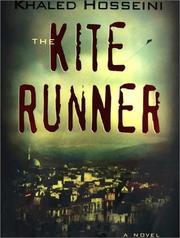
The Kite Runner
The Kite Runner is a first-person novel about Amir, a privileged boy growing up in Kabul, and Hassan, the Hazara son of a servant in Amir’s household. Their intimacy is genuine but structurally unequal: affection, dependence, ethnicity, social rank, and Amir’s desire for his father’s approval all shape what the boys can ask of one another. After Amir witnesses a brutal assault and fails to help Hassan, fear and shame lead him into a further betrayal. The narrative follows the long consequences of that failure. Political upheaval drives Amir and his father from Afghanistan to the United States, where their social positions change dramatically. Amir builds an adult life in California, but migration does not erase his memory or responsibility. A summons from the past eventually returns him to an Afghanistan transformed by war and Taliban rule, where an attempt to help Hassan’s son becomes both a rescue mission and a test of whether remorse can produce meaningful action. Although major ev…
Where to buy or borrow
Are you selling this book? Bookstores, publishers, authors and libraries can be listed here for free. Request a listing
About this book
The narrative follows the long consequences of that failure. Political upheaval drives Amir and his father from Afghanistan to the United States, where their social positions change dramatically. Amir builds an adult life in California, but migration does not erase his memory or responsibility. A summons from the past eventually returns him to an Afghanistan transformed by war and Taliban rule, where an attempt to help Hassan’s son becomes both a rescue mission and a test of whether remorse can produce meaningful action.
Although major events in modern Afghan history organize the novel’s timeline, its central method is intimate rather than documentary. National collapse is experienced through households, friendships, secrets, exile, and interrupted family lines. The story repeatedly asks how private wrongdoing becomes entangled with inherited hierarchy and public violence. Redemption is presented not as the cancellation of guilt but as a difficult willingness to accept risk, obligation, and uncertain consequences.
Deep Overview
The narrative follows the long consequences of that failure. Political upheaval drives Amir and his father from Afghanistan to the United States, where their social positions change dramatically. Amir builds an adult life in California, but migration does not erase his memory or responsibility. A summons from the past eventually returns him to an Afghanistan transformed by war and Taliban rule, where an attempt to help Hassan’s son becomes both a rescue mission and a test of whether remorse can produce meaningful action.
Although major events in modern Afghan history organize the novel’s timeline, its central method is intimate rather than documentary. National collapse is experienced through households, friendships, secrets, exile, and interrupted family lines. The story repeatedly asks how private wrongdoing becomes entangled with inherited hierarchy and public violence. Redemption is presented not as the cancellation of guilt but as a difficult willingness to accept risk, obligation, and uncertain consequences.
Key Themes
• Redemption without erasure: The novel distinguishes repairing harm from simply feeling sorry. Amir cannot undo the past, and his later actions do not restore everything that was lost.
• Friendship under inequality: Amir and Hassan love one another, but their relationship is compromised by the hierarchy between a wealthy Pashtun household and its Hazara servants.
• Fathers, sons, and approval: Amir’s longing for Baba’s admiration drives much of his childhood behavior. The novel also examines the damage caused by fathers’ secrecy and by narrow expectations of masculinity.
• Ethnic and class hierarchy: Pashtun privilege and Hazara marginalization are not merely background information; they affect who is protected, believed, educated, and permitted agency.
• Exile and divided identity: Life in the United States offers safety and reinvention while preserving ties to language, memory, custom, and an Afghanistan that exists partly through recollection.
• Storytelling and truth: Reading and writing create friendship, conceal cruelty, preserve memory, and eventually help Amir confront what he has avoided.
• Repetition across generations: Images, phrases, secrets, and forms of violence recur in altered circumstances, raising the question of whether later generations must inherit earlier wrongs.
Historical and Cultural Context
These events change the meaning of home throughout the novel. Kabul first appears through childhood routines, gardens, cinemas, storytelling, and winter kite competitions. It later becomes a place of destroyed neighborhoods, coercive rule, poverty, and displacement. The contrast is filtered through Amir’s memory and should not be mistaken for a complete social history of Afghanistan.
The Pashtun-Hazara relationship is equally important. Hazaras, many of whom are Shi’a Muslims, have endured longstanding discrimination and episodes of persecution in Afghanistan. The novel translates this history into the unequal positions of Amir and Hassan. Readers should nevertheless distinguish a dramatized family story from a comprehensive account of either community; critical discussion has questioned the novel’s limited agency for Hazara characters and the potentially reductive impressions created by its ethnic contrasts.
Intended Audience
It is frequently studied by older secondary-school and college readers, but suitability depends more on emotional readiness than on vocabulary. The novel includes child sexual assault, ethnic abuse, war violence, execution, suicide-related material, domestic conflict, and the exploitation of children. Readers seeking a broad or documentary introduction to Afghanistan should pair it with Afghan history and additional Afghan perspectives rather than treating one fictional narrator as representative of an entire country.
Reading Difficulty
The greater difficulty is emotional. Several pivotal scenes depict or discuss sexual violence against children, and the narrative repeatedly returns to the psychological aftermath. The pacing becomes more suspense-oriented during Amir’s return to Afghanistan, while earlier chapters devote more space to childhood relationships, family dynamics, and memory. Readers may also need to track how concealed biological relationships revise the meaning of earlier events.
Helpful Background Knowledge
A brief introduction to Afghanistan’s ethnic and religious diversity is also valuable, particularly the distinction between Pashtun and Hazara identities and the historical marginalization of Hazaras. Readers should understand that Afghanistan is multilingual and culturally diverse, and that the social world depicted is primarily that of particular Kabul families as remembered by a retrospective narrator.
Familiarity with first-person retrospective narration can sharpen the reading experience. Adult Amir organizes his childhood memories around guilt, so readers should ask not only what happened but also how his need to explain himself shapes the telling.
Why Read This Book?
The novel also makes large historical disruptions legible through changes in friendship, family status, migration, and memory. Its recurring images—kites, the pomegranate tree, stories, scars, and repeated phrases—give reading groups concrete ways to connect the book’s emotional plot with its larger questions about inheritance and responsibility.
It can serve as an entry point into conversations about Afghanistan and Afghan diaspora life, provided readers approach it as one novelistic perspective rather than a cultural guide. Its value increases when it prompts further reading by Afghan historians, journalists, memoirists, and novelists representing different ethnic, regional, political, and gendered experiences.
Potential Reader Takeaways
The book also demonstrates how personal relationships can reproduce social hierarchy even when the people involved feel affection for one another. Amir’s love for Hassan coexists with his willingness to exploit privileges Hassan does not share. This tension invites readers to examine the difference between private fondness and genuine equality.
Finally, the novel emphasizes that migration changes identity without creating a clean break from the past. Memory, family expectations, cultural community, and political history continue to shape Amir’s American adulthood, even as exile gives him possibilities unavailable in Kabul.
Editorial Strengths
Its motifs are memorable and structurally useful. Kite fighting begins as competition, beauty, shared skill, and a bid for paternal approval, then becomes inseparable from betrayal and later care. Repetition allows the closing movement to echo the beginning without implying that the damage has been neatly reversed.
The first-person narration also creates productive discomfort. Amir admits actions that make him difficult to admire, and the novel asks readers to remain engaged without excusing him. Clear prose, strong forward momentum, and sharply staged turning points make complex ethical questions approachable for a wide readership.
Limitations and Cautions
The representation of ethnicity deserves critical attention. Hassan is central to the novel’s moral force but receives less narrative agency than Amir, whose guilt controls the story. Commentary on Hazara representation has noted that depicting Hassan chiefly through loyalty, suffering, and sacrifice can reproduce a passive image even while exposing genuine patterns of anti-Hazara discrimination. Some readers have also criticized the concentration of Pashtun aggression in major antagonists. These concerns do not make the historical discrimination fictional; they show why literary representation and historical reality must be examined separately.
The later plot relies on revelations, symbolic coincidences, and a highly concentrated confrontation. Readers who prefer restrained realism may find these elements melodramatic. The novel’s pursuit of Amir’s redemption can also shift attention away from the inner lives of Hassan and Sohrab, whose suffering enables much of Amir’s moral development.
Important Concepts and Motifs
• Pashtun and Hazara identity: Ethnic difference intersects with religion, appearance, class, labor, and social power within the novel.
• Baba’s moral code: Baba’s public principles influence Amir, but later revelations complicate the gap between moral declarations and private behavior.
• The pomegranate tree: Initially associated with shared childhood and storytelling, it records the deterioration of Amir and Hassan’s relationship.
• Storytelling and literacy: Amir’s ability to read and write creates intimacy but also gives him power over Hassan. Authorship later becomes part of Amir’s adult identity.
• Kabul and Fremont: The two locations represent more than Afghanistan and America; they reveal changes in status, belonging, memory, and the performance of identity.
• The scar and the cleft lip: Bodily marks connect vulnerability, sacrifice, family resemblance, and the lasting visibility of violence.
• Silence and confession: Characters conceal truths to preserve relationships or reputations, but those silences transfer consequences to others.
Questions the Novel Explores
Reading Group Guide
Create a motif chart for kites, stories, trees, scars, and repeated language. Note each recurrence and ask whether it signals repetition, reversal, attempted repair, or an unresolved wound.
Before discussing ethnic representation, review a reliable independent account of Hazara history. Keep two questions separate: what historical inequality does the novel expose, and how does its narrative construction limit or shape Hazara characters?
Because the book contains child sexual assault, groups should establish expectations before meeting. Participants should be free to discuss the scene’s narrative consequences without recounting graphic details. A final session might compare Amir’s idea of redemption with the needs and agency of Sohrab.
Discussion Questions
2. How does the unequal social relationship between Amir and Hassan complicate the word “friendship”?
3. Does adult Amir narrate his younger self honestly, or does the structure of confession also help him manage how readers judge him?
4. How does Baba’s public morality compare with his private conduct? What does Amir inherit from him besides guilt?
5. What does the move to California change for Baba and Amir, and what remains unchanged?
6. How does the novel contrast nostalgia for prewar Kabul with the limitations and inequalities already present there?
7. Is Amir’s return motivated more by love, obligation, self-punishment, or a desire for absolution?
8. How much agency does Hassan possess within Amir’s account? How might the novel differ if Hassan narrated part of it?
9. What responsibilities accompany telling stories about communities marked by persecution or war?
10. Why does the novel end with a small, uncertain response rather than an unambiguous recovery?
11. Which recurring image changes meaning most significantly over the course of the story?
12. Does the ending demonstrate redemption, the beginning of restitution, or something more limited?
Sources and Verification
Historical framing was checked against UNHCR material on the Soviet invasion and Afghan refugee crisis and Minority Rights Group material concerning Hazara persecution and discrimination. The discussion of representational limits draws on an analysis published by the London School of Economics’ South Asia Centre. The thematic and reader-guidance sections are original editorial analysis, not publisher claims.
Comments
No published comments yet.
Available editions
Hardcover
First U.S. hardcover edition
- Publisher
- Riverhead Books
- ISBN-13
- 9781573222457