
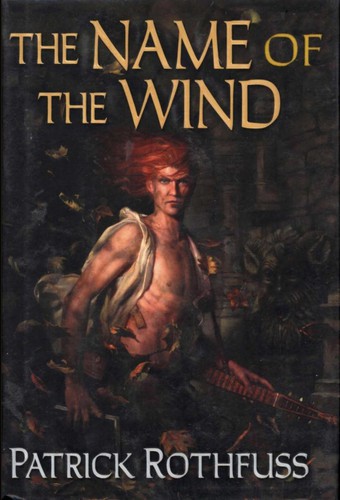
The Name of the Wind
The Kingkiller Chronicle: Day One
At a quiet inn in a troubled corner of the world, an unassuming man called Kote is revealed as Kvothe, the brilliant and notorious figure at the center of countless contradictory legends. Persuaded to tell his own story, Kvothe recounts his childhood among the Edema Ruh, his early instruction under the arcanist Abenthy, a devastating encounter with the mysterious Chandrian, and his struggle to survive in Tarbean before earning admission to the University. There he pursues knowledge, music, status, and clues about the forces that destroyed his family. The Name of the Wind combines a coming-of-age narrative with a framed confession, continually asking how much of a celebrated life is truth, performance, memory, or myth. Its distinctive appeal lies less in a conventional campaign against evil than in the making—and possible unmaking—of a legendary identity.
Where to buy or borrow
Are you selling this book? Bookstores, publishers, authors and libraries can be listed here for free. Request a listing
About this book
Deep Overview
Kvothe begins with the Edema Ruh, a traveling people whose troupe gives him a childhood shaped by theater, music, observation, and social adaptability. Their outsider status also teaches him how reputation can precede evidence: settled communities often distrust them regardless of their conduct. Abenthy, an educated arcanist who joins the troupe, recognizes Kvothe’s unusual intelligence and introduces him to sympathy, disciplined study, and the more mysterious art of naming. This education gives Kvothe intellectual direction, but it also strengthens a dangerous conviction that talent can overcome nearly any boundary.
A catastrophe connected to the Chandrian destroys the secure world of his childhood. Kvothe survives, but trauma, isolation, and poverty interrupt the heroic trajectory promised by later legend. His years in Tarbean expose him to hunger, violence, social invisibility, and the moral compromises of survival. The contrast between gifted prodigy and homeless child is crucial: the novel’s hero is not formed solely by instruction and adventure, but also by loss and deprivation.
At the University, Kvothe finds an institution capable of rewarding his abilities while magnifying his faults. Tuition, patronage, academic rank, personal rivalry, and access to restricted knowledge repeatedly determine what he can do. He studies sympathy and artificing, performs with his lute, antagonizes the wealthy Ambrose Jakis, and searches for references to the Chandrian. His intelligence produces genuine accomplishments, yet pride and impatience often turn solvable problems into lasting conflicts.
Denna complicates Kvothe’s story further. His attraction to her is bound up with uncertainty: she changes names, moves through precarious social arrangements, and remains resistant to the stable role Kvothe imagines for her. His narration gives readers intense access to his feelings without granting equivalent access to hers, making their relationship an important test of his perception.
Throughout, the frame narrative prevents the past from becoming a straightforward triumph. The older Kvothe knows how legends have exaggerated or rearranged his deeds, but his own account is also a crafted performance. He chooses beginnings, establishes suspense, and interprets his younger self. The central mystery therefore concerns more than the Chandrian or the mechanics of naming. It asks how Kvothe became famous, how fame became a story beyond his control, and why the living man appears so estranged from the legend.
Key Themes
**Names and identity:** Names can indicate social roles, hidden natures, chosen disguises, or forms of power. Kvothe’s transformation into Kote makes identity itself one of the novel’s unresolved problems.
**Knowledge and its limits:** Study can produce practical mastery, but the book distinguishes technical competence from deeper understanding. Kvothe often knows enough to act before he knows enough to judge wisely.
**Music, memory, and belonging:** Music links Kvothe to his family and the Edema Ruh, allows him to earn recognition, and expresses experiences that his clever explanations cannot contain.
**Poverty and social power:** Talent does not free Kvothe from tuition, debt, hunger, patronage, or class hierarchy. Material insecurity shapes many of his choices.
**Pride and self-authorship:** Kvothe actively creates the impression he makes on others. The skill that helps him survive also feeds recklessness and contributes to the legend surrounding him.
Literary and Genre Context
The University draws on recognizable features of premodern and early modern scholarly institutions—masters, admissions examinations, fees, ranks, archives, medicine, and practical workshops—without reproducing one historical university. The Edema Ruh evoke the position of itinerant performers who depend on patronage while facing settled prejudice. These elements give the invented world a strong social structure: education, mobility, and art are shaped by money and reputation as much as by ability.
Rothfuss’s use of stories within stories also connects the book to oral traditions in which songs, folktales, religious accounts, and local variants preserve history imperfectly. Contradictory versions are not mere background decoration; they are part of the novel’s inquiry into how cultures remember.
Intended Audience
Reading Difficulty
Helpful Background Knowledge
Why Read It?
Reader Takeaways
Strengths
Limitations and Cautions
Important Concepts, People, and Places
**Chronicler:** A professional scribe who records Kvothe’s account. His presence turns private memory into a deliberate historical record.
**Bast:** Kvothe’s enigmatic student and companion at the Waystone Inn. His concern for his teacher suggests that storytelling may have consequences in the present.
**Denna:** A gifted, elusive young woman whose changing circumstances and names resist Kvothe’s desire to understand and protect her.
**Abenthy:** The arcanist who recognizes Kvothe’s promise and gives him his first systematic education in sympathy, science, and naming.
**The Edema Ruh:** Kvothe’s traveling people and artistic tradition. They shape his music, theatrical instincts, adaptability, and experience of prejudice.
**The University and the Arcanum:** The principal institution of advanced learning and magical training. It offers Kvothe opportunity while exposing the economic and political limits of merit.
**The Archives:** The University’s enormous library and the focus of Kvothe’s research into suppressed or fragmented histories.
**The Chandrian:** Feared figures associated with destructive signs and contradictory folklore. Kvothe’s search for reliable knowledge about them drives the deeper mystery.
**The Amyr:** A legendary or historical order connected to justice and hidden power. Their uncertain status illustrates the instability of recorded history.
**Sympathy:** A disciplined practice based on links, energy, concentration, and belief. It represents magic treated as teachable technique.
**Naming:** A rarer form of knowledge concerned with the deeper nature of things. The wind becomes the clearest example of a reality that cannot be mastered by ordinary study alone.
**Tarbean:** The city where Kvothe survives in extreme poverty after losing his troupe. His experiences there complicate the later image of effortless genius.
**Ambrose Jakis:** A wealthy University student whose rivalry with Kvothe reveals how pride, class privilege, and institutional influence interact.
Questions the Book Explores
Can someone tell the truth about a life while still arranging that truth into a compelling performance?
What separates technical knowledge from wisdom, and talent from maturity?
How do money, status, and institutional access determine who may pursue knowledge?
Are names labels, social roles, expressions of identity, or keys to the nature of reality?
When folklore and official records disagree, how can a seeker judge what has been forgotten, distorted, or deliberately concealed?
What happened between Kvothe’s ambitious youth and Kote’s diminished present?
Reading Group Guide
For a thematic discussion, compare sympathy and naming as two models of knowledge—one procedural and teachable, the other intuitive and difficult to command. Consider music as a parallel form of understanding. It is also productive to map the novel’s competing information systems: University archives, religious doctrine, songs, children’s rhymes, theatrical stories, eyewitness memory, and rumor. Finally, discuss Denna apart from Kvothe’s romantic expectations by focusing on what her actions imply about her own constraints and aims.
Discussion Questions
2. When does Kvothe appear most reliable, and when does his instinct for performance make his account questionable?
3. How does growing up among the Edema Ruh shape both Kvothe’s strengths and his vulnerabilities?
4. In what ways does poverty influence the person Kvothe becomes at the University?
5. Does the University reward merit, privilege, obedience, or some combination of all three?
6. What does Abenthy teach Kvothe beyond formal magic, and which lessons does Kvothe fail to absorb?
7. How do songs and folktales preserve truths that formal records do not—and how do they distort them?
8. What might Denna’s changing names communicate about autonomy, survival, or self-protection?
9. How are sympathy and naming connected to different ideas of control?
10. Which of Kvothe’s conflicts are forced upon him, and which does he intensify through pride?
11. Why might the older Kvothe have become unable or unwilling to perform the identity associated with his legend?
12. Does telling his story appear to restore Kvothe, endanger him, or do something more ambiguous?
Sources and Verification
Comments
No published comments yet.
Available editions
Hardcover
hardcover
- Publisher
- DAW Books
- ISBN-13
- 9780756404079
- Publication date