
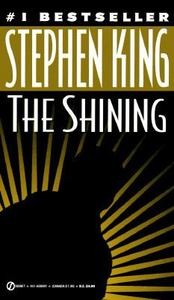
The Shining
Jack Torrance takes a winter caretaking job at the isolated Overlook Hotel, hoping the quiet will help him rebuild his career and repair his damaged family. His wife, Wendy, wants to believe in that recovery, while their young son, Danny, senses what the adults cannot: the hotel retains the psychic traces of its violent past. Danny’s extraordinary gift—the “shining”—makes him especially valuable to the forces gathering around the family. As snow seals the hotel off from the outside world, the Overlook exploits Jack’s alcoholism, resentment, and fear of failure. King combines a haunted-building story with an intimate examination of addiction, domestic abuse, inherited trauma, and a child’s divided love for a dangerous parent.
Where to buy or borrow
Are you selling this book? Bookstores, publishers, authors and libraries can be listed here for free. Request a listing
About this book
Deep Overview
That hope is compromised before the family is snowbound. Danny possesses a psychic ability that Dick Hallorann, the hotel’s cook, recognizes as “the shining.” It permits flashes of thought, distant communication, and visions of events beyond ordinary perception. Danny senses the Overlook’s malignancy but withholds much of what he knows because he fears that refusing the move will worsen his parents’ problems. His silence gives the novel one of its most painful dynamics: the child most aware of the danger is also the family member with the least authority to act.
The Overlook is not simply occupied by separate ghosts. It behaves like an intelligence assembled from decades of cruelty, indulgence, corruption, and death. Its rooms, objects, records, and festivities preserve the past as an active force. Jack becomes fascinated by a scrapbook documenting the hotel’s scandals and imagines writing its history. This apparent research project feeds his wounded ambition and gradually changes his loyalties. The hotel encourages him to see Wendy and Danny not as people he has harmed but as obstacles to the recognition he believes he deserves.
King makes Jack both accountable and vulnerable. His addiction, anger, shame, and memories of his violent father existed before the Overlook began manipulating him. The supernatural influence magnifies rather than invents those weaknesses. That design prevents a simple division between external possession and personal guilt: the hotel offers permission, justification, and symbolic substitutes for alcohol, while Jack repeatedly moves toward what it offers.
Wendy’s role becomes increasingly practical as she recognizes the scale of the threat and tries to protect Danny. Hallorann, meanwhile, provides Danny with a model of psychic ability governed by empathy rather than domination. Their resistance contrasts with the Overlook’s effort to convert intimacy into control. By bringing family trauma and supernatural horror into the same enclosed space, the novel asks whether destructive inheritance must be repeated—and what it costs to interrupt it.
Key Themes
• **Domestic violence:** Supernatural terror intensifies an existing pattern of intimidation and injury within the Torrance family rather than replacing it.
• **Inherited trauma:** Jack’s memories of his abusive father connect his behavior to a generational cycle that Danny may either inherit or escape.
• **Isolation and control:** Physical separation removes witnesses, assistance, and ordinary social restraints, giving both Jack and the Overlook greater power over Wendy and Danny.
• **The persistence of history:** The hotel’s past is not safely finished. Violence survives through records, memories, rituals, and repeated roles.
• **Perception and disbelief:** Danny’s psychic knowledge is genuine, yet his age limits his ability to communicate it or make adults respond.
• **Creativity and wounded ambition:** Jack’s desire to write is entangled with pride, grievance, and his hunger for recognition.
Historical Context
King’s official account traces the book’s conception to a late-September 1974 stay at the Stanley Hotel in Estes Park, Colorado. The nearly empty hotel was preparing to close for winter, and King’s experience of its corridors, remote mountain setting, and seasonal emptiness helped generate the premise. The resulting Overlook is fictional rather than a documentary portrait of the Stanley.
The novel predates Stanley Kubrick’s 1980 film adaptation, which has strongly shaped the story’s public image. The book gives greater attention to Jack’s attempted recovery, Danny’s interior life, the hotel’s documented history, and the family’s emotional bonds. It was King’s third published novel and helped establish the direction of his career in large-scale popular horror.
Intended Audience
It is less suitable for readers seeking light suspense, a rapidly moving monster story, or restrained depictions of family danger. The novel spends considerable time inside Jack’s rationalizations and Danny’s fear, making its emotional pressure as important as its supernatural events. Its violence toward a spouse and child can be particularly distressing.
Reading Difficulty
The hotel’s history arrives through conversations, documents, visions, and Jack’s investigation rather than in a single explanation. Readers must connect these details across the book. No specialized academic vocabulary is required. The main challenge is emotional intensity: prolonged suspense, domestic conflict, addiction, and threats against a child create a demanding reading experience.
Helpful Background Knowledge
Readers who know Kubrick’s film may benefit from treating the book as an independent work rather than expecting identical scenes or character arcs. It is also useful to understand that recovery from alcohol dependence involves more than physical abstinence; Jack has stopped drinking, but many of his grievances, habits of denial, and failures of accountability remain active.
Why Read This Book?
The novel also offers a fuller encounter with Danny, Wendy, Hallorann, and Jack than adaptations can provide. Multiple viewpoints reveal how danger looks different to a child, an endangered spouse, a recovering alcoholic, and an adult who shares Danny’s gift. It is an influential example of popular horror using suspense to examine responsibility, inherited violence, and the stories people tell to excuse their own conduct.
Reader Takeaways
Danny and Hallorann demonstrate that unusual sensitivity can be both burden and means of connection. Wendy’s choices emphasize that resistance often begins not with certainty but with recognizing that familiar explanations no longer fit the danger. More broadly, the book encourages readers to notice how supernatural fiction can make concealed emotional realities visible.
Strengths
The shifting viewpoints give Wendy and Danny interior lives rather than treating them solely as targets. Danny’s mixture of insight, limited vocabulary, loyalty, and fear is especially effective. Hallorann expands the meaning of the shining beyond horror by presenting psychic recognition as a basis for care.
The hotel is also a memorable Gothic creation. Its archives, social spaces, machinery, and seasonal closure make it simultaneously a haunted place, a business, and a repository of American excess. Recurring images and verbal patterns create cohesion without requiring the supernatural to be reduced to a neat system.
Limitations and Cautions
Some language and social attitudes reflect a 1970s American novel and may strike present-day readers as dated or offensive. Hallorann is essential and sympathetically presented, but parts of his characterization employ racialized language and conventions that merit critical attention.
Jack’s complexity is artistically important, yet readers may disagree over whether the narrative grants too much emotional space to an abusive parent. Sympathy should not be confused with exoneration. Content cautions include alcoholism, relapse imagery, domestic abuse, child abuse, threats to a child, suicidal references, racial slurs, sexual material, disturbing visions, and graphic violence.
Important Concepts, People, and Places
• **Wendy Torrance:** Jack’s wife and Danny’s mother. Her growing recognition of danger turns the family drama into a struggle for protection and survival.
• **Danny Torrance:** The Torrances’ young son. His psychic sensitivity reveals the hotel’s intentions and places him at the center of its plans.
• **Dick Hallorann:** The Overlook’s cook, who recognizes Danny’s gift and names it “the shining.” He represents responsible use of that ability and a connection beyond the isolated family.
• **Tony:** Danny’s mysterious inner companion, associated with warnings and visions whose meaning Danny cannot initially understand.
• **The shining:** A range of psychic capacities that includes telepathy, intuition, visions, and sensitivity to emotional traces left in places.
• **The Overlook Hotel:** A remote Colorado resort whose violent history has accumulated into an active supernatural presence.
• **Room 217:** A prohibited space that concentrates the tension between warning, curiosity, and the hotel’s capacity to make its history physically immediate.
• **The scrapbook:** Jack’s source for the Overlook’s scandalous past and a key instrument in the hotel’s seduction of his imagination.
• **The boiler:** The hotel’s dangerous heating system, requiring regular pressure relief. It links neglected responsibility with mounting catastrophe.
• **Horace Derwent:** A former owner associated with the hotel’s glamour, exploitation, and corrupt social history.
• **Delbert Grady:** A former winter caretaker whose family’s fate establishes a pattern that the hotel attempts to repeat through Jack.
• **The Stanley Hotel:** The Estes Park, Colorado, hotel whose seasonal emptiness and mountain setting helped inspire King’s conception of the novel; it is not the fictional Overlook.
Questions the Book Explores
• Can a person break an inherited pattern of violence without fully confronting it?
• How does isolation alter the balance of power inside a family?
• Why can resentment feel more attractive than responsibility?
• Do places retain the moral consequences of what happened within them?
• What makes Danny’s psychic sensitivity a source of danger, and what allows it to become a source of connection?
• How do ambition and humiliation reshape Jack’s understanding of his family?
• Can love survive fear without becoming denial?
• Where should responsibility be placed when supernatural coercion magnifies preexisting desires?
• What must one generation do to prevent its trauma from governing the next?
Reading Group Guide
Assign each participant one recurring element—the boiler, the scrapbook, masks, the playground, Room 217, clocks, or snow—and compare how its meaning changes. Another useful approach is to chart moments when Jack could still choose differently, discussing whether those moments become less meaningful or more urgent as supernatural pressure increases.
Keep discussion of addiction and domestic abuse grounded in accountability. The group can acknowledge Jack’s trauma and dependence without minimizing Wendy’s and Danny’s danger. Conclude by comparing the shining as experienced by Danny and Hallorann: one is young and overwhelmed, while the other has learned boundaries, language, and practical responses.
Discussion Questions
2. At what point does Wendy’s interpretation of the family’s situation decisively change?
3. How does Danny’s love for his father affect his response to danger?
4. Which aspects of Jack’s decline belong to him, and which belong to the hotel?
5. What does Hallorann teach Danny beyond the basic meaning of the shining?
6. How does King use the hotel’s business history to deepen its supernatural identity?
7. Why is the scrapbook so powerful for Jack?
8. How does the boiler function as more than a mechanical source of suspense?
9. Does access to several viewpoints change how responsibility is assigned within the family?
10. How does the novel distinguish psychic sensitivity from supernatural evil?
11. What does the Overlook gain by encouraging Jack to think of himself as a victim?
12. Which element of the novel most effectively turns an ordinary domestic fear into horror?
13. How might the story differ if the family were not physically isolated?
14. What does the ending suggest about memory, inheritance, and the possibility of breaking a cycle?
Sources and Verification
Comments
No published comments yet.
Available editions
Paperback
Signet mass-market paperback
- Publisher
- Signet
- ISBN-13
- 9780451160911
- Pages
- 447