
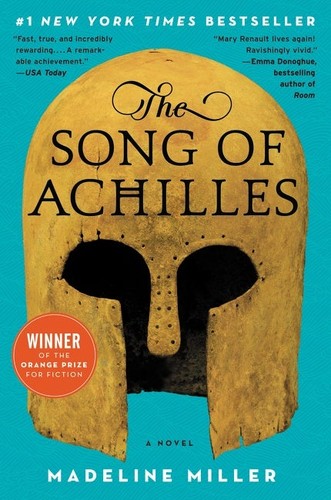
The Song of Achilles
Patroclus, an exiled and unexceptional young prince, is sent to the court of King Peleus, where he forms an intense bond with Peleus’s gifted son, Achilles. Friendship becomes love as they train under the centaur Chiron and grow toward the futures prescribed by family, prophecy, and heroic culture. When the Greek kings sail against Troy, Achilles pursues the glory that may immortalize his name but shorten his life, while Patroclus follows out of devotion. Narrating from the margins of epic fame, Patroclus reveals the private costs behind the public legend: captivity, pride, political rivalry, and the transformation of human beings into instruments of war. Miller’s novel reimagines the Trojan cycle as both a coming-of-age story and a tragedy about love confronting mortality.
Where to buy or borrow
Are you selling this book? Bookstores, publishers, authors and libraries can be listed here for free. Request a listing
About this book
Deep Overview
Their years together create the novel’s emotional foundation. Training with Chiron on Mount Pelion briefly removes them from courts, dynastic obligations, and competitive masculinity. That protected interval cannot last. Achilles’s mother, the sea goddess Thetis, opposes the relationship and regards mortal attachments as obstacles to her son’s greatness. Prophecy sharpens the conflict: Achilles can choose a long, obscure life or a short one crowned by lasting fame. The choice exposes a central tension in the book—whether glory preserves a person or replaces that person with a public story.
The expedition to Troy enlarges the narrative from private formation to political catastrophe. The Greek alliance is held together by oaths, ambition, rivalry, and the authority of Agamemnon rather than by uncomplicated moral purpose. Patroclus, positioned near power but not fully identified with warrior culture, observes how commanders turn human lives into prizes, symbols, and leverage. His relationship with Briseis, a captive Trojan woman, broadens his loyalties beyond Achilles and makes the consequences of Greek conquest personally visible.
The quarrel between Achilles and Agamemnon becomes more than a dispute over honor. Achilles’s refusal to fight protects his status but leaves others to die, revealing how the heroic code can convert injury into collective disaster. Patroclus is increasingly caught between devotion to Achilles and responsibility toward vulnerable people. His eventual attempt to intervene is loving and courageous, but it also draws him into the machinery of heroic imitation: to save the Greeks, he must appear as Achilles.
Because the broad outcome is inherited from myth, suspense rests less on what will happen than on how love, pride, and prophecy make it happen. Miller’s Patroclus gives emotional continuity to events that epic poetry often presents through public speeches, battlefield deeds, and divine action. The result is not an attempt to supersede Homer but a modern interpretive retelling: it asks what Achilles’s terrible grief might reveal about the life that preceded it, and whether tenderness can survive inside a culture that measures worth through reputation and violence.
Key Themes
- **Fate and chosen responsibility:** Prophecy establishes limits, but characters remain accountable for the ways they respond to what has been foretold.
- **The human cost of glory:** Immortal renown is shown to depend upon mortal bodies, conquered cities, captive women, and grieving survivors.
- **Power and possession:** Kings repeatedly treat people as extensions of rank. The conflict over Briseis reveals the violence beneath the language of honor.
- **Identity under expectation:** Achilles is shaped by divine parentage and public demand, while Patroclus struggles against definitions of masculinity that label compassion as weakness.
- **Storytelling as survival:** Song can preserve a name, but it can also simplify a complex human being into a heroic emblem.
- **Intimacy and moral vision:** Patroclus’s love gives him unusual insight into Achilles, yet devotion does not erase the ethical consequences of Achilles’s choices.
Historical Context
Miller therefore works with a layered tradition rather than one fixed account. Greek and Roman authors supplied varying episodes about Achilles’s childhood, education, concealment on Skyros, death, and afterlife. The erotic interpretation of Achilles and Patroclus also has ancient precedents, although the Iliad itself does not explicitly define their relationship in modern sexual categories. Miller makes a deliberate fictional choice to portray them as lovers.
The novel also reflects a modern revival of myth retellings that shifts attention from the most famous victor toward marginal, silenced, or interior viewpoints. Published in the United States in 2012 after a 2011 British publication, it entered contemporary discussions of queer representation while remaining rooted in long-standing classical debates about Achilles and Patroclus.
Intended Audience
It may be less suitable for those seeking a historically exact reconstruction of Bronze Age Greece, an action-dominated military epic, or a romance with a reassuring resolution. The novel contains war, enslavement, sexual coercion, death, grief, and the killing of children. Although the principal relationship begins in adolescence, sexual material is generally restrained rather than graphic.
Reading Difficulty
Conceptual difficulty is moderate. The main challenges come from interpreting prophecy, honor culture, divine intervention, and the gap between ancient social structures and modern expectations. Knowing the legendary ending does not diminish the novel’s design; dramatic irony is one of its principal effects.
Helpful Background Knowledge
Readers should also know that Greek myth has no single canonical version. Contradictions among Homer, later poets, dramatists, mythographers, and Roman writers are normal. Modern concepts such as fixed sexual orientation do not map neatly onto ancient Greek evidence. Treating Miller’s narrative as an interpretive novel rather than a textbook will make comparisons with ancient sources more productive.
Why Read This Book?
The book also offers a useful bridge between popular storytelling and classical literature. Its emotional clarity welcomes newcomers, while its rearrangement of familiar episodes gives experienced readers material for disagreement and analysis. Most importantly, it treats queer love not as a decorative revision but as the organizing force that explains Achilles’s grief and the tragedy’s movement.
Reader Takeaways
The novel also encourages skepticism toward fame as a substitute for a life. It distinguishes what later generations remember from what loved ones know, and it shows how public ideals can trap even those who seem privileged by them. Readers may reconsider the relationship between tenderness and courage, the moral limits of loyalty, and the extent to which prophecy describes choices rather than excuses them.
Strengths
- The relationship develops over years, allowing friendship, desire, dependence, disagreement, and grief to accumulate rather than appear suddenly.
- Classical references are integrated without requiring the reader to recognize every source.
- Patroclus’s attention to medicine, captives, and casualties provides an effective counterweight to martial prestige.
- The structure steadily narrows childhood possibility into tragic inevitability.
- The novel makes a familiar ending compelling through character causation and dramatic irony rather than surprise.
- Its treatment of fame asks not only who is remembered, but who controls the terms of remembrance.
Limitations and Cautions
The intimate focus can also limit perspectives outside the central couple. Briseis receives meaningful development, but captive Trojan women remain filtered primarily through Patroclus, while Trojan life receives less sustained attention than the Greek camp. The novel criticizes heroic violence yet still derives much of its emotional power from exceptional aristocratic men.
Content cautions include warfare, enslavement, coercive sexual situations, misogyny, homophobic hostility, parental rejection, graphic injury, death, and prolonged grief. Readers should not use its social details or relationship categories as direct evidence about historical Bronze Age society.
Important Concepts, People, and Places
- **Achilles:** Son of Peleus and Thetis, prophesied to become the greatest Greek warrior. His conflict between love, pride, and fame drives the tragedy.
- **Thetis:** Immortal sea goddess and Achilles’s mother. She embodies divine distance, maternal ambition, and resistance to Achilles’s mortal attachments.
- **Peleus:** Mortal king of Phthia and Achilles’s father, whose court gives the exiled Patroclus a new home.
- **Chiron:** Centaur and teacher who trains the boys on Mount Pelion, creating a temporary refuge from political and familial demands.
- **Briseis:** Trojan captive claimed as a war prize. Her friendship with Patroclus exposes the human reality concealed by heroic conventions of ownership.
- **Agamemnon:** Commander of the Greek coalition. His contest with Achilles demonstrates how status rivalry becomes a military and moral crisis.
- **Odysseus:** King of Ithaca and skilled negotiator, presented as perceptive, pragmatic, and deeply aware of reputation’s political uses.
- **Hector:** Troy’s leading warrior and Achilles’s greatest battlefield counterpart; his fate is bound to Patroclus’s and Achilles’s.
- **Deidameia and Skyros:** Princess and island involved in Thetis’s attempt to hide Achilles from the Trojan expedition.
- **Phthia:** Peleus’s kingdom, where Patroclus and Achilles meet and form their bond.
- **Mount Pelion:** Chiron’s home and the setting of the pair’s education, freedom, and early love.
- **Troy/Ilium:** Besieged city around which the Greek expedition, the novel’s political conflicts, and its losses converge.
- **Kleos:** The Greek idea of glory or renown preserved through story. Achilles’s pursuit of lasting fame gives this concept its tragic force.
- **The heroic code:** A system linking masculine worth to lineage, martial success, honor, and public recognition; the novel repeatedly tests its moral cost.
- **Prophecy and fate:** Foreknowledge constrains the characters, but the story remains interested in the decisions that turn prediction into reality.
Questions the Book Explores
- Can love resist a culture organized around competition, conquest, and masculine prestige?
- How much freedom is possible when a future has been prophesied?
- When does loyalty become complicity in another person’s harmful choices?
- Is compassion a weakness within war, or a different and necessary form of courage?
- Who bears the cost when rulers defend honor as though it were more valuable than life?
- Can retelling an ancient work recover neglected perspectives without imposing modern assumptions on the past?
- Does fame defeat mortality, or merely conceal the individual who died?
Reading Group Guide
A second approach is to track forms of value. Note when characters appeal to love, honor, rank, usefulness, mercy, or fame, and consider which values the narrative ultimately privileges. Groups familiar with the Iliad can compare the opening of Homer’s epic, the quarrel over Briseis, Patroclus’s battlefield role, and Achilles’s grief with Miller’s treatment. Newcomers can read a short synopsis after finishing the novel and ask what Patroclus’s narration made visible that an epic summary leaves out.
Because the final chapters reshape earlier scenes, reserve time to reconsider the title, the function of memory, and who finally gains the authority to tell Achilles’s story. Establish content expectations beforehand, particularly around enslavement, sexual coercion, and bereavement.
Discussion Questions
2. What does Mount Pelion represent, and why can the life created there not endure?
3. Does Achilles choose fame freely, or have prophecy and upbringing made another choice impossible?
4. Where does Patroclus’s devotion become morally complicated?
5. How does Briseis change the ethical scope of the novel beyond its central romance?
6. In what ways are Thetis and Patroclus competing to define who Achilles is?
7. How does Agamemnon’s understanding of honor differ from Achilles’s, and where are they alike?
8. What qualities does the novel treat as heroic that the Greek commanders do not?
9. How does knowing the mythic outcome affect the experience of suspense?
10. What is gained—and what may be lost—by portraying Achilles and Patroclus explicitly as lovers?
11. How does the novel distinguish a remembered name from a remembered person?
12. After the ending, who can most truthfully be said to sing the “song” of Achilles?
Sources and Verification
The exact day of publication for the profiled hardcover has been left blank because the strongest print catalog records support the year but not a complete date. Classical mythology contains multiple, sometimes incompatible traditions; descriptions of Miller’s adaptation therefore distinguish her fictional interpretation from claims about a single authoritative ancient version.
Comments
No published comments yet.
Available editions
Hardcover
First U.S. edition
- Publisher
- Ecco
- ISBN-13
- 9780062060624
- Pages
- 378