
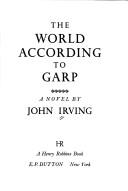
The World According to Garp
Born to the fiercely independent nurse and eventual feminist icon Jenny Fields, T. S. Garp grows from an unconventional child into a wrestler, husband, father, and novelist. His effort to build a safe domestic life repeatedly collides with adultery, ideological conflict, public notoriety, random violence, and the unruly consequences of love. John Irving combines family saga, literary satire, embedded fiction, and dark comedy to examine gender, parenthood, artistic ambition, and mortality. Often included among classic novels to read, the book is memorable less for offering a settled worldview than for exposing how fear and certainty can deform human relationships.
Where to buy or borrow
Are you selling this book? Bookstores, publishers, authors and libraries can be listed here for free. Request a listing
About this book
Deep Overview
Garp grows into a wrestler and aspiring writer. A period in Vienna gives him experience beyond the sheltered school community and helps shape his artistic ambitions. He later marries Helen Holm, the wrestling coach’s daughter, whose academic career and intellectual independence complicate familiar domestic roles. Garp assumes much of the household work and childcare, yet he remains jealous, controlling, sexually inconsistent, and intensely anxious about danger. His devotion to his family is real, but so is his capacity to wound it.
Jenny’s memoir transforms her into a public feminist figure. Women seeking refuge gather around her, and her private rejection of prescribed womanhood becomes a cause larger than she intended. Irving contrasts Jenny’s practical independence with organized movements that convert suffering into doctrine or spectacle. The Ellen Jamesians—followers who mutilate themselves in symbolic solidarity with a survivor of sexual violence—are the novel’s starkest example of identification becoming coercive extremism. Ellen James herself rejects what they do in her name.
Roberta Muldoon, a former professional football player and transgender woman, becomes one of the family’s most loyal friends. Her presence broadens the novel’s consideration of gender beyond the opposition between Garp and Jenny, although some language and characterization reflect the period in which the book was written. Roberta’s warmth and steadfastness often expose the limitations of characters who claim moral certainty.
The novel also follows Garp’s development as an author. Embedded works such as “The Pension Grillparzer” and material from The World According to Bensenhaver reveal different stages of his craft. They complicate any simple reading of Garp as Irving’s surrogate: biography feeds fiction, but fiction distorts, enlarges, and rearranges life. Literary success brings Garp neither authority nor safety.
Across these intertwined stories, Irving repeatedly links tenderness with vulnerability. Parenthood heightens Garp’s love but also his fear; marriage creates intimacy while multiplying opportunities for betrayal; political commitment can shelter the injured or turn them into symbols. Comedy does not neutralize catastrophe. Instead, the collision between absurdity and grief becomes the novel’s way of representing a world in which people improvise meaning despite knowing that control is temporary.
Key Themes
• **Gender and prescribed roles:** Jenny, Garp, Helen, and Roberta challenge assumptions about motherhood, fatherhood, work, sexuality, and the kinds of lives available to women and men.
• **Feminism and ideological ownership:** The novel distinguishes personal independence and practical solidarity from movements that claim authority over another person’s suffering. Its representation of feminism is substantial but contested.
• **Fear, protection, and control:** Garp’s vigilance arises from love, yet his attempts to eliminate danger cannot master chance and sometimes damage the life he wants to protect.
• **Writing and experience:** Garp’s fiction transforms private events into art, raising questions about appropriation, autobiography, reputation, and the difference between an author’s life and work.
• **Mortality and contingency:** Sudden reversals make death an ordinary condition rather than a neatly prepared conclusion.
• **Extremism:** Political and emotional absolutes repeatedly erase individuality, making people representatives of causes instead of complex human beings.
Historical Context
The book also appeared amid disagreements about feminism itself. Irving dramatizes those tensions through the contrast between Jenny’s independence, communities formed around women’s suffering, antifeminist hostility, and the fictional extremism of the Ellen Jamesians. The latter should not be treated as a documentary portrait of the women’s movement; they are satirical inventions within a novel inclined toward grotesque exaggeration.
Its broad storytelling, intrusive biographical narration, coincidences, eccentric supporting characters, and mixture of humor with misfortune place it in a tradition often associated with nineteenth-century social novels, even as its frank sexual material and gender debates are distinctly late twentieth century. The first paperback edition won the 1980 National Book Award for Fiction—Paperback, during a period when the award program maintained separate hardcover and paperback categories.
Intended Audience
Book clubs willing to discuss ethically difficult behavior and historically situated representations of feminism and transgender identity will find abundant material. Readers seeking restrained realism, consistently sympathetic protagonists, or a gentle treatment of violence may find it less suitable. It is also a poor match for anyone wanting a straightforward political position: the novel’s satire distributes discomfort broadly and does not provide a reliable ideological spokesperson.
Reading Difficulty
Readers must also distinguish among the narrator’s framing, Garp’s opinions, Jenny’s public meaning, and the claims made by political followers or opponents. The novel sometimes uses period terminology concerning gender and transgender identity that may feel dated now. At 437 pages in the selected edition, it is substantial but not formally obscure; its difficulty is emotional and interpretive rather than linguistic.
Helpful Background Knowledge
Readers may benefit from recognizing the book as a Künstlerroman, or artist-development novel, as well as a family saga. Garp’s embedded stories are not detachable diversions: they show his changing craft and his tendency to reshape trauma through invention. Familiarity with wrestling is unnecessary, although the sport’s discipline, physical vulnerability, and adversarial intimacy echo throughout Garp’s life.
Why Read This Book?
It also rewards readers interested in how novels can criticize ideological extremism without offering a politically neutral world. Jenny, Garp, Helen, Roberta, Ellen James, and the people who claim to represent them continually challenge one another’s assumptions. For readers looking for strong book club books, that unresolved friction is valuable: the novel invites disagreement about sympathy, responsibility, satire, consent, representation, and whether fear can ever make a family safe.
Reader Takeaways
Readers may also reconsider the ease with which movements, audiences, and critics turn complicated individuals into symbols. Jenny’s beliefs become larger than Jenny; Ellen James’s experience is appropriated by people who ignore her wishes; Garp’s books acquire meanings that exceed his intentions. Finally, the embedded fiction encourages attention to the way artists borrow from life while disguising, enlarging, or misunderstanding it.
Strengths
• **Tonal daring:** Irving can place farce beside grief without pretending that laughter cancels harm.
• **Memorable relationships:** Garp’s bonds with Jenny, Helen, their children, and Roberta remain emotionally layered rather than purely symbolic.
• **Structural intelligence:** Embedded writings illuminate Garp’s development and make authorship part of the novel’s form, not merely its subject.
• **Moral complexity:** Love, hypocrisy, courage, selfishness, and loyalty coexist within the same characters.
• **Discussion value:** Its unresolved tensions around gender, violence, representation, and family responsibility support multiple defensible interpretations.
Limitations and Cautions
Its treatment of feminism is disputed. Although the narrative condemns misogyny and gives major roles to independent women, it often represents political activism through extremity, spectacle, or factionalism. Some readers and critics view this as complex satire; others see an ambivalent or resistant response to feminism.
Roberta Muldoon is sympathetic and important, but aspects of her description reflect a 1970s cisgender authorial perspective and may now seem dated or overly focused on physical transition. The book’s conception of gender remains largely framed through women-versus-men conflicts despite Roberta’s presence. Readers should also expect conspicuous coincidence and melodrama; those are deliberate features of Irving’s design, but admirers of austere realism may find them excessive.
Important Concepts, People, and Places
• **Jenny Fields:** Garp’s mother, a nurse and memoirist whose rejection of marriage makes her a feminist icon, despite her uneasy relationship to organized followers.
• **Helen Holm:** Garp’s wife, an academic and reader whose career helps reverse conventional domestic expectations; her marriage to Garp carries both intellectual partnership and betrayal.
• **Roberta Muldoon:** A transgender woman and former professional football player who becomes a trusted member of Garp and Jenny’s extended family.
• **Ellen James:** A survivor of sexual violence whose suffering is appropriated by activists acting in her name, making her central to the novel’s critique of symbolic politics.
• **The Ellen Jamesians:** A fictional extremist group whose self-mutilation demonstrates how solidarity can become coercive identification and spectacle.
• **Steering School:** The New England boys’ school where Jenny works, Garp grows up, and wrestling shapes his habits of discipline and physical awareness.
• **Vienna:** The city where Garp develops as a young writer and encounters experiences that feed his imagination.
• **Wrestling:** Both a sport and a recurring metaphor for controlled struggle, bodily danger, persistence, and intimate opposition.
• **“The Pension Grillparzer”:** An embedded story that represents an important stage in Garp’s artistic formation.
• **The World According to Bensenhaver:** Garp’s sensational fictional work, used to examine violence, literary reputation, and the unstable relationship between intention and reception.
• **Second-wave feminism:** The historical movement forming part of the novel’s context, particularly its debates about autonomy, sexuality, domestic roles, and violence against women.
Questions the Book Explores
Reading Group Guide
Next, compare three forms of authorship: Jenny’s memoir, Garp’s fiction, and the narrator’s account of Garp. Discuss how each turns a life into a story and what may be lost in that conversion. A group can then examine the difference between Jenny’s personal independence and the causes built around her, before considering the Ellen Jamesians as satire rather than straightforward social history.
Finally, track the novel’s changes of tone. Select several moments where comedy, dread, and grief meet, and discuss whether humor deepens or weakens the emotional effect. Because the material can be distressing, establish in advance that participants may avoid detailed discussion of sexual violence or child harm.
Discussion Questions
2. Is Garp’s fear for his family primarily an expression of love, a desire for authority, or both?
3. How does Helen’s intellectual and professional life alter the novel’s presentation of marriage?
4. What does Roberta contribute to the family that its biological members cannot provide for one another?
5. How do Garp’s embedded writings change your judgment of him as a person and as an artist?
6. Where does the novel distinguish feminism from extremism, and where does that distinction become unclear?
7. What ethical problems arise when the Ellen Jamesians claim solidarity with someone who rejects their actions?
8. How does Irving use wrestling as more than biographical detail?
9. Does the novel’s dark comedy help readers confront violence, or does it sometimes create too much distance from suffering?
10. Which characters are most often misunderstood by others, and how do those misunderstandings affect their lives?
11. How does the book challenge conventional ideas about maternal and paternal behavior?
12. What does the novel suggest about the possibility—and impossibility—of creating a safe home?
Sources and Verification
Comments
No published comments yet.
Available editions
Hardcover
First U.S. edition
- Publisher
- E. P. Dutton
- ISBN-13
- 9780525237709
- Pages
- 437