
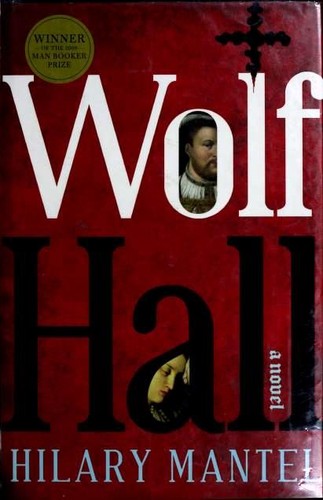
Wolf Hall
Hilary Mantel’s Wolf Hall reimagines the rise of Thomas Cromwell, the statesman who moves from Cardinal Thomas Wolsey’s household into the center of Henry VIII’s government. Beginning with Cromwell’s violent childhood and advancing through the political crisis surrounding Henry’s marriage to Catherine of Aragon, the novel follows a gifted outsider as he turns legal knowledge, commercial experience, memory, and personal alliances into power. Mantel presents Tudor politics not as a settled sequence of famous events but as an unstable present in which succession, religion, money, family loyalty, and royal desire continually alter what is possible.
Where to buy or borrow
Are you selling this book? Bookstores, publishers, authors and libraries can be listed here for free. Request a listing
About this book
Thomas Cromwell’s Rise Through the Court of Henry VIII
Cromwell survives the destruction of his patron and gradually becomes useful to the king. The central political problem is Henry’s determination to replace Catherine of Aragon with Anne Boleyn and secure a male heir. Around that problem gather questions of royal authority, parliamentary law, property, diplomacy, religious reform, and England’s relationship with Rome. Cromwell’s strength lies in recognizing that these matters can be connected and reorganized.
Although readers know the broad historical outcome, the characters do not experience their lives as predetermined history. Mantel keeps attention on conversations, documents, debts, marriages, household relationships, rumors, and small changes in royal favor. Public transformation emerges from countless private calculations. The result is both a political narrative and a study of how a man constructs power while trying to preserve a household, honor old obligations, and anticipate danger.
Power, Memory, Family, and the Making of History
Memory is equally important. Cromwell’s present is repeatedly interrupted by recollections of childhood, travel, Wolsey, and family life. These movements help explain his judgments while preventing the narrative from becoming a straightforward chronicle. History is shown as something remembered, misremembered, recorded, suppressed, and rewritten.
The novel also examines chosen and biological families. Cromwell’s household is a center of education, employment, affection, and political networking. Its relative openness contrasts with aristocratic families preoccupied with inheritance and bloodline. At the national level, Henry’s marriage crisis turns reproduction into state policy: the future of the Tudor dynasty depends upon the intimate life of the king.
Other recurring concerns include religious conscience, social mobility, violence, masculinity, grief, and the moral cost of effective government. Mantel does not reduce these tensions to a contest between modernity and backwardness. Reformers, traditionalists, courtiers, clerics, and royal servants act from mixed motives that include conviction, ambition, fear, and loyalty.
The King’s Great Matter and the English Reformation
Cardinal Thomas Wolsey initially carried responsibility for resolving the king’s marital problem. When he failed, his political dominance collapsed, creating an opening for Cromwell. The novel follows the early stages of a transformation that would lead to England’s break with Rome. Historically, a sequence of parliamentary measures between 1533 and 1536 severed jurisdictional ties with the papacy, and the 1534 Act of Supremacy recognized Henry as supreme head of the Church of England. Cromwell helped steer this legislative transformation.
Mantel places these major events within a European world of merchants, diplomats, scholars, printers, clerics, and competing rulers. Religious reform is already spreading through books and networks of communication. Ideas associated with William Tyndale and other evangelical figures circulate despite official opposition. In this environment, a dispute about one royal marriage becomes part of a wider struggle over scripture, sovereignty, institutional authority, and the reach of the state.
Who Is Most Likely to Appreciate Wolf Hall
Prior knowledge of Henry VIII’s reign is helpful but not essential. Mantel supplies context through action and conversation rather than stopping frequently to explain it. Readers who enjoy piecing together motives and relationships may find this approach immersive. Those seeking a fast, linear account of famous events may find the large cast, temporal shifts, and close viewpoint demanding.
The novel includes domestic violence, executions, religious persecution, bereavement, illness, and threats of state violence. Much of the harshest material is handled without sensationalism, but the world depicted remains dangerous.
Present-Tense Narration and the Challenge of the Pronouns
The structure moves through scenes and memories rather than following an uninterrupted timeline. Political information may be conveyed through implication, jokes, household exchanges, letters, and arguments. A substantial cast includes people who share first names, titles, or family connections. The genealogical material and cast list included in many editions can therefore be useful.
The difficulty comes less from archaic vocabulary than from density. Mantel generally uses accessible modern English, while incorporating period offices, legal questions, religious controversies, and forms of address. Once the viewpoint becomes familiar, many readers find the narrative faster and more immediate.
What to Know Before Entering Tudor England
Anne Boleyn was not simply a romantic alternative. Marriage to her had implications for court factions, foreign alliances, succession, and religious policy. Their daughter would become Elizabeth I, although the characters cannot know her future importance.
Thomas Cromwell should not be confused with Oliver Cromwell, the seventeenth-century political and military leader. Mantel’s Cromwell lived from about 1485 to 1540 and served first Cardinal Wolsey and later Henry VIII. Thomas More, another major figure in the novel, was a lawyer, humanist scholar, royal servant, and committed opponent of religious heresy. Knowing these basic relationships is sufficient preparation; a detailed Tudor chronology can be consulted as needed rather than mastered beforehand.
Why Wolf Hall Changed Expectations of Historical Fiction
The choice of Cromwell as the viewpoint character also challenges inherited portrayals. Rather than presenting him only as a sinister bureaucrat opposed to the saintly Thomas More, the novel considers how his commercial knowledge, legal imagination, international experience, and unusual household shape his politics. This is not a claim that the fictional portrait is a neutral biography. It is an argument, made through fiction, about who receives sympathy and interiority in historical storytelling.
Readers may also choose the novel for its combination of scale and detail. Court ceremonies and parliamentary change exist alongside meals, clothing, accounts, illnesses, jokes, and family grief. That combination makes institutions feel inhabited and political power feel personal.
What Readers May Reconsider After Wolf Hall
The novel also encourages readers to see administration as dramatic. Documents, statutes, property transfers, debts, and appointments can alter a nation as decisively as public speeches or battles. Cromwell’s political intelligence consists partly in perceiving connections among these apparently separate instruments.
Readers may leave with a more complicated understanding of reform. New institutions can emerge through mixtures of principle, ambition, necessity, coercion, and personal desire. Wolf Hall resists the comforting idea that political change is made by morally uncomplicated heroes. It instead asks how people act when loyalty, conscience, survival, and effectiveness point in different directions.
Psychological Intimacy Within a Large Political Story
Mantel also creates distinctive relationships rather than treating the court as a list of famous names. Cromwell’s continuing attachment to Wolsey, his wary exchanges with Thomas More, his management of Henry VIII, and his negotiations with Anne Boleyn each reveal a different kind of power. Domestic scenes give emotional weight to the political narrative and prevent Cromwell from being defined solely by office.
The present tense and close viewpoint make known events feel unstable. Humor, menace, grief, and intellectual argument can coexist within a single encounter. The approach rewards rereading because early remarks and apparently minor figures often acquire greater significance later.
Fictional Perspective, Historical Debate, and Scope Boundaries
Because the narrative remains close to Cromwell, people who oppose or obstruct him may appear chiefly as he understands them. The treatment of Thomas More is particularly likely to prompt disagreement among readers familiar with More’s religious, humanist, or saintly reputation. The novel’s achievement depends on this partiality, but partiality is not the same as completeness.
The book ends well before Cromwell’s final downfall and execution in 1540. It is the opening movement of a trilogy, not a complete account of his career. Its density may also frustrate readers who prefer frequent historical explanation, clear chapter-by-chapter chronology, or a small cast.
Thomas Cromwell, Thomas More, Wolsey, and the Institutions of Tudor Power
Henry VIII is both a man and an institution. His bodily health, desires, disappointments, and need for a male successor affect diplomacy, religion, and law. Those near him must interpret personal preference as potential national policy.
Cardinal Thomas Wolsey is Cromwell’s patron and an early model of power built through service rather than inherited rank. His fall demonstrates the danger of failing a monarch even after years of effective government.
Anne Boleyn is a political participant whose marriage to Henry affects factions at court and England’s relationship with Rome. Catherine of Aragon remains a formidable source of legitimacy and resistance, while her daughter Mary represents an unresolved succession problem.
Thomas More embodies a different combination of scholarship, conscience, office, and coercive authority. His conflict with Cromwell brings legal obedience and religious conviction into direct tension.
Parliament, the royal council, the church courts, aristocratic households, print networks, and merchant connections are not merely settings. They are mechanisms through which influence becomes enforceable power. The English Reformation emerges from interaction among these institutions rather than from a single theological dispute.
Can Effective Power Be Separated from Moral Compromise?
The novel also explores who is permitted to shape history. Does inherited status confer genuine authority, or can knowledge, labor, and adaptability rival noble birth? What happens when the private desires of a monarch become matters of legislation and national religion? When conscience conflicts with the law, which form of obedience should prevail?
At the level of historical fiction, the book asks another question: what responsibility does a novelist have when entering gaps in the record? Mantel’s answer is not to erase uncertainty but to make uncertainty part of the reading experience.
A Practical Reading Plan for Wolf Hall
For the first meeting, focus on the opening, Cromwell’s early life, and his service to Wolsey. Discuss how the novel teaches readers to interpret “he” and how violence shapes the adult Cromwell. A second meeting can examine Wolsey’s fall, Cromwell’s survival, and Henry’s marital problem. Later meetings can address Anne Boleyn’s ascent, the confrontation with Thomas More, and the changing relationship among law, religion, and royal authority.
The group can distinguish three kinds of statement during discussion: what the novel explicitly depicts, what historical sources establish, and what readers infer about motives. Maintaining those distinctions allows both literary interpretation and historical comparison without treating either as a substitute for the other.
Discussion Questions About Cromwell, More, and Tudor Power
2. What does Cromwell learn from Cardinal Wolsey’s rise and fall?
3. How does Mantel’s close use of “he” affect intimacy, confusion, and trust?
4. In what ways does Cromwell’s household differ from the aristocratic families around Henry VIII?
5. Does the novel portray Cromwell as morally better than his rivals, or primarily as more adaptable?
6. How are Thomas More’s conscience and his exercise of institutional power placed in tension?
7. What roles do money, credit, property, and legal knowledge play in political change?
8. How does the pressure to produce a male heir transform the lives of Catherine of Aragon, Anne Boleyn, Mary Tudor, and the wider kingdom?
9. Where does the novel draw attention to gaps, rumors, and uncertainties in the historical record?
10. Why is the Seymour family’s home, Wolf Hall, an effective title even though it is not the principal setting?
11. Which scenes most clearly show private conversation becoming public policy?
12. How might the story change if narrated from the perspective of Catherine, Anne, More, Wolsey, or Mary?
Edition and Historical Verification
Historical context was checked against the UK Parliament and The National Archives, particularly their material on Thomas Cromwell, the Act of Supremacy, and the English Reformation. These sources support the broad chronology and institutional background, but the novel’s dialogue, private motives, and interior experiences remain imaginative constructions.
Comments
No published comments yet.
Available editions
Hardcover
First UK edition, hardcover
- Publisher
- Fourth Estate
- ISBN-13
- 9780007230181
- Publication date
- Pages
- 653