Grafton began as a name change. In 1983 the Glasgow publisher William Collins, Sons bought Granada Publishing, a London paperback business, and put Granada's mass-market lists under a new banner. The name came from the address of the editorial offices, 8 Grafton Street in central London. Collins ran it alongside its own Fontana paperbacks. In 1989 Rupert Murdoch's News Corporation took full control of Collins, and in 1990 Collins merged with Harper & Row to form HarperCollins. Grafton's lists were absorbed into the new group, and the imprint no longer operates.
The name sat on a wide, popular paperback list. It took in older Granada imprints such as Panther and Paladin, and it carried the joint Triad paperbacks that Granada had set up with the hardback houses Jonathan Cape, Chatto and Windus, and The Bodley Head. Library catalogues show Grafton editions of science fiction and fantasy (Philip K. Dick, Piers Anthony, Jack Vance), thrillers by Len Deighton, and literary fiction by D. H. Lawrence, Doris Lessing and Barbara Pym. The imprint also issued a Centenary edition of Tolkien's The Hobbit in 1991. HarperCollins's later science fiction and fantasy list, Voyager, inherited the Grafton sci-fi line.
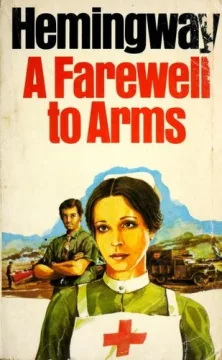
Hemingway was one of its steadier names. The Triad/Grafton paperback of A Farewell to Arms, his 1929 novel of an American ambulance driver and a British nurse in the First World War, is the book that brings most readers here. Library records also list Grafton editions of The Garden of Eden in 1988 and Islands in the Stream in 1990, both of them books that appeared after his death.
These are secondhand-market books now. A Grafton copy is a reading edition: a small, inexpensive mass-market paperback from the 1980s or early 1990s, often with period cover art. The text is the author's own. If you want a current edition, or the rest of an author's work, HarperCollins and the writers' present publishers are the place to look.