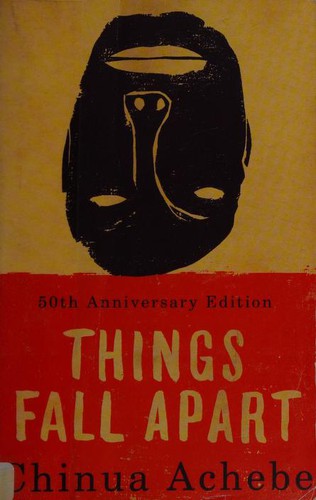
Deep Overview
The novel is built in three movements, and the structure carries much of its argument. Part One, the longest, is almost entirely about life in Umuofia before any outsider arrives. Readers meet Okonkwo, who rose from poverty to wealth and title through wrestling prowess and hard farming work. He is haunted by his father Unoka, a gentle, indebted musician whom the clan regarded as a failure. Okonkwo's fear of weakness shapes his marriages, his treatment of his children and his reverence for strength. Achebe fills this section with ritual and institutions: the Week of Peace, the oracle of the Hills and Caves, the masked egwugwu who sit in judgment over disputes, and the bride-price negotiations, the kola-nut greetings and the stories told at night. The effect is to establish Umuofia as a society with its own ethics and its own internal critics. Okonkwo's friend Obierika, for instance, often questions the clan's practices.
The tension in Part One comes from within the community. Okonkwo takes part in the killing of Ikemefuna, a boy placed in his household as part of a settlement between villages. He does so partly to avoid seeming soft. Soon afterward, an accident at a funeral forces Okonkwo into a seven-year exile in Mbanta, his mother's homeland. That makes up Part Two, which is shorter. Here Achebe changes the pressure on the story. White missionaries arrive, and they find their first converts among people the clan has marginalized, and then among others, including Okonkwo's own son Nwoye. The new religion is not presented as simply foolish or simply wicked. It answers real doubts and real suffering inside Igbo society, which makes its pull understandable even as the novel counts its costs.
Part Three covers Okonkwo's return to a village that has changed. Churches, a trading post and a colonial court now exist, and the clan's old ways of settling conflicts are being supplanted. Okonkwo wants a violent answer, but the community is divided and unable to respond as a single body. The final pages shift to the viewpoint of a colonial official, and that shift is deliberate. After hundreds of pages in which the Igbo are individuals, the outsider reduces them to material for a chapter in a book. Achebe is demonstrating how the colonial record flattens people, and he is also showing why a novel like his own was needed. The tragedy is double: a personal one, in which Okonkwo's rigid idea of manhood destroys what he loves, and a communal one, in which a society loses its ability to govern itself. Achebe's refusal to idealize either Okonkwo or the clan is what keeps the book from being a simple lament.
Key Themes
Masculinity and fear: Okonkwo's definition of manhood is built in reaction to his father, and it leaves him unable to show tenderness without feeling shame. The novel asks what that costs him and those around him.
Tradition and change: Igbo society is shown as capable of debate and adaptation, so its collapse cannot be put down solely to its own rigidity or to outside force. Both factors operate.
Colonialism and religion: Missionary Christianity and colonial administration work together, sometimes by persuasion and sometimes through courts and force.
Storytelling and who writes history: The closing perspective of the colonial official raises the question of who gets to tell the story of a people.
Fate and personal choice: Igbo ideas of the personal god, or chi, and the novel's tragic pattern raise the question of how far Okonkwo is a victim of circumstance and how far he is responsible for his own downfall.
Gender and value: The clan prizes strength and "masculine" work, yet the novel keeps returning to the quiet importance of women and of maternal ties.
Historical Context
The story takes place in the later nineteenth century, when British missionary and trading interests were extending into Igbo-speaking areas of what is now southeastern Nigeria. Achebe was writing in the 1950s, in the final years of British rule. As CliffsNotes and other study references note, the book appeared two years before Nigeria became independent in 1960. It was written at a time when educated Nigerians were rethinking their history and the stories told about it. Achebe worked at the Nigerian Broadcasting Corporation while composing the novel. His manuscript was shaped by revision: in 1957 he cut material down to concentrate on Okonkwo's story and restructured it. The novel was first published by William Heinemann in London on 17 June 1958, and it later became prominent in Heinemann's African Writers Series. Its significance is partly literary: earlier European writing about Africa, including colonial adventure fiction, usually treated African characters as scenery. Achebe's novel is widely read as a direct response to that tradition, and it helped create a readership for postcolonial literature in English.
Intended Audience
This novel suits students, general readers and book groups looking for a concise, serious work of fiction that opens onto large historical questions. It is useful to readers of postcolonial literature, African studies, and anyone who wants to see how a colonial encounter looks when told from the colonized side. It is also well suited to readers who like tragedy in the classical sense, where a strong character's own flaws shape the outcome. The book is commonly assigned in secondary and university courses; the publisher lists it for grades 6–12 and AP/IB use. Readers who want a fast-moving plot, or who are uncomfortable with scenes of violence, including the killing of a child and the treatment of women and children in a patriarchal household, should know these elements are present and are treated seriously rather than softened.
Reading Difficulty
The English is plain, the sentences are short and the book is quite brief, so most readers finish it in a few sittings. The challenge lies elsewhere. Igbo names, titles, proverbs and untranslated terms appear throughout, and the novel does not pause to explain them at length, so context must be gathered from the narrative. The pacing is slow in Part One, which builds a world rather than a plot, and then accelerates. Irony is central, particularly in the narrator's calm tone, and readers may need to look for it. The first Anchor Books paperback is a standard print edition; page counts differ between catalogues, so check the copy in hand. Readers with an interest in the Igbo language may value editions with a glossary or notes, which this edition may or may not include.
Helpful Background Knowledge
No specialist knowledge is required, but a little preparation helps. A basic outline of British colonial rule in Nigeria will make Part Three clearer, as will a sense of what Igbo society was like, notably the absence of centralized kings in many Igbo communities and the role of councils and titled men. It helps to know that Achebe is writing in the 1950s with an eye on earlier European fiction about Africa, such as Joseph Conrad's Heart of Darkness, which he criticized in his essay on racism in that work. Knowing the Yeats poem the title comes from is useful but not essential. Finally, readers should be ready for a narrative in which the cultural description and the plot are one thing: the details of festivals and disputes are the book's evidence, not decoration.
Why Read This Book?
Few novels have been so often named among the classic novels to read, and few reward that status so clearly. Its distinctiveness lies in the combination of a compact tragedy and a broad historical argument. Achebe's approach, which is to show the community fully before showing its disruption, makes the colonial encounter feel like a loss rather than an abstraction. It also does not flatter. Okonkwo is brave and hard-working and also violent, and his clan is both orderly and capable of cruelty. Readers who want to understand why this book is so influential in postcolonial studies, and why later African writers refer to it so often, will find the answer within its pages. It also leaves a lot to discuss, which suits it to anyone who enjoys comparing readings with others.
Reader Takeaways
A careful reader may come away with a more detailed sense of Igbo social institutions and a clearer view of the ways pre-colonial societies are often simplified. They may also notice how Achebe uses form, in the sequence of the three parts, in the proverbs, and in the closing shift of viewpoint, to make his argument. Readers may reconsider the idea that tragedy is only a matter of individual character: the novel suggests that personal flaws and historical forces interact. It also invites attention to how institutions such as courts, churches and records quietly reshape a community. Finally, it offers a model of how a story can respect its characters' own moral world while still examining it critically.
Strengths
The novel's economy is its main strength: in a short span it builds a full social world, a personal tragedy and a historical argument. The prose is controlled, and its irony gives emotional restraint to scenes that might otherwise become melodrama. Achebe's use of proverbs and oral storytelling patterns gives the English a distinctive voice without making it hard to follow. The characterization avoids easy heroes and villains, including among the missionaries and the colonial officials. The three-part structure is clear and teaches well, which is a reason the book is widely used in classrooms. Its historical and literary influence adds value, since many later works answer or echo it.
Limitations and Cautions
The novel is told largely through Okonkwo and the men of Umuofia, so women's experiences appear mainly at the edges. Critics have discussed whether the book challenges the clan's patriarchal values or simply records them, and readers differ. The book is a work of fiction about an invented clan, not a documentary history, and readers should not treat Umuofia as a precise portrait of every Igbo community. Its picture of colonial encounter is selective: the focus is on one village and a handful of missionary and administrative figures. Some scenes involve violence, including violence against a child, which may be difficult. Readers wanting the full historical background should supplement the novel with nonfiction on Nigerian colonial history. Details of editions such as notes, introductions and page counts vary, so a reader should check the copy they intend to use.
Important Concepts, People, and Places
Okonkwo: the protagonist, a respected wrestler and farmer whose fear of weakness drives the plot and his downfall.
Unoka: Okonkwo's father, a musician remembered by the clan as a failure; his memory shapes Okonkwo's values.
Ikemefuna: a boy given to Umuofia as part of a settlement and raised in Okonkwo's household; his fate is a turning point.
Nwoye: Okonkwo's eldest son, whose attraction to the new religion marks the split between father and son.
Obierika: Okonkwo's close friend, who often questions the clan's customs and acts as a reflective voice.
Umuofia and Mbanta: the clan's village and Okonkwo's mother's homeland, where he spends his exile; both are fictional.
Igbo society: the setting, with its councils, titles, oracle, ancestral spirits (egwugwu), and religious and legal practices.
Chi: the Igbo notion of a personal god or destiny, relevant to the novel's treatment of fate and responsibility.
The missionaries and the District Commissioner: the representatives of church and colonial government, whose different methods together alter the community.
W. B. Yeats and "The Second Coming": the source of the novel's title, which signals themes of collapse and the breakdown of an order.
African Trilogy: the grouping of this novel with No Longer at Ease and Arrow of God.
Heinemann and the African Writers Series: the publisher of the first edition, which helped carry the book to a wide readership.
Questions the Book Explores
How does a society change when outside forces arrive, and how much of the change begins inside the society? Why do some people embrace a new religion while others resist it, and what does the new faith offer that the old order did not? What does it mean to be strong, and when does strength become a weakness? How far are individuals responsible for their fate, and how far is it shaped by custom, family and history? Who has the authority to write about a people, and what is lost when outsiders do the writing? Can a culture be both admired and criticized by the same narrative?
Reading Group Guide
Because the book is short, a group can read it in a single stretch or split it by the three parts. A useful plan is to meet once after Part One and discuss how the novel establishes Umuofia before any conflict arrives, then once after the whole book. Members may find it helpful to bring examples of proverbs, rituals or scenes that struck them and to compare how each reader judges Okonkwo. A short biographical note on Achebe and a brief outline of Nigerian colonial history can provide context without overwhelming the discussion. Groups who enjoy pairing books might read it alongside a colonial-era novel about Africa or one of Achebe's later works, to compare perspectives. Since several scenes involve violence, it can be worthwhile to agree beforehand to discuss them respectfully.
Discussion Questions
1. How does Achebe's decision to spend most of Part One inside Umuofia, before the missionaries arrive, shape your response to the later events?
2. In what ways is Okonkwo a sympathetic character, and in what ways does the narrator withhold sympathy?
3. How does the novel treat Igbo customs that seem harsh or unjust to modern readers? Does it defend them, criticize them, or do something else?
4. Why do some characters, such as Nwoye, find the new religion attractive? What does that suggest about the community they leave?
5. How do the roles of women and mothers function in the book, and how might you read their relative absence from the centre of the plot?
6. What is the effect of the final shift to the colonial official's viewpoint?
7. How does the title connect to the book's structure and themes, and do you find it apt?
8. To what extent is Okonkwo responsible for his own downfall, and to what extent do historical forces determine it?
9. How do proverbs and oral storytelling shape the way the story is told?
10. What does the novel suggest about the relationship between written history and lived experience?
Sources and Verification
The book's identity and edition were checked against the publisher's own catalogue pages for the Anchor Books paperback and against Open Library, which matches the ISBN-13 and ISBN-10 to the first Anchor Books edition. Information on the novel's first publication, its composition, its title and its place in the African Trilogy comes from reference and institutional sources, including a university digital exhibit, a scholarly publisher's anniversary note, an encyclopaedic research summary and study guides. Descriptions of the plot and themes are the editor's own synthesis. Sources disagree on the page count of this edition, so it is not stated here, and the exact day of publication follows the publisher's listing.