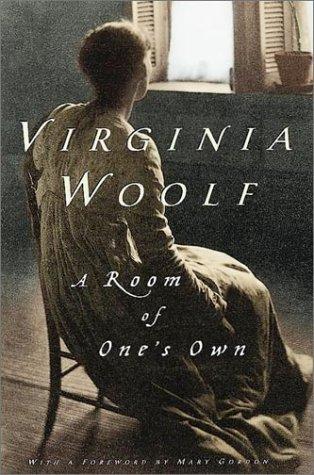
Deep Overview
Woolf begins from an invitation to speak on women and fiction and immediately complicates it. She tells her audience that she cannot deliver a settled truth on the subject. What she can offer is an honest account of how she reached her opinion, so that listeners can judge the reasoning for themselves. The narrator spends a day at "Oxbridge", an invented blend of Oxford and Cambridge. A beadle steers her off the grass, and a library attendant turns her away because she is a woman. The contrast between a rich lunch at a men's college and a plain dinner at the women's college of "Fernham" prepares her central point. Intellectual life rests on food, warmth, leisure and security, and these have been distributed unequally.
The next stage of the argument is investigative. In the British Museum the narrator finds shelves of books by men about women, many of them angry, and concludes that they reveal more about male anxiety than about women. She then asks why there is so little record of women's own lives. Her thought experiment of Shakespeare's equally gifted sister, Judith, imagines how family pressure, lack of schooling, ridicule and the absence of any professional route would have crushed such a talent. Woolf's point is that genius is not simply born; it needs conditions, and for centuries women were denied them.
Chapter four turns to the women who did write, from aristocratic eccentrics to Aphra Behn, who earned a living by her pen, and on to Jane Austen, the Brontës and George Eliot. Woolf reads them with admiration but also notes where anger, defensiveness or the pressure to write like a man bent their work. In the fifth chapter she reads a new novel by an invented author, Mary Carmichael, and uses it to speculate about the future. She is struck by how women might at last write about friendship between women and about aspects of life that literature had overlooked.
The last chapter reaches for an ideal, drawing on Samuel Taylor Coleridge's idea of the androgynous mind. Woolf suggests that the best writing comes from a mind not preoccupied with asserting one sex against the other. The book ends with a call to the audience to earn money, claim space, and write fearlessly, honouring the dead woman poet who has not yet had the chance to live. The essay is therefore both a diagnosis of past exclusion and an invitation to make something of the opportunity that was newly opening.
Key Themes
Material conditions and creativity: the claim that thinking and writing depend on money, time and privacy, not on talent alone.
Gender and the writer's mind: how anger, self-doubt and the expectation of male approval shape what women write, and what freedom from these pressures might look like.
The missing record: women were written about far more than they wrote, and Woolf asks what is lost when a group's experience goes undocumented.
Education and institutions: universities, libraries and professions as gatekeepers, shown through the unequal wealth of men's and women's colleges.
Literary tradition: the idea that writers need predecessors, and that women's work builds on a thin but real line from Aphra Behn onward.
Androgyny and integration: the closing hope for a mind that does not write from the sex-consciousness that distorted much earlier work.
Form and voice: the argument that an essay can be playful, fictional and personal and still be rigorous.
Historical Context
The lectures were given in October 1928, a few months after the Equal Franchise Act gave women the vote on the same terms as men. The earlier 1918 reform had enfranchised some women over thirty. Woolf, in her late forties and an established novelist, was speaking at a moment when women's legal and political position was changing quickly, but social and economic barriers remained. Her venue matters. Women had been admitted to study at Cambridge from 1869 onward, but they were not made full members of the university until 1948, a fact that gives her library scene a real basis even though the colleges in the book are fictionalised.
The essay also belongs to Woolf's wider work in the modernist circle around the Bloomsbury Group and the Hogarth Press, the publishing house she ran with her husband, Leonard Woolf. Its experiments with voice and perspective echo her novels. It also draws on a long history of male-authored commentary about women's abilities, which Woolf treats with irony, and on the nineteenth-century women novelists she regards as her predecessors. Readers should recall that Woolf writes from an upper-middle-class English vantage point.
Intended Audience
The book suits readers of feminist thought, literary history and the essay form, as well as students meeting modernist prose for the first time. Writers and artists who struggle with time, money or space for their work will find the central argument personally relevant. It is short and non-technical, so it also works for general readers looking for classic books that are manageable in length.
It may be less satisfying for those who want a systematic, evidence-heavy study of women's history or a modern theoretical account of gender. Woolf argues by suggestion, anecdote and irony rather than by statistics or a step-by-step thesis, and readers who prefer a plain, linear argument may find the narrator's digressions frustrating.
Reading Difficulty
The vocabulary is not demanding, but the prose moves by association. Sentences are long, ironic and sometimes loop back on themselves, and the narrator drifts between observation, imagined scenes and argument. A slow, attentive first read is more rewarding than skimming for a thesis. Allusions to English writers, historical figures and social customs may need a quick look-up for readers outside Britain or without a literature background, and some period terms (beadle, Oxbridge, college dining customs) are unfamiliar today. The essay is brief, and this paperback has about 114 numbered pages, so pacing is not a problem. The fiction-like scenes at the beginning make it easier to enter, while the later chapters on novels and the androgynous mind ask for more concentration.
Helpful Background Knowledge
No formal preparation is necessary, but a few points help. It is useful to know that Woolf was a novelist and critic of the early twentieth century, and that the narrator is a literary persona rather than a literal self-portrait. A basic sense of the status of women in Britain in the 1920s, including the recent expansion of the vote and the limits on university membership, will clarify the stakes. Familiarity with a few writers Woolf discusses, such as Jane Austen, Charlotte Brontë and George Eliot, adds pleasure, as does a passing knowledge of Shakespeare's career. Readers who have not read Woolf before may enjoy reading a few pages aloud, since the rhythm of her sentences is part of the experience.
Why Read This Book?
Choose this book if you want a compact piece of argument that is also a piece of literature. Few essays about inequality are as readable and as funny. The imagined scenes, such as the library door, the contrasting meals and Judith Shakespeare, turn abstract questions into things a reader can picture. It is also a practical text about creative work: it asks what a writer, or anyone with ambitions, must have in order to begin. Among books that make you think about everyday assumptions, it stands out for suggesting that ideas about talent and genius often hide questions of money and access. Because it has shaped later debates in feminist criticism, reading it also makes much subsequent writing on gender and literature easier to follow.
Reader Takeaways
A careful reader may come away able to explain why Woolf links independence to income and privacy, and to see how that link can apply to artists, scholars and carers today. They may notice how often history records a group through the opinions of others, and begin to ask who is missing from other archives. They may also see how a text's voice, whether argumentative, comic or confessional, affects what it persuades the reader to believe. Finally, readers may reconsider the notion of the lone genius, and think about the social supports that make creative work possible.
Strengths
The essay's greatest strength is its blend of clarity of purpose with flexibility of form. A single plain claim carries a large and varied discussion. Woolf's fictional narrator allows her to be witty and indirect about subjects that might otherwise sound like grievances, and her thought experiments are memorable because they use ordinary details of food, housing and schooling. The literary-historical sections are brief but suggestive, and they have encouraged readers to seek out neglected writers. The book is short, well organised into six chapters and endlessly quotable without being slogan-driven, which has made it durable in classrooms and discussion groups.
Limitations and Cautions
The book reflects the vantage point of an educated, middle-class white Englishwoman in 1928. Its picture of women's exclusion concentrates on writers with access to books and leisure, and it says little about working-class women's experience or about women of colour and colonial subjects. Later critics, including many feminist scholars, have discussed these omissions and have also debated whether the ideal of an androgynous mind sidesteps real questions of power between the sexes; Woolf's defenders read it as a proposal about creative freedom rather than a denial of difference. Some of her historical claims, such as the near silence of women before the sixteenth century, are presented as an imaginative argument, and later research has uncovered more women's writing than she assumed. The practical figure of a yearly income reflects 1920s conditions and should not be read as a current benchmark. Finally, the narrator's irony means some passages are not meant literally, so readers should be careful when quoting lines out of context.
Important Concepts, People, and Places
Virginia Woolf: the author, a modernist novelist and critic who also ran the Hogarth Press, which published the first edition.
Newnham College and Girton College: the Cambridge women's colleges where the lectures were first given, which give the book its original audience.
Oxbridge and Fernham: invented names for a wealthy men's university and a poorer women's college, used to dramatise unequal resources.
The narrator and the three Marys: Woolf invites readers to call the speaker Mary Beton, Mary Seton, Mary Carmichael or any other name, stressing that this is a persona rather than a confession.
The legacy and the room: the narrator receives a yearly income from a dead aunt, and the book's formula of money plus a lockable room becomes its best-known idea.
The British Museum: the library setting for the survey of male writing about women.
Judith Shakespeare: an invented sister of William Shakespeare, whose imagined fate shows how social barriers can destroy talent.
Aphra Behn: the seventeenth-century playwright and novelist whom Woolf credits with opening a path for women to earn a living by writing.
Jane Austen, the Brontë sisters and George Eliot: nineteenth-century novelists whose work Woolf uses to examine how women wrote under constraint.
Mary Carmichael and Life's Adventure: an invented novelist and her novel, which Woolf uses to imagine women's new subjects.
Samuel Taylor Coleridge and the androgynous mind: the Romantic poet and critic whose idea of a mind that unites masculine and feminine qualities frames Woolf's closing vision.
Questions the Book Explores
Why has the list of women writers been so short for most of English literary history? What role do money, time and privacy play in whether anyone can write? How do men's descriptions of women shape women's sense of what they can do? Can talent survive without education and encouragement? How does a woman writer handle anger, and what does that anger do to her work? What would literature look like once women could write about subjects their predecessors had to avoid? And can a writer's mind rise above the awareness of sex, or is that awareness always part of the work?
Reading Group Guide
Since the book is short, groups can read it in one sitting or split it by chapter. A good plan is to read chapters one and two before the first meeting, then three and four, and finally five and six. Ask members to bring a passage that struck them as funny, one that struck them as persuasive and one that they resisted. It helps to begin by agreeing how to treat the narrator: is she Woolf, a character, or both? Groups looking for book discussion questions will find that the essay's mix of fiction and argument offers many angles. Consider comparing Woolf's claims with members' own experience of time, money and space for creative or intellectual work, and keep in mind the 1928 setting while discussing which barriers have shifted since.
Discussion Questions
1. Why does Woolf present her argument through an invented narrator instead of speaking in her own name? How does this affect your trust in her?
2. The contrast between the lunch at Oxbridge and the dinner at Fernham comes early. What does it accomplish before any theory is stated?
3. Does the story of Judith Shakespeare work as evidence, as an illustration, or as something else?
4. How does Woolf's treatment of anger in earlier women writers compare with her own tone in the essay?
5. Which of the conditions she names for writing seem most and least relevant to creative work today?
6. Woolf focuses on women of a certain class and nationality. What perspectives would you want added, and how might they change the argument?
7. How convincing is the idea of the androgynous mind, and does it support or weaken her case about women's writing?
8. What do you make of the final call to readers to write, and to prepare the way for a future woman poet?
Sources and Verification
This profile draws on library catalogue records and Open Library for the identity of the work and the details of this 1989 Harvest paperback, on bookseller listings only to cross-check the ISBN pairing and the edition label, and on reference works, encyclopedia entries and study guides for the essay's background, structure and historical setting. All descriptive prose is original. Only the year of publication is known for this edition, so no exact date is given. Sources give different page totals, and the library-catalogued figure of 114 numbered pages (plus front matter) is used here. The exact date of the first publication in 1929 is reported differently by different sources, so it is stated only as the year.