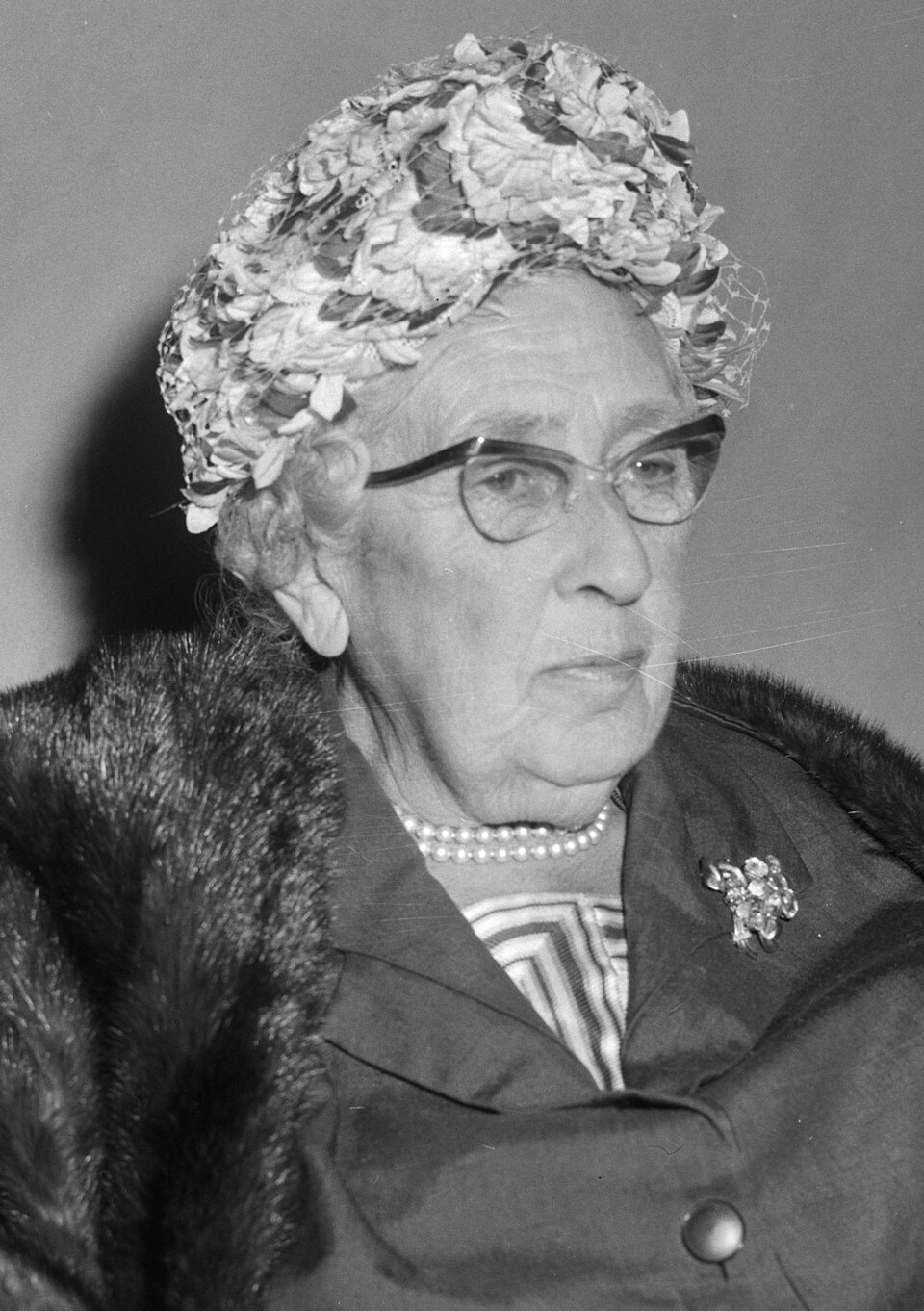
Agatha Christie was born Agatha Miller in Torquay, Devon, in 1890 and was largely taught at home. Her early manuscripts were turned down six times in a row. Then The Mysterious Affair at Styles came out in 1920 and introduced the Belgian detective Hercule Poirot. She died in 1976, by then a Dame.
Christie wrote 66 detective novels and 14 short-story collections. They are puzzle mysteries, built around a crime, a limited set of suspects and a detective who sorts the lies from the truth. Besides Poirot she created Miss Marple, who debuted in The Murder at the Vicarage in 1930, and the pair of amateur sleuths Tommy and Tuppence, first seen in The Secret Adversary in 1922. Under the name Mary Westmacott she also published six romances.
Her play The Mousetrap opened at the Ambassadors Theatre in London in November 1952 and had passed 27,500 performances by 2018. In 1955 the Mystery Writers of America made her the first recipient of its Grand Master Award, and Witness for the Prosecution won an Edgar for best play. Her books are commonly said to have sold more than two billion copies, and Britannica notes that she is reportedly outsold only by Shakespeare and the Bible.
Start with The Murder of Roger Ackroyd, published in 1926. Poirot has retired to a quiet English village when a wealthy man is found stabbed in his study, and the local doctor, James Sheppard, tells the story. It is the fourth Poirot book, but it needs no preparation, and its ending is still argued over, so avoid spoilers. If you want to see where Poirot began, read The Mysterious Affair at Styles next. For Miss Marple, try The Murder at the Vicarage.