
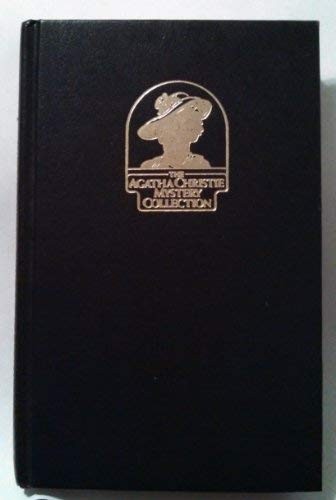
The Murder of Roger Ackroyd
Agatha Christie's 1926 murder mystery novel draws Hercule Poirot out of retirement in the English village of King's Abbot, where a wealthy landowner is found dead in his study soon after learning a damaging secret about the woman he meant to marry. The story is told by the local doctor, who becomes Poirot's assistant, and the case works its way through a household of suspects who all have something to conceal. The book matters for two reasons: it is a brisk, carefully built example of the Golden Age puzzle, and its ending set off a lasting argument about what fairness between author and reader should mean. This profile covers the 1983 Bantam hardcover and avoids revealing the solution.
Where to buy or borrow
Are you selling this book? Bookstores, publishers, authors and libraries can be listed here for free. Request a listing
About this book
Deep Overview
Christie then does what she does best: she assembles a circle of plausible suspects and gives each a reason to lie. Ackroyd's stepson Ralph Paton has debts, a secret engagement and an inconvenient disappearance. Ackroyd's niece Flora, her mother Mrs Cecil Ackroyd, the secretary Geoffrey Raymond, the soldier and big-game hunter Major Blunt and the butler Parker all have private business that the investigation drags into the light. Inspector Raglan handles the official inquiry. Poirot, who has retired to grow vegetable marrows next door, is drawn in through Flora's request for help and through the doctor's own curiosity, and Sheppard becomes his Watson-like companion.
The novel's drive comes from the gap between what people say and what they do. Poirot's method is to stop treating timetables, footprints and alibis as mere facts and to ask what each one tells him about the person who produced it. Small domestic details, such as a chair moved, a telephone call at an odd hour or a bit of trivial gossip, matter more than the dramatic evidence that first catches the eye. The pace is quick: most chapters are short, and each closes on a fresh question or a small reversal.
The book's lasting interest lies in how it treats storytelling itself. The reader depends on one voice, and Christie shows how much a narrator can say, leave out and arrange without ever stating anything false. This is the source of the controversy that followed publication. Some contemporaries felt the solution broke the unwritten contract of the genre; others, including Dorothy L. Sayers, argued that all the necessary information was on the page and the fault lay with the reader's assumptions. Because of that dispute, the novel is often read alongside the Detection Club's later codification of fair-play rules. Readers coming to it for the first time are best served by avoiding reviews and forum threads that reveal the ending, since the experience depends on not knowing.
Key Themes
Secrets in a small community. King's Abbot runs on observation and rumour. Christie shows how private shame, money worries and hidden relationships can be both camouflage for a crime and a trail that leads back to it.
Fair play between author and reader. The book is a test case for what a detective writer owes the audience: how much may be concealed, and by what means, before a surprise becomes a cheat.
Appearance versus character. Respectable surfaces, a retired detective who looks harmless, and a household that seems settled all prove less simple than they first appear.
Blackmail and moral pressure. The earlier death in the village, and the threat of exposure that surrounds it, show how fear of scandal drives behaviour in a society that prizes respectability.
Historical Context
The Detection Club, founded in London in 1930 with Anthony Berkeley as a driving force and G. K. Chesterton as its first president, counted Christie among its members. Ronald Knox, another founder, drafted ten commandments for detective writers that expressed the fair-play ideal. The Ackroyd debate belongs to the same conversation.
The book is also tied to Christie's personal history. It was the work that brought her wide recognition, and it was current when she disappeared for eleven days in December 1926, an episode that became a national news story. Its first serialisation in 1925 and its book publication by William Collins in 1926 marked a turn in her career; Collins and its successor HarperCollins have published her ever since. The 1983 Bantam edition profiled here belongs to a much later phase of the book's life, when Christie's novels were being reissued in uniform collector sets for a mass readership.
Intended Audience
It may be less satisfying for readers who prefer graphic violence, forensic procedure, deep psychological interiority for every character or a fast, modern thriller pace. Those who have already had the ending revealed will lose much of what makes the book distinctive, though the writing and character comedy still reward a reread.
Reading Difficulty
The main challenge is keeping track of who was where at what time. The plot depends on a timetable of the evening and on small remarks that may later prove significant, so some readers like to jot down times and movements. No specialist knowledge is needed. As an older mass-market-era hardcover, this particular edition is more likely to turn up second-hand than new, and its typography reflects the 1980s reissue style rather than modern design.
Helpful Background Knowledge
It is also useful to know the broad idea of the Golden Age whodunit as a game between writer and reader. If you want the book's full impact, read it before any commentary on it. If you already want to explore the debate, the Detection Club and Ronald Knox's commandments are good starting points, but save them until you have finished the novel.
Why Read This Book?
It also shows a writer making a deliberate bet. Reading it, you can see how a conventional set-up, with a body in a study, a household of suspects and an outsider detective, can be turned into something more daring by changing how the story is told. For readers curious about how Christie became the best-known name in crime fiction, this book is an informative waypoint in her career, and the Britannica entry notes that many critics regard it as her best novel, a judgement that is itself open to debate.
Reader Takeaways
You may also reconsider your own habits as a reader, especially how readily you trust a narrator who is agreeable, helpful and apparently on your side. Finally, the book offers a model of fair play to test against other mysteries: when a twist surprises you, can you go back and find the groundwork for it?
Strengths
The book is genuinely entertaining on the page, with sharp domestic comedy, especially in the doctor's household, balancing the investigation.
It is historically instructive. Few single novels are as often cited in discussions of narration, fair play and the limits of the genre, so reading it gives context for much later crime fiction.
It is economical. The book makes its case without long digressions, and its short chapters sustain curiosity.
Limitations and Cautions
The novel reflects 1920s English attitudes. Class assumptions, period stereotypes and a view of domestic staff and outsiders that was conventional then may strike modern readers as dated.
The fair-play question remains disputed. Some critics see the solution as brilliant, while others still feel it strains the genre's conventions; Pierre Bayard, a French literature professor, has gone further and argued that the official solution is itself open to challenge. Those are their views, not settled fact.
Finally, characters beyond the detective and narrator are sketched fairly briskly, which suits the puzzle form but gives limited psychological depth. This specific 1983 Bantam hardcover is a collectible reissue and may be harder to find than modern paperbacks.
Important Concepts, People, and Places
Dr James Sheppard: the village physician who narrates the story and assists Poirot; his role is the foundation of the book's technique and its controversy.
Roger Ackroyd: the wealthy owner of Fernly Park whose death sets the plot in motion.
Mrs Ferrars: the widow whose death precedes Ackroyd's and links the story to blackmail and secrecy.
Caroline Sheppard: the doctor's sister, an enthusiastic gatherer of village gossip, who supplies much of the book's humour and local information.
Ralph Paton, Flora Ackroyd, Mrs Cecil Ackroyd, Major Blunt, Geoffrey Raymond and Parker: members of Ackroyd's circle and household whose private concerns widen the list of suspects.
Inspector Raglan: the local police officer who represents the official, conventional line of inquiry.
King's Abbot and Fernly Park: the village and the estate that form the closed setting typical of Golden Age mysteries.
Fair play: the idea that a detective story should give the reader the information needed to solve it; this novel is a landmark case in that debate.
The Detection Club and Ronald Knox: the writers' society founded in 1930 and its member whose ten commandments formalised the fair-play ideal; they supply the later context for the argument the novel started.
William Collins, Sons and Bantam Books: respectively the original British publisher in 1926 and the publisher of this 1983 collection edition.
Questions the Book Explores
Reading Group Guide
Groups that include people who already know the book could be invited to talk about what they notice on a second reading. The book also pairs well with an episode of a screen adaptation or another Golden Age novel for comparison. If your group likes a structured approach, these are useful starting points for book discussion questions: the role of the village, the narrative voice, and Poirot's methods. The following section offers further prompts.
Discussion Questions
2. How does Dr Sheppard's role as narrator shape the way you see the other characters?
3. What does the village setting, with its gossip and social routines, contribute to the mystery?
4. Poirot says little about his reasoning until late. Does this strengthen or weaken the story?
5. In your view, what does a detective novelist owe the reader? Where should the line fall between clever concealment and unfair trickery?
6. How do money, class and reputation motivate the behaviour of the characters?
7. Which small details seemed trivial on first reading but looked different later?
8. Is the humour in the novel a distraction or part of its strategy?
9. How well does a book written in 1926 hold up for a modern reader, and in which respects does it feel dated?
10. If you have read other Christie novels, how does this one compare in structure and tone?
Sources and Verification
Comments
No published comments yet.
Available editions
Hardcover
The Agatha Christie Mystery Collection
- Publisher
- Bantam Books
- ISBN-13
- 9780553350012
- Pages
- 213