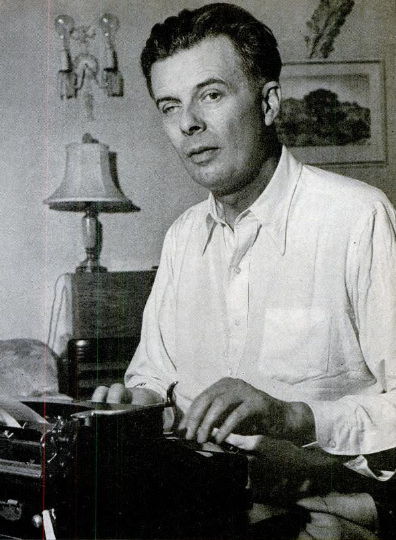
Aldous Huxley was born in 1894 in Godalming, Surrey, into a family of scientists: his grandfather was T. H. Huxley and his brother the biologist Julian Huxley. Partly blind from childhood, he studied English literature at Balliol College, Oxford. From 1937 he lived in California, where he died in 1963.
He first made his name in the 1920s with sharp, witty satires of the English intellectual set, among them Crome Yellow, Antic Hay and Point Counter Point. From Eyeless in Gaza (1936) his books turned toward Hindu philosophy and mysticism. Across novels, essays, travel writing and poems, the same worry keeps returning: what people will trade away for comfort, and how politics and technology can make the trade easy.
Brave New World, written in 1931 and published by Chatto & Windus in 1932, is the best known result. Its title comes from Miranda's speech in Shakespeare's The Tempest, and it appears on Le Monde's list of the 100 books of the century. The Doors of Perception (1954) grew out of his first mescaline experience in May 1953. His last novel, Island (1962), imagines a society that gets things right. The Nobel archive records nine nominations for him, and the Royal Society of Literature elected him a Companion of Literature.
Start with Brave New World. It is short, strange and still argumentative. If it leaves you wanting his own second thoughts, read Brave New World Revisited (1958), a set of essays on the novel's themes. For his lighter early voice, try Crome Yellow.