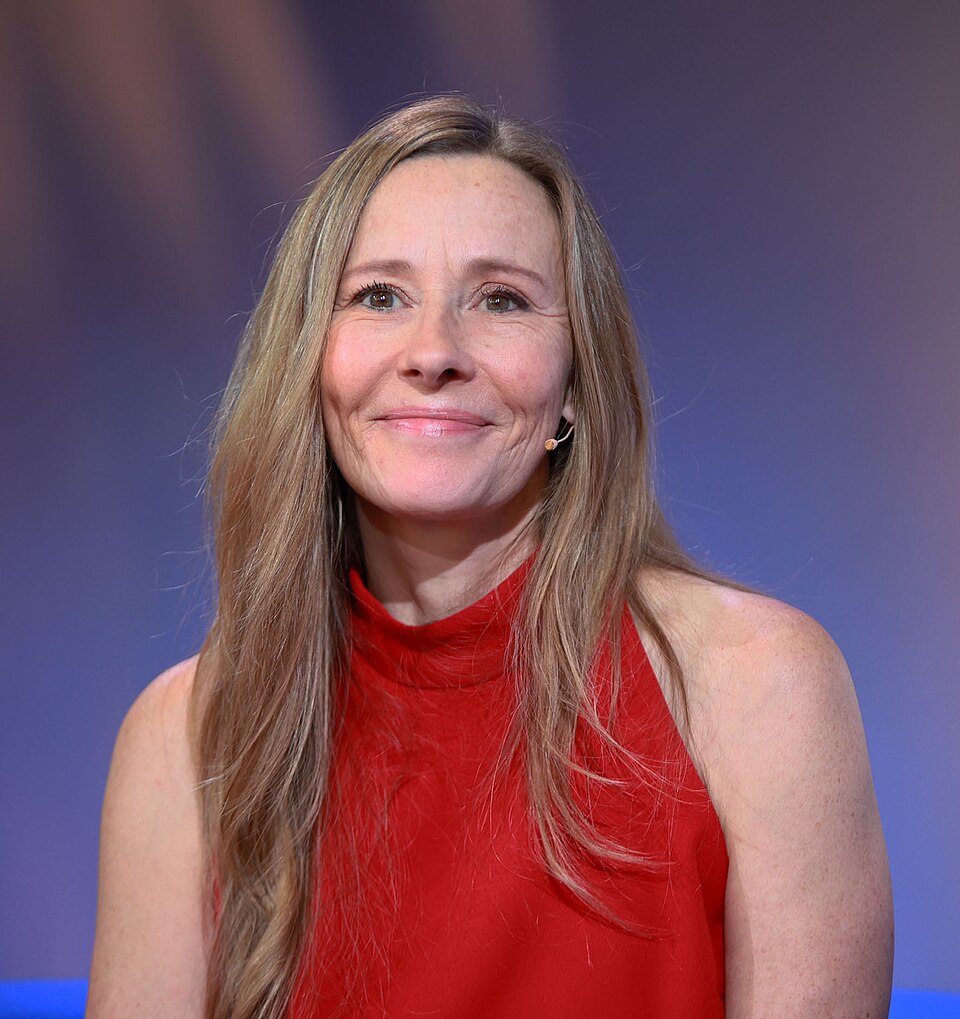
Photo of Andrea Wulf
Photo: Elena Ternovaja · CC BY-SA 3.0 · via source

Author profile

Andrea Wulf

Andrea Wulf is a German-British historian and biographer whose narrative nonfiction connects exploration, science, nature and ideas across centuries.

1 published book 0 published articles

Official website

About Andrea Wulf

Andrea Wulf was born in India, grew up in Germany and lives in the United Kingdom. A Fellow of the Royal Society of Literature since 2018, she writes biography and narrative history, with a particular interest in the exchange between scientific discovery, political thought and imaginative life.

Her books often recover people and intellectual circles whose influence has outlasted their fame. The Brother Gardeners follows the transatlantic exchange of plants and ideas, while Founding Gardeners examines horticulture in the lives of America’s founders. Chasing Venus recounts the international effort to observe the eighteenth-century transits of Venus. Magnificent Rebels turns to the writers and thinkers gathered in Jena at the birth of German Romanticism.

The Invention of Nature is her biography of Alexander von Humboldt, the Prussian naturalist who climbed volcanoes, travelled along the Orinoco and described nature as an interconnected whole vulnerable to human damage. Published in 2015, it won the Costa Biography Award, the 2016 Royal Society Science Book Prize and the 2016 Los Angeles Times Book Prize for Science and Technology.

Start with The Invention of Nature. It offers the clearest introduction to Wulf’s strengths: energetic storytelling, vivid journeys and an argument built across science, literature and environmental history. Readers drawn to its account of ideas moving through friendships and rivalries can continue with Magnificent Rebels.

Published books

Author

The Invention of Nature

Andrea Wulf’s biography restores Alexander von Humboldt to the center of nineteenth-century science and environmental thought. Following the Prussian naturalist from his constrained youth through expeditions in the Spanish Americas and Russia, the book shows how field observation, measurement, aesthetic response, and wide reading shaped his vision of nature as an interconnected whole. Wulf also traces his encounters with figures including Johann Wolfgang von Goethe, Aimé Bonpland, Simón Bolívar, and Thomas Jefferson. The later chapters move beyond Humboldt’s lifetime to examine his influence on Charles Darwin, Henry David Thoreau, George Perkins Marsh, Ernst Haeckel, and John Muir. The result is both an adventure-filled life and a history of ideas: an account of how connections among climate, geography, plants, animals, and human activity became central to understanding the living world—and why Humboldt’s warnings about environmental destruction remain significant.

View book