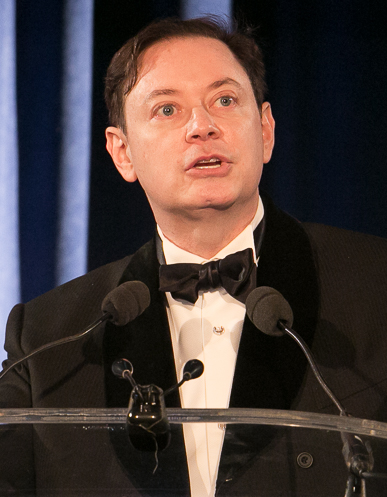
Photo of Andrew Solomon
Photo: PEN American Center · CC BY 2.0 · via source

Author profile

Andrew Solomon

Andrew Solomon is an American writer on psychology, identity, family and culture. His nonfiction combines personal experience, reporting and research.

1 published book 0 published articles

Official website

About Andrew Solomon

Andrew Solomon is an American writer and lecturer whose work crosses psychology, culture, politics and the arts. Educated at Yale and Jesus College, Cambridge, he began by writing about Soviet artists during glasnost. He later became a professor of clinical psychology at Columbia University Medical Center and served as president of PEN American Center.

His nonfiction joins personal testimony to wide-ranging reporting. The Noonday Demon: An Atlas of Depression begins with Solomon’s own illness, then considers depression through medical research, history, politics and the experiences of people in varied communities. Questions of identity, difference and social acceptance recur throughout his work.

The Noonday Demon won the 2001 National Book Award for Nonfiction and was a 2002 Pulitzer Prize finalist in General Nonfiction. Far from the Tree: Parents, Children, and the Search for Identity examines families in which children differ sharply from their parents, including through deafness, autism, schizophrenia or exceptional ability. It received the National Book Critics Circle Award for Nonfiction. Solomon has also published the novel A Stone Boat and the international-reporting collection Far and Away.

Start with The Noonday Demon. It is Solomon’s defining book and the best introduction to his method: intimate experience set beside interviews, science and cultural history. Readers drawn especially to family relationships and the meaning of difference should continue with Far from the Tree.

Published books

Author

The Noonday Demon

Andrew Solomon examines depression as an illness, a lived ordeal, a cultural category, and a public problem. Beginning with his own severe depressive episodes, he moves outward through interviews with other sufferers, clinicians, researchers, policymakers, and people working within religious or traditional healing systems. The result combines memoir, reportage, medical history, social analysis, and philosophical inquiry. Rather than offering a single explanation, Solomon studies the interaction of biology, experience, poverty, stigma, treatment, family relationships, and individual will. He considers medication, psychotherapy, alternative approaches, suicide, addiction, political responses, and the unequal conditions under which people seek care. The book’s central achievement is its refusal to reduce depression either to ordinary sadness or to a purely chemical malfunction. It presents the condition as at once bodily and psychological, private and social—an experience that can erode…

View book