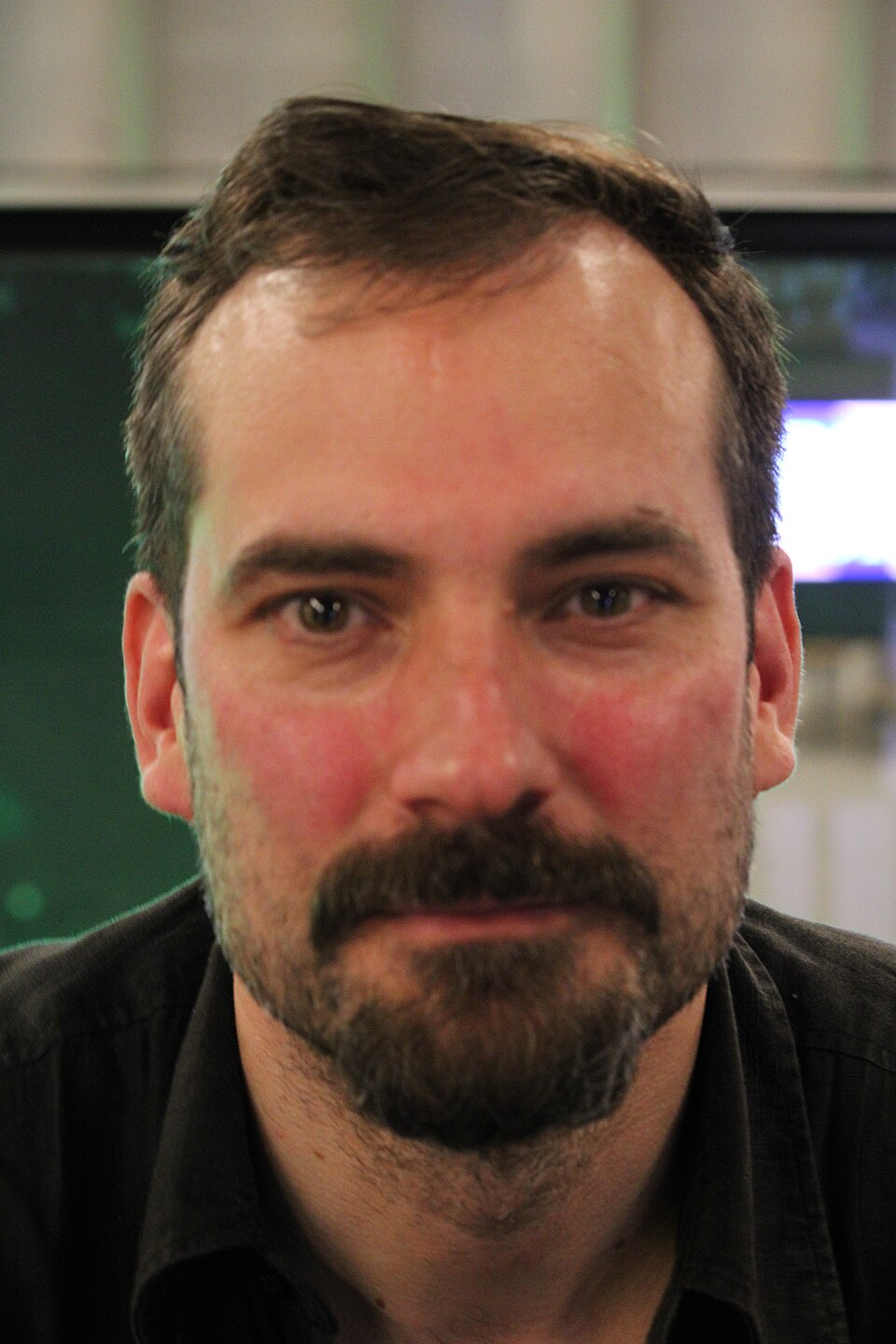
Photo of Andrzej Tichý
Photo: Christian Ursilva from København, Danmark · CC BY-SA 4.0 · via source

Author profile

Andrzej Tichý

Swedish-Czech-Polish novelist born in Prague, living in Malmö since 1981. His polyphonic, music-driven fiction maps the margins of European cities. Wretchedness is his first novel in English.

1 published book 0 published articles

About Andrzej Tichý

Andrzej Tichý was born in Prague in 1978 to a Polish mother and Czech father. He has lived in Malmö, Sweden, since 1981, and writes in Swedish. His publishers and the Swedish literary press describe him as one of the most important novelists of his generation.

His five novels move through the underbelly of European cities: housing estates, squats, underground clubs, the economies of cash-only work. The prose is polyphonic and rhythm-driven, often structured like a musical composition rather than a conventional narrative. Wretchedness, his fifth novel, comprises eight extended paragraphs, shifting between the memories of a cellist and the present moment, tracing the lives of those Sweden's political discourse tends to render invisible.

His debut, Sex liter luft (Six Litres of Air, 2005), won the Borås Tidnings Debutant Prize. Fält (Fields, 2008) was shortlisted for the Nordic Council Literature Award. Wretchedness (Eländet, 2016) was shortlisted for the August Prize, Sweden's most prestigious literary award. The English translation by Nichola Smalley, published by And Other Stories in 2020, was longlisted for the International Booker Prize and won the Oxford-Weidenfeld Prize.

Wretchedness is the natural entry point. It is short, urgent, and its musical structure rewards close reading. The narrator's encounter with a young man on a Malmö street sets off a cascade of memory, loss, and survival that reads less like a plot than like a piece of avant-garde music finding its resolution.

Published books

Author

Wretchedness

In Wretchedness, Andrzej Tichý follows a classical cellist whose brief encounter with a homeless addict by a Malmö canal pulls him back into the life he left behind. That life was a 1990s youth on the city's multi-ethnic margins, full of fights, drugs, raves and friends who never got out. Nichola Smalley translated the novel from Swedish. It unfolds as one restless act of remembering, in which past and present, and the narrator's voice and the voices of others, keep running into each other. The book matters because it pairs this daring form with a hard question: what does someone who escaped owe to those who stayed, and what does their fate say about a country proud of its fairness? The novel was shortlisted for the August Prize and longlisted for the International Booker. It stands among contemporary world literature books that reward readers willing to follow rhythm until meaning comes into focus.

View book