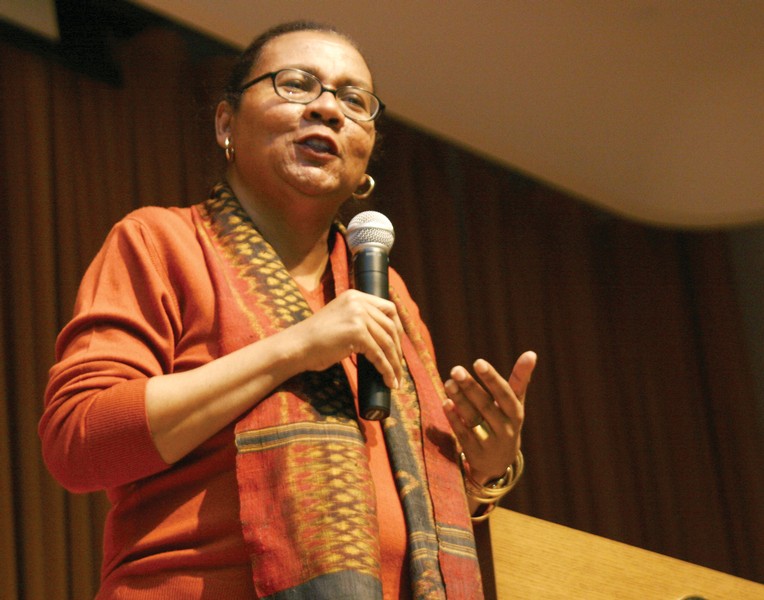
Photo of bell hooks
Photo: Cmongirl · Public domain · via source

Author profile

bell hooks

bell hooks was an American feminist writer, cultural critic and teacher whose work joined questions of race, gender and class with searching arguments about education, love and freedom.

1 published book 0 published articles

About bell hooks

bell hooks was the pen name of Gloria Jean Watkins, born in Hopkinsville, Kentucky, in 1952. A feminist theorist, cultural critic and teacher, she held academic posts at Yale, Oberlin and other institutions before becoming Distinguished Professor in Residence in Appalachian Studies at Berea College. She died in 2021.

Across criticism, memoir, poetry and books for children, hooks examined how race, gender and class shape everyday life. Her prose often moves between cultural analysis, personal experience and direct instruction. Education, popular culture, masculinity, belonging and love recur throughout her work, as does her insistence that ideas matter most when they alter how people live together.

Her major books include Ain’t I a Woman: Black Women and Feminism, Yearning, Bone Black, All About Love and Belonging: A Culture of Place. She received an American Book Award for Yearning and entered the Kentucky Writers Hall of Fame in 2018. Her work remains especially influential in Black feminist thought, cultural studies and critical pedagogy.

Start with Teaching to Transgress. Drawing on classroom experience and sustained engagement with Paulo Freire, hooks presents education as a practice of freedom while confronting racism, sexism and class power in teaching. It is an inviting route into both her political thought and her belief that learning can transform teachers and students alike.

Published books

Author

Teaching to Transgress

In this collection of essays, bell hooks presents education as a potentially liberating practice rather than the one-way transmission of approved knowledge. Drawing on her experiences as a Black student, feminist theorist, and university teacher, she examines how race, gender, class, language, authority, and emotion shape classroom life. Her alternative, “engaged pedagogy,” asks teachers and students to participate actively in learning, connect ideas with lived experience, and recognize that education is never detached from power. hooks develops her position through encounters with critical pedagogy, Black intellectual traditions, feminism, multicultural education, and engaged Buddhism. She also confronts practical tensions: who gets to speak, how authority should operate, whether experience counts as knowledge, and how teachers can invite participation without denying conflict. The result is both an argument about educational freedom and a candid account of how difficult such freedom…

View book