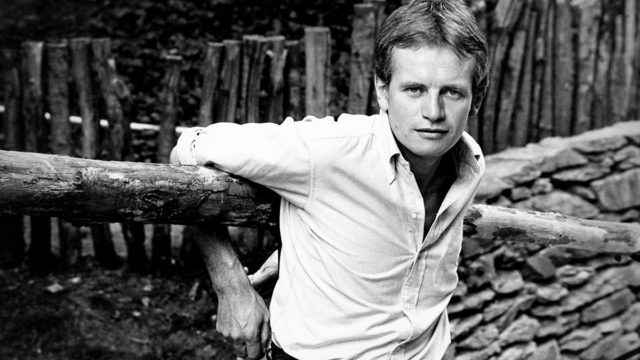
Photo of Bruce Chatwin
Photo: Viaggio Routard · CC BY 2.0 · via source

Author profile

Bruce Chatwin

British novelist, journalist and travel writer whose spare, episodic books blur reportage and fiction while exploring journeys, restlessness, collecting and the human urge to move.

1 published book 0 published articles

About Bruce Chatwin

Bruce Chatwin was a British writer born in Sheffield in 1940. He began his career at Sotheby’s, rising from porter to director, and later worked for The Sunday Times. A journey through Argentina and Chile became his first book, In Patagonia, published in 1977. He died in 1989.

Chatwin wrote travel narratives, novels, profiles and essays, often allowing those forms to mingle. His books return to movement and settlement, the stories attached to objects, and the tension between possession and freedom. His prose is compressed and visual; In Patagonia builds its portrait of a region from brief encounters, historical fragments and tales of exiles and adventurers rather than a continuous itinerary.

His other major books include The Viceroy of Ouidah, On the Black Hill, The Songlines and Utz. On the Black Hill won the 1982 James Tait Black Prize for fiction. Utz, centred on a collector of Meissen porcelain in Cold War Czechoslovakia, was shortlisted for the 1988 Booker Prize. Several works reached the screen, including The Viceroy of Ouidah as Werner Herzog’s Cobra Verde and On the Black Hill in an adaptation directed by Andrew Grieve.

Begin with In Patagonia. Its search for a relic once described as “brontosaurus skin” opens into ninety-seven compact sections about landscape, migration, myth and disputed memory. It is the clearest introduction to Chatwin’s distinctive method: the journey becomes a chain of stories, each pointing beyond the road actually travelled.

Published books

Author

In Patagonia

Bruce Chatwin’s In Patagonia follows a journey through the southern regions of Argentina and Chile, but it is neither a practical guide nor a continuous record of an itinerary. Chatwin assembles the book from brief encounters, historical digressions, family legends, archival traces, and sharply observed landscapes. A childhood memory of a mysterious scrap of animal skin—said to come from a prehistoric creature—provides the journey with its initial quest. Along the way, Chatwin investigates Welsh settlement, Indigenous displacement, European migration, labor unrest, vanished outlaws, eccentric colonists, and stories attached to remote houses and settlements. The result is a mosaic in which Patagonia becomes both a geographical region and a repository of exile, longing, violence, and reinvention. First published in 1977, the book became influential for its compressed, episodic approach to travel writing and its deliberate movement between reportage, oral history, literary reconstruction…

View book