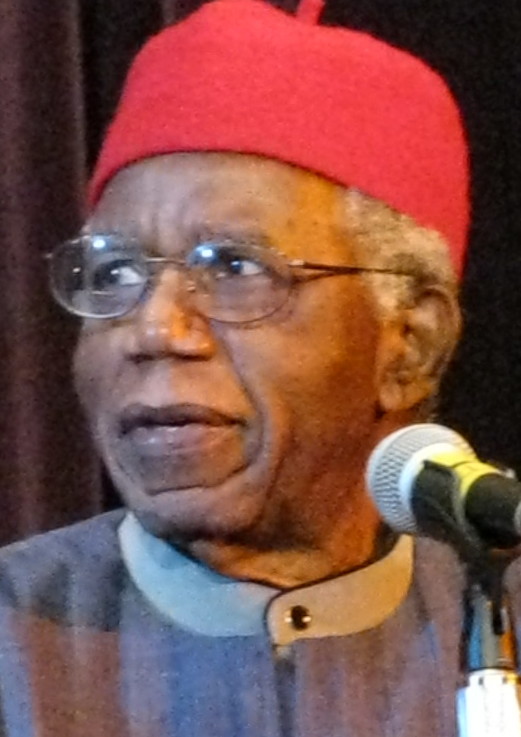
Photo of Chinua Achebe
Photo: Stuart C. Shapiro · CC BY 3.0 · via source

Author profile

Chinua Achebe

Nigerian Igbo novelist, poet and essayist (1930–2013), best known for Things Fall Apart. His fiction follows Igbo life under colonial rule and the disappointments of independent Nigeria.

1 published book 0 published articles

About Chinua Achebe

Chinua Achebe was born Albert Chinualumogu Achebe in 1930 in Ogidi, a market town in eastern Nigeria. He studied English, history, and theology at University College, Ibadan, then moved to Lagos to join the Nigerian Broadcasting Corporation, where he produced talks and eventually became Director of External Broadcasting. He also taught at Bard College. He died in 2013.

His novels split along a clean line. Things Fall Apart and Arrow of God ask what colonial administration did to Igbo village life; No Longer at Ease, A Man of the People, and Anthills of the Savannah ask what broke once Nigeria was its own. Beyond the novels he wrote poetry, children's books (Chike and the River, How the Leopard Got His Claws), and essays in Hopes and Impediments and Morning Yet on Creation Day, where he pressed the question of what an African writer working in English owes to a local readership.

Things Fall Apart, published in 1958, has been translated into more than fifty languages. In 2007 Achebe was awarded the Man Booker International Prize.

Start with Things Fall Apart. It is his first novel, and the rest of his fiction reads as a series of corrections and extensions of it.

Published books

Author

Things Fall Apart

Things Fall Apart is Chinua Achebe's 1958 debut novel and a landmark of historical fiction from Africa. Set in the late nineteenth century among the Igbo of southeastern Nigeria, it follows Okonkwo, a celebrated wrestler and farmer in the fictional village of Umuofia. He is driven by fear of resembling his failed father. The book shows a complex, self-governing society with its own law, religion and family life. It then shows how missionaries and British colonial administrators unsettle that society from within. Achebe wrote in English but shaped the novel with Igbo proverbs and storytelling rhythms. In doing so he answered the colonial fiction that had portrayed Africans as a backdrop. It remains a standard text in world literature classrooms and book groups.

View book