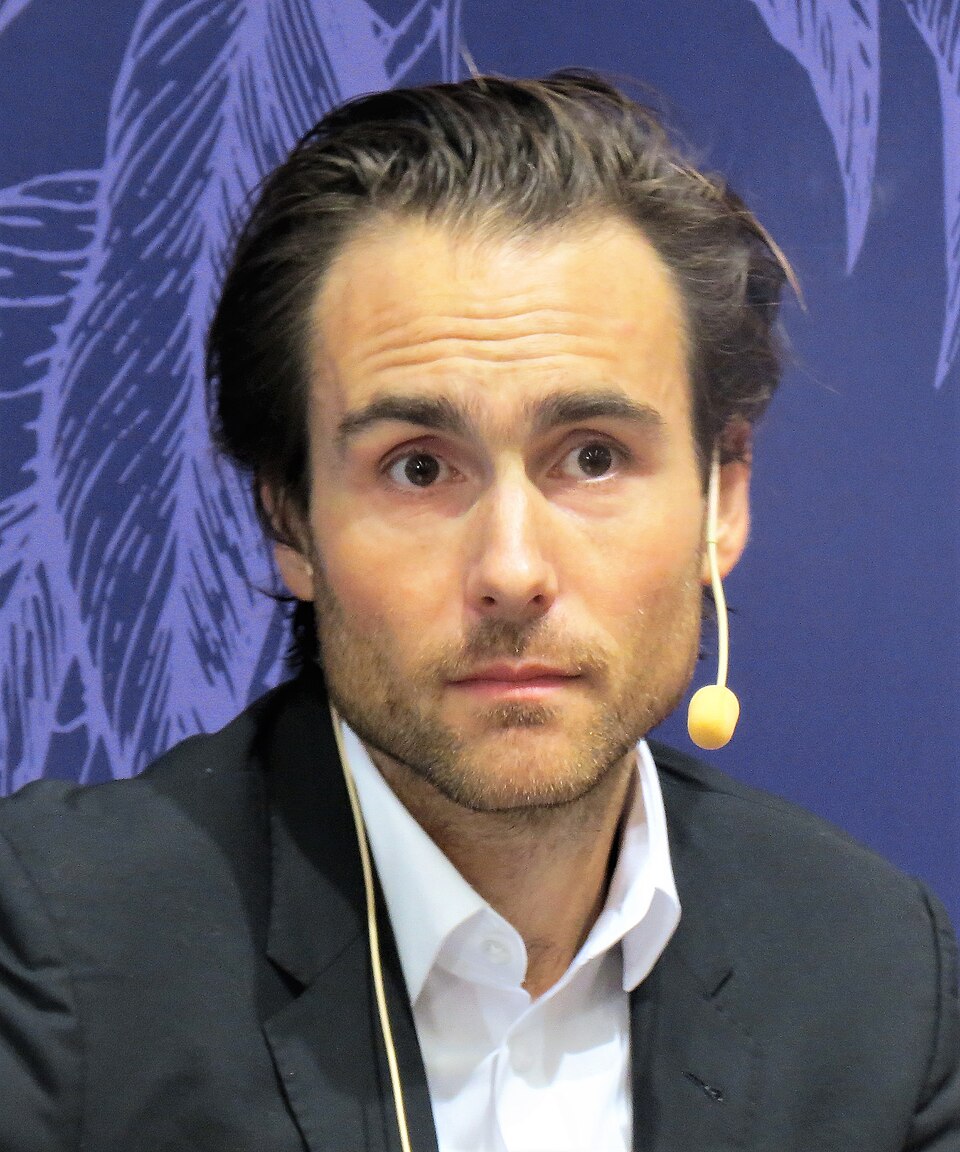
Photo of David Wallace-Wells
Photo: Vogler · CC BY-SA 4.0 · via source

Author profile

David Wallace-Wells

David Wallace-Wells is an American journalist and author whose nonfiction examines climate change, science, technology and the political future shaped by a warming planet.

1 published book 0 published articles

About David Wallace-Wells

David Wallace-Wells is an American journalist and science writer. Before becoming known for climate reporting, he worked in literary journalism as an editor at The Paris Review. He later served as deputy editor of New York magazine and was a 2019 National Fellow at New America.

His nonfiction focuses on climate change and the near future of science and technology. He writes at the scale of systems: heat, food, migration, economics and politics appear as connected consequences rather than isolated problems. The tone is urgent, but the argument extends beyond catastrophe to ask how warming may alter culture, power and ordinary expectations of progress.

The Uninhabitable Earth: Life After Warming grew from his widely read and debated 2017 New York cover story about severe global-warming scenarios. Published in 2019, the book became a New York Times bestseller and was selected as a Kirkus Reviews Best Book of 2019. It was also longlisted for the 2020 Andrew Carnegie Medal for Excellence in Nonfiction and the PEN/E. O. Wilson Literary Science Writing Award.

New readers should begin with The Uninhabitable Earth. It is his defining book and the title on WebToTell, combining a broad account of climate risk with an examination of what warming could mean for politics, capitalism, technology and human life. Its directness makes the stakes difficult to treat as abstract.

Published books

Author

The Uninhabitable Earth

In The Uninhabitable Earth, journalist David Wallace-Wells surveys the human consequences of a rapidly warming planet. Rather than treating climate change chiefly as a question of rising seas or endangered wildlife, he presents it as a force capable of reshaping food systems, public health, migration, conflict, economic life, politics, and culture. The book moves from physical dangers—including extreme heat, wildfire, water scarcity, ocean damage, and disease—to the social narratives and institutions through which people interpret those dangers. Its central contention is that climate disruption is neither remote nor confined to a single environmental problem: it is an all-encompassing condition created by human choices. Wallace-Wells writes in an intentionally alarming register, but he does not argue that catastrophe is predetermined. The range of possible futures remains politically contingent, making the book both a warning about cascading risks and an argument for collective agency.

View book