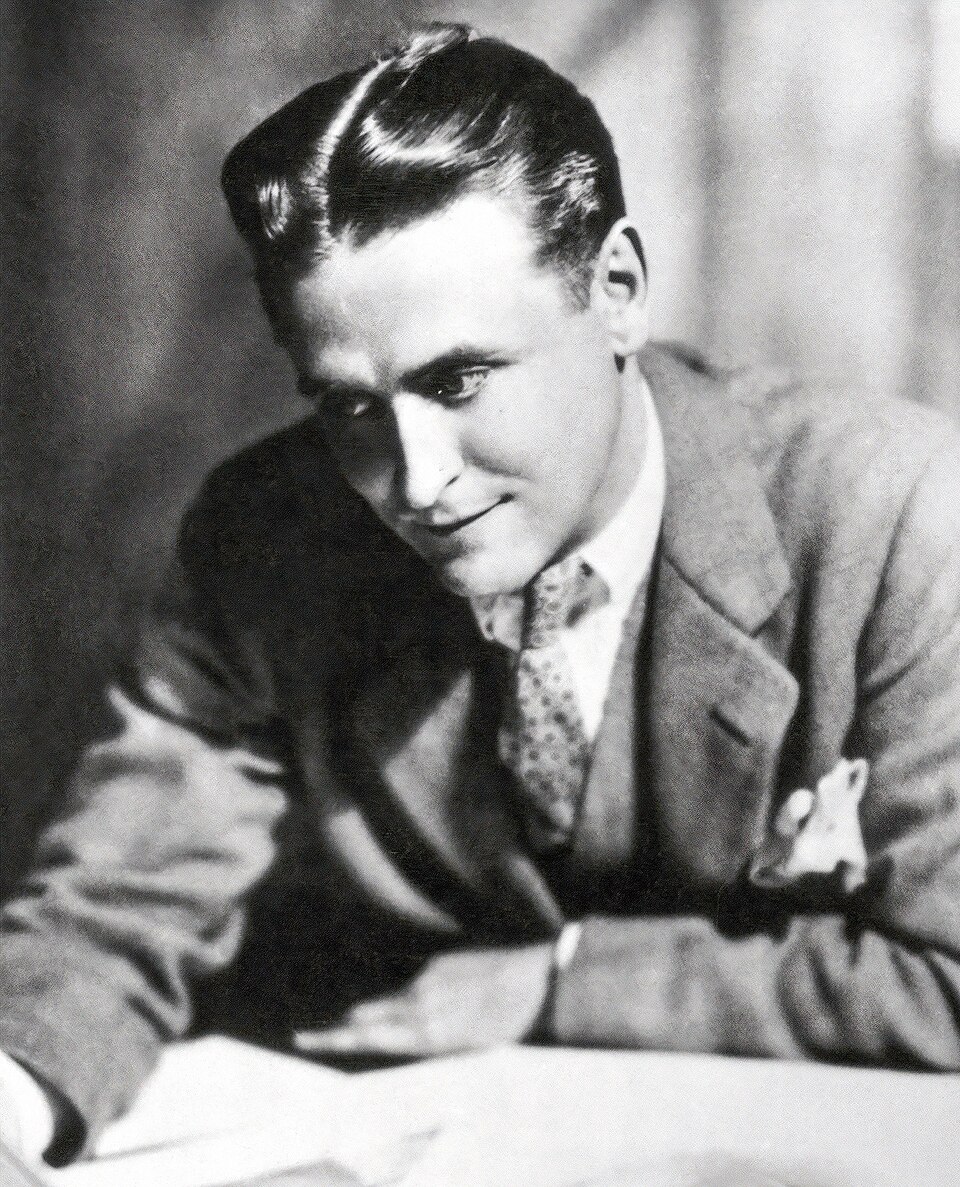
Francis Scott Key Fitzgerald was born in St. Paul, Minnesota, in 1896 and left Princeton in 1917 to join the Army. At twenty-three he became famous with his first novel, This Side of Paradise (1920), and for the rest of the decade he was the public face of the Jazz Age, a phrase he helped popularize. He died in Los Angeles in 1940, aged 44, while working on a novel about Hollywood.
He completed four novels and more than 150 short stories. His subject is desire that outruns its means: love bent by social climbing, money that corrupts, youth that promises more than it can keep. The prose is lyrical but exact, and it often comes through an observer standing a little outside the glitter. The stories range wider than his reputation suggests, from comedy and fantasy to tragedy. "The Diamond as Big as the Ritz," collected in Tales of the Jazz Age, is a good example.
The Great Gatsby came out from Scribner's in April 1925 to mixed reviews and slow sales. Its standing grew later, helped by its popularity among American soldiers in the Second World War and its adoption as a school text in the 1950s. It is now often called the great American novel. Tender Is the Night followed in 1934. The Last Tycoon, left unfinished, was published in 1941.
Start with The Great Gatsby. Nick Carraway tells the story of one summer on Long Island in 1922, when his neighbor Jay Gatsby throws huge parties in the hope of winning back Daisy Buchanan. It is compact, and it holds nearly all of Fitzgerald's concerns in one place. If it hooks you, try Tender Is the Night for something longer and darker, or Tales of the Jazz Age for the shorter fiction.