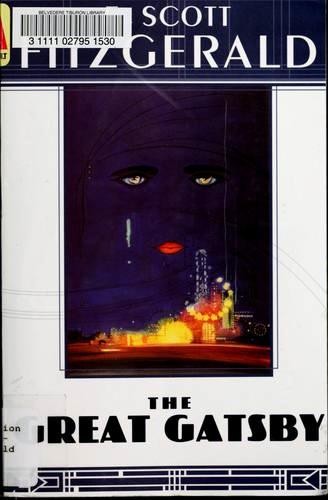
Cover for The Great Gatsby

Literary Fiction

The Great Gatsby by F. Scott Fitzgerald

F. Scott Fitzgerald's 1925 novel follows Nick Carraway, a young Midwesterner who rents a small house on Long Island in the summer of 1922. Next door, the mysterious millionaire Jay Gatsby throws extravagant parties in the hope of winning back Daisy Buchanan, the woman he loved years earlier. In under two hundred pages, the book turns one man's romantic obsession into a study of wealth, class, reinvention and the American Dream. It sold slowly at first but is now a fixture of school curricula, and it is one of the classic novels to read for its compression and its famous closing pages. It is also a dependable choice among book club books, because its ambiguities invite argument.

Where to buy or borrow

Are you selling this book? Bookstores, publishers, authors and libraries can be listed here for free. Request a listing

About this book

The Great Gatsby is Fitzgerald's third novel, published by Charles Scribner's Sons in 1925. It is usually classed as a tragedy or a Jazz Age novel and is often treated as a central work of American modernism. Fitzgerald avoids the sprawl of many social novels. He uses a single retrospective narrator, nine chapters, and a handful of recurring images, such as a green light, a faded billboard and a grey industrial wasteland. The result is a book that rewards slow rereading and is short enough to finish in a weekend. That is one reason it keeps appearing among classic novels to read.

The edition profiled here is the Scribner trade paperback edited by Fitzgerald scholar James L. W. West III. The publisher presents it as a text that restores the author's own late corrections, and catalogue records also credit an introduction by Jesmyn Ward. Readers comparing printings should check the front matter of their own copy, because Scribner has reissued this ISBN with changing supplementary material.

Deep Overview

The story is told in retrospect by Nick Carraway, a bond salesman from the Midwest who settles in West Egg, a newer-money community on Long Island. His cousin Daisy lives across the water in fashionable East Egg with her husband, Tom Buchanan, a wealthy former athlete whose arrogance is barely disguised. Nick's neighbour is Jay Gatsby, whose mansion fills each weekend with guests who drink his liquor and trade rumours about where his money came from.

Fitzgerald builds the book on a gap between what Gatsby appears to be and what he actually is. Gatsby is not an aristocrat. He is a self-invented figure, born James Gatz, who has remade himself and acquired wealth, partly through criminal connections, in order to be worthy of Daisy's world. His parties are less a celebration than a signal flare meant to draw one particular person across the bay. When Nick arranges a reunion, the novel shifts from social comedy to something more fragile. Gatsby wants not just Daisy's affection but the undoing of five years, and the book steadily shows how little the present can accommodate that wish.

The structure alternates between spectacle and intimacy. Large set pieces include the parties, a hot afternoon in a New York hotel suite, and a drive through the valley of ashes between Long Island and Manhattan. These are interleaved with quieter scenes of conversation and delayed revelation. Gatsby's history arrives in fragments, filtered through Nick's partial knowledge and Nick's own changing feelings about him. Because Nick is both participant and judge, the reader must keep asking how far to trust his moral summaries. He claims to withhold judgment, yet he plainly judges.

The book's world is divided by class, and the divisions are geographic. East Egg stands for inherited privilege, West Egg for ambitious newcomers, and the valley of ashes for the people who bear the costs of the leisure class's carelessness. Tom and Daisy's insulation from consequences becomes the book's sharpest moral observation. Gatsby, for all his criminality and self-deception, is the only major character who commits himself wholly to something beyond comfort.

The ending extends the book from a story about one summer to a comment on national aspiration. The closing pages connect Gatsby's longing to the long history of Americans imagining a better future. Whether Fitzgerald is celebrating that impulse, mourning it, or doing both is the question that has kept the novel alive in classrooms and reading groups.

Key Themes

The American Dream and its limits: Gatsby's rise suggests that anyone can remake themselves, but the novel questions whether money can buy acceptance by those who inherited their position.

Class and social stratification: the settings of East Egg, West Egg and the valley of ashes turn status differences into physical geography.

The past and nostalgia: Gatsby believes that time can be reversed, and the book treats that belief as both moving and doomed.

Carelessness and moral responsibility: several characters leave damage behind them and retreat into money or reputation.

Illusion versus reality: performed identities, rumours and staged glamour keep the characters from seeing one another clearly.

Desire and longing: the green light and similar images show how wanting something can matter more than having it.

Unreliable perspective: Nick's narration shapes our sympathies, so the book is also about who gets to tell a story and how.

Historical Context

The novel is set in the summer of 1922, in the aftermath of the First World War and during national Prohibition, which banned the sale of alcohol in the United States and created a lucrative market for bootleggers. Fitzgerald coined or popularized the label Jazz Age for the decade, a period of rising consumer wealth, changing social manners, and anxiety about whether the new prosperity rested on solid ground. The story's Long Island world draws on the North Shore society Fitzgerald observed in the early 1920s, and scholars also connect the Gatsby–Daisy romance to Fitzgerald's youthful relationship with the socialite Ginevra King. Fitzgerald completed a rough draft in 1924 while living in France and revised it with editor Maxwell Perkins at Scribner. The 1925 first edition appeared with the now famous Francis Cugat jacket painting of floating eyes above a city. The book had mixed reviews and sold slowly on publication; its status as a central American novel came later, as readers and critics reassessed the Twenties and Fitzgerald's work.

Intended Audience

This edition suits first-time readers of Fitzgerald, high school and college students, and adults returning to a book they read long ago. It is also a good fit for readers who like compact novels with a strong narrator and symbolic design. Those who want a fast, plot-driven story may find the first half leisurely. Readers who expect Gatsby to be a straightforward romance may be surprised by how critical and ironic the book is about romance. Because of its brevity, it is accessible to reluctant readers, but its ambiguities reward people who enjoy interpretation.

Reading Difficulty

The sentences are polished and often lyrical, with some period vocabulary and references to 1920s money, social institutions and slang. Most readers can follow the narrative without annotation. The difficulty is interpretive, not linguistic: the novel depends on implication, tone and symbolism, and Nick's perspective is not neutral. The pace is moderate, with long party scenes in the first half and faster events in the last third. The book is short, so it can be read in a few sittings. In a paperback trade edition like this one, the type is standard and there are no illustrations; readers who want annotations should look for a separately annotated edition.

Helpful Background Knowledge

No preparation is required, but a few contexts help. Knowing something about Prohibition and the 1920s economic boom explains where characters' money may come from and why wealth looked both glamorous and suspicious. A basic understanding of the term American Dream, and of the old-money versus new-money distinction, makes the social comedy clearer. It can be useful to know that the novel is narrated by a participant, not an omniscient narrator. Readers who care about textual history may also want to read the editor's note on the text and the foreword and introduction in this edition after finishing the novel, so as not to be influenced by interpretations beforehand.

Why Read This Book?

Few novels this short manage to hold so many ideas in balance. It rewards a first read for its story and a second read for its structure and craft. It is a shared point of reference in American culture, appearing in classrooms, adaptations and arguments about wealth and aspiration, so reading it gives access to a wider conversation. This particular edition is useful if you care about the text itself, because it was prepared by a Fitzgerald scholar and incorporates the author's later corrections. It is also a strong choice if you are building a reading list of classic novels and want something you can finish quickly but think about for much longer.

Reader Takeaways

A careful reader may come away able to explain how Fitzgerald uses setting, repeated images and a single narrator's viewpoint to build meaning. They may reconsider familiar claims about the American Dream, noticing that the novel is both sympathetic to and sceptical of aspiration. They may also notice how often the book shows privilege as the ability to avoid consequences. On a practical level, readers can learn to ask who is telling a story and what that person may be leaving out, a habit that applies well beyond this book.

Strengths

The novel is economical: every chapter contributes to its pattern of images and its building momentum. The prose is memorable without being obscure. Its central characters, particularly Gatsby and Nick, are open to genuine disagreement rather than a single correct reading. It connects intimate emotion to social critique without turning into a lecture. This edition adds scholarly care in the text, and catalogue records indicate supplementary matter by a respected editor and a contemporary novelist.

Limitations and Cautions

The novel is told from a narrow social vantage. Its world is wealthy, mostly white and focused on a small circle, and working-class characters and women have limited interior lives. Some of its period attitudes about race, ethnicity and gender are unsettling to modern readers, and critics continue to discuss how much the book exposes those attitudes and how much it shares them. Its ending and symbolism are open to different readings, so summaries that present one meaning as settled should be treated cautiously. The book's cultural fame can also create inflated expectations; readers who come for a lavish romance may be disappointed by how restrained and ironic it is. Bibliographic details for this ISBN vary across printings, so supplementary material may differ from the copy you hold.

Important Concepts, People, and Places

Nick Carraway: the narrator, a Midwesterner who becomes Gatsby's neighbour and confidant and whose judgments shape the reader's view.

Jay Gatsby (born James Gatz): the self-made millionaire whose wealth and persona are organized around winning Daisy back.

Daisy Buchanan: Nick's cousin and Gatsby's former love, whose charm and carelessness make her the book's central object of desire.

Tom Buchanan: Daisy's wealthy husband, who embodies inherited privilege and entitlement.

Jordan Baker: a professional golfer and Daisy's friend, who connects Nick to the society circle and represents its cool detachment.

Myrtle and George Wilson: the couple from the valley of ashes whose fates link the working class to the leisure class.

Meyer Wolfsheim: Gatsby's associate, who points to the criminal side of his fortune.

West Egg and East Egg: the two Long Island communities that dramatize the difference between new and old money.

Valley of ashes: the industrial wasteland between Long Island and New York City, which exposes the costs behind the glitter.

The green light: the light at the end of Daisy's dock, which becomes an emblem of longing for something just out of reach.

The eyes of Doctor T. J. Eckleburg: a faded billboard whose gaze invites readers to ask whether anyone is watching or judging.

Prohibition and the Jazz Age: the historical backdrop that shapes the characters' money, parties and moral ambiguity.

Maxwell Perkins: Fitzgerald's editor at Scribner, who encouraged revision of the manuscript.

Questions the Book Explores

Can a person leave behind their origins and become someone new, or does society keep track? Is Gatsby's devotion admirable, delusional, or both? What does it mean to hold on to a past that no longer exists? Who is responsible when careless people cause harm and do not face the consequences? How does the wish for wealth and status shape love? How reliable is a narrator who says he is reserving judgment while describing events in ways that guide ours?

Reading Group Guide

The book is short enough for a single meeting, though groups may prefer to divide it into three parts: chapters one to three, four to seven, and eight and nine. A first meeting can begin with first impressions of Gatsby and Nick before moving to close reading of the parties, the hotel scene and the final chapter. Participants might each bring one passage they find revealing and explain why. Groups may want to compare how the characters are depicted in film or stage adaptations with their own mental images, if members have seen any. Because opinions on the characters often divide, it helps to ask people to support views with specific scenes. Note that this is among the more reliable book club books because its ambiguities leave plenty of room for debate.

Discussion Questions

1. How does Nick's claim to be tolerant of others compare with the way he behaves and describes people?

2. What does Gatsby actually want from Daisy, and is it something she could give him?

3. In what ways do East Egg, West Egg and the valley of ashes shape the characters' choices?

4. Which characters seem most responsible for the novel's tragedy, and why?

5. How do the green light and the eyes of Doctor T. J. Eckleburg work differently as symbols?

6. Does the novel criticize the American Dream, celebrate it, or complicate it?

7. How does reading the book in retrospect, through Nick's memory, affect your sense of suspense and sympathy?

8. How do the novel's portrayals of women and of ethnic or working-class characters affect your reading today?

9. What is the effect of the final paragraphs, and what do they ask readers to consider about the past?

Sources and Verification

Bibliographic identification relied on library catalogue records matching the title, author, ISBN and edition information, along with the publisher's reading group material and an established encyclopedia and reference entry for the novel's publication history, setting and reception. Retail and bookseller listings were used only to cross-check edition data. Publication date and page count for this ISBN are not stated here because sources differ across printings. Interpretation and analysis are the editorial team's own.

Comments

No published comments yet.

Sign in to add a comment.

Available editions