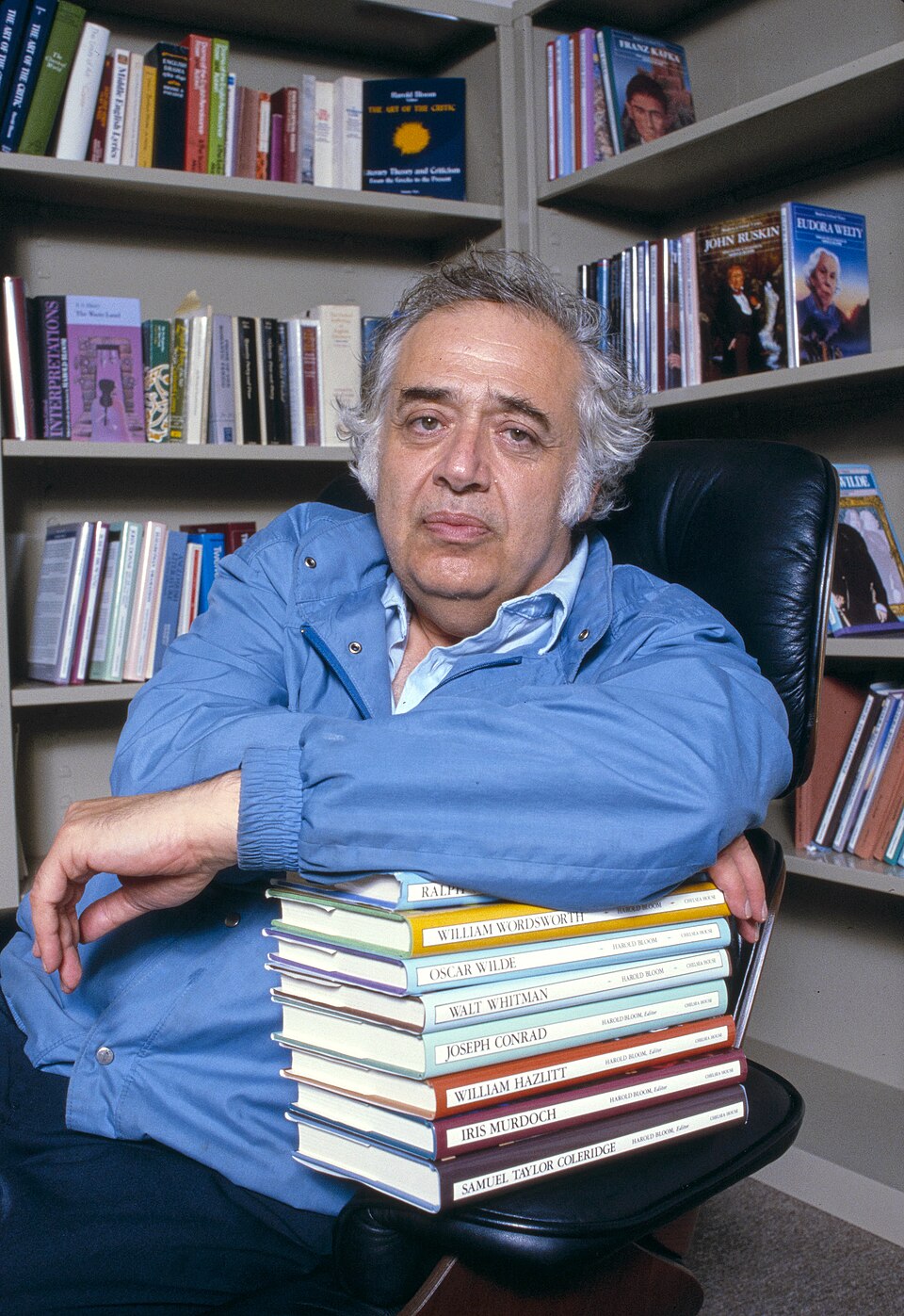
Harold Bloom was born in the Bronx in 1930 and died in New Haven in 2019. He took a BA at Cornell, then a PhD at Yale in 1955, and joined the Yale faculty that same year. He taught there for the rest of his life, and he also held the Charles Eliot Norton chair at Harvard and a professorship at New York University. His last class came only days before his death.
He started out writing on the Romantic poets, in Shelley's Mythmaking (1959) and The Visionary Company (1961), when they were out of fashion. The Anxiety of Influence (1973) made his name. Its argument is that strong poets write by misreading the predecessors who shaped and threatened them. A Map of Misreading followed in 1975. Later he wrote on religion, including The Book of J, and edited a huge number of anthologies and series for Chelsea House. His prose is passionate, partisan and unashamed about ranking writers.
He received a MacArthur fellowship in 1985. The Western Canon (1994) defended Shakespeare, Dante, Chaucer and other writers he thought essential, and attacked what he saw as the rise of multiculturalism in the academy. Critics contested that position, and it still divides readers. Shakespeare: The Invention of the Human (1998) became an unexpected best-seller.
On WebToTell he appears as the author of the introduction to Edith Grossman's 2003 English translation of Don Quixote, published by Ecco. That makes it a small first taste of how he reads a masterpiece. For a full book, try How to Read and Why (2000), which Yale counts among his master works. Take on The Western Canon for his big argument, and leave The Anxiety of Influence until you want the theory.