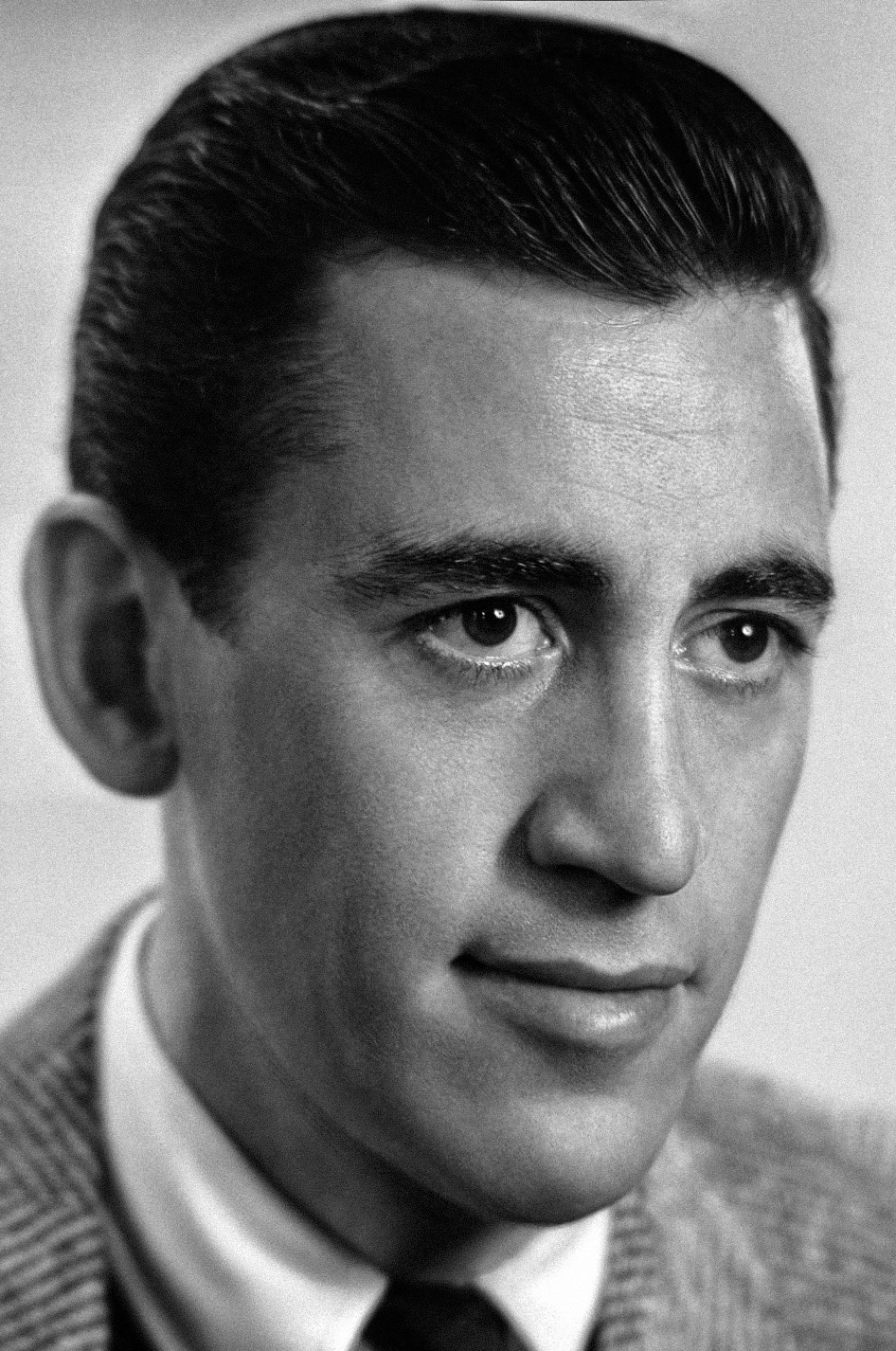
Jerome David Salinger was born in Manhattan on New Year's Day 1919. He studied at Columbia and New York University and had his first story printed in Story magazine in 1940. After service in the Second World War, his fiction appeared regularly in The New Yorker. In 1953 he moved to a wooded property in Cornish, New Hampshire. He lived there in seclusion for more than fifty years and died in January 2010.
He wrote short stories and exactly one novel. His characters are quick, sensitive young people who find the adult world false, and many of them are hurt by it. Several belong to the Glass family, among them Seymour, Franny and Zooey, whose story runs through his later work. The voices are chatty and confessional, and the plots are small.
The Catcher in the Rye came out on 16 July 1951. It follows Holden Caulfield, expelled from Pencey Prep, as he drifts around New York before Christmas, thinking about his younger sister Phoebe. Time put it on its 2005 list of the hundred best English-language novels since 1923, and Modern Library readers placed it among the century's best. Nine Stories followed in 1953, then Franny and Zooey in 1961 and Raise High the Roof Beam, Carpenters and Seymour: An Introduction in 1963. His last published work, the novella Hapworth 16, 1924, ran in The New Yorker on 19 June 1965.
Start with The Catcher in the Rye. It is his best-known book and the clearest introduction to his voice. If you want him in shorter form, read Nine Stories next. Franny and Zooey comes after that, for the Glass family.