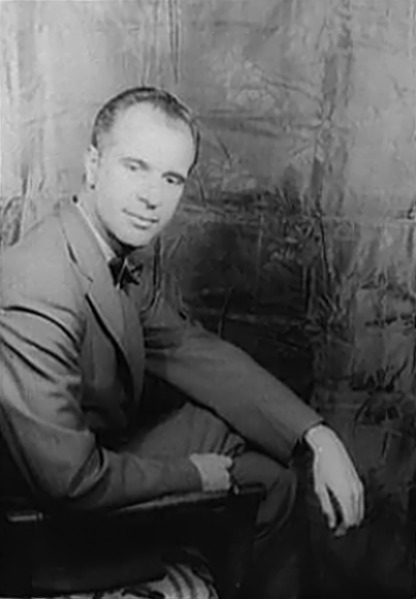
John Hersey was born in 1914 in Tianjin, then spelled Tientsin, to American missionary parents. He lived in China until 1925, when his family moved to the United States. He studied at Yale and at Clare College, Cambridge, then went into journalism. During the Second World War he reported from Europe and Asia for Time, Life and The New Yorker. He died in Key West, Florida, in 1993.
Hersey worked on the border between reporting and fiction. His early war books, such as Men on Bataan and Into the Valley, came straight out of fieldwork. His novels often take a historical catastrophe as their ground. The Wall, for example, places invented characters and fictional diary entries inside the real story of the Warsaw Ghetto Uprising. His prose is plain and unhurried, and he lets ordinary people carry events instead of commenting on them.
A Bell for Adano, his 1944 novel about the Allied occupation of an Italian town, won the Pulitzer Prize in 1945. Hiroshima made him a landmark of modern journalism. It filled the whole feature space of The New Yorker on August 31, 1946, and Knopf published it as a book the same year. It opens at a quarter past eight on the morning of August 6, 1945, with a clerk named Toshiko Sasaki at her desk. Many people now rank it among the most influential pieces of long-form reporting ever published.
Start with Hiroshima. The first Knopf edition ran to about 160 pages, so you can read it in an evening, and everything else he wrote about war is easier to place once you have. If you want fiction next, try A Bell for Adano for its gentler, humane comedy, or The Wall for something heavier and longer.