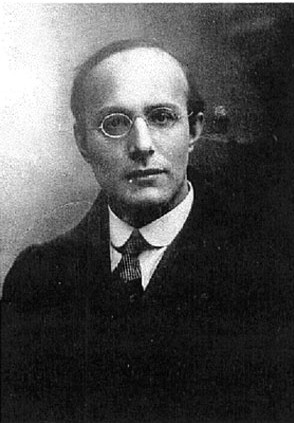
Photo of Karl Polanyi
Photo: Unknown authorUnknown author · Public domain · via source

Author profile

Karl Polanyi

Karl Polanyi was a Hungarian economic historian and social theorist whose work examines how market systems reshape society, politics and human relationships.

1 published book 0 published articles

About Karl Polanyi

Karl Polanyi (1886–1964) was born in Vienna, raised in Budapest and trained in law. He worked as an economic journalist in Vienna before the rise of fascism led him to Britain in 1933. There he taught social and economic history through the Workers’ Educational Association. He later held posts at Bennington College and Columbia University.

His writing crosses economic history, political economy and anthropology. Polanyi challenged the idea that markets arise naturally and operate apart from society. Instead, he argued that economic life is organized through social institutions, political choices and communal obligations. His prose joins broad historical argument with close attention to labor, land, money and the human costs of rapid change.

The Great Transformation, written while he was at Bennington and published in 1944, is his defining work. It traces the rise of industrial capitalism and the self-regulating market, especially through nineteenth-century Britain. His later research in economic history and anthropology contributed to Trade and Market in the Early Empires, published in 1957 with other scholars.

Begin with The Great Transformation. It introduces Polanyi’s central arguments and shows how his historical method works across economics, politics and social life. The book is demanding but direct, and it remains the clearest route into the questions that shaped his career: what happens when markets are treated as independent forces, and how societies respond to the disruption that follows.

Published books

Author

The Great Transformation

Polanyi sets out to explain the breakdown of nineteenth-century European civilization and the political disasters that followed it. His account connects four institutions: the balance-of-power system, the international gold standard, the liberal state, and—most importantly—the ideal of a self-regulating market. Rather than treating markets as timeless or naturally dominant, he distinguishes ordinary markets from a market society in which production and social life are organized around market prices. The book moves across diplomatic history, industrialization, English poor relief, classical political economy, labor legislation, monetary institutions, imperialism, depression, fascism, and socialism. Its governing argument is that constructing a self-regulating market required extensive political intervention and the treatment of labor, land, and money as commodities. Because those elements are inseparable from human beings, nature, and public institutions, unrestricted commodification g…

View book

Articles about Karl Polanyi's books