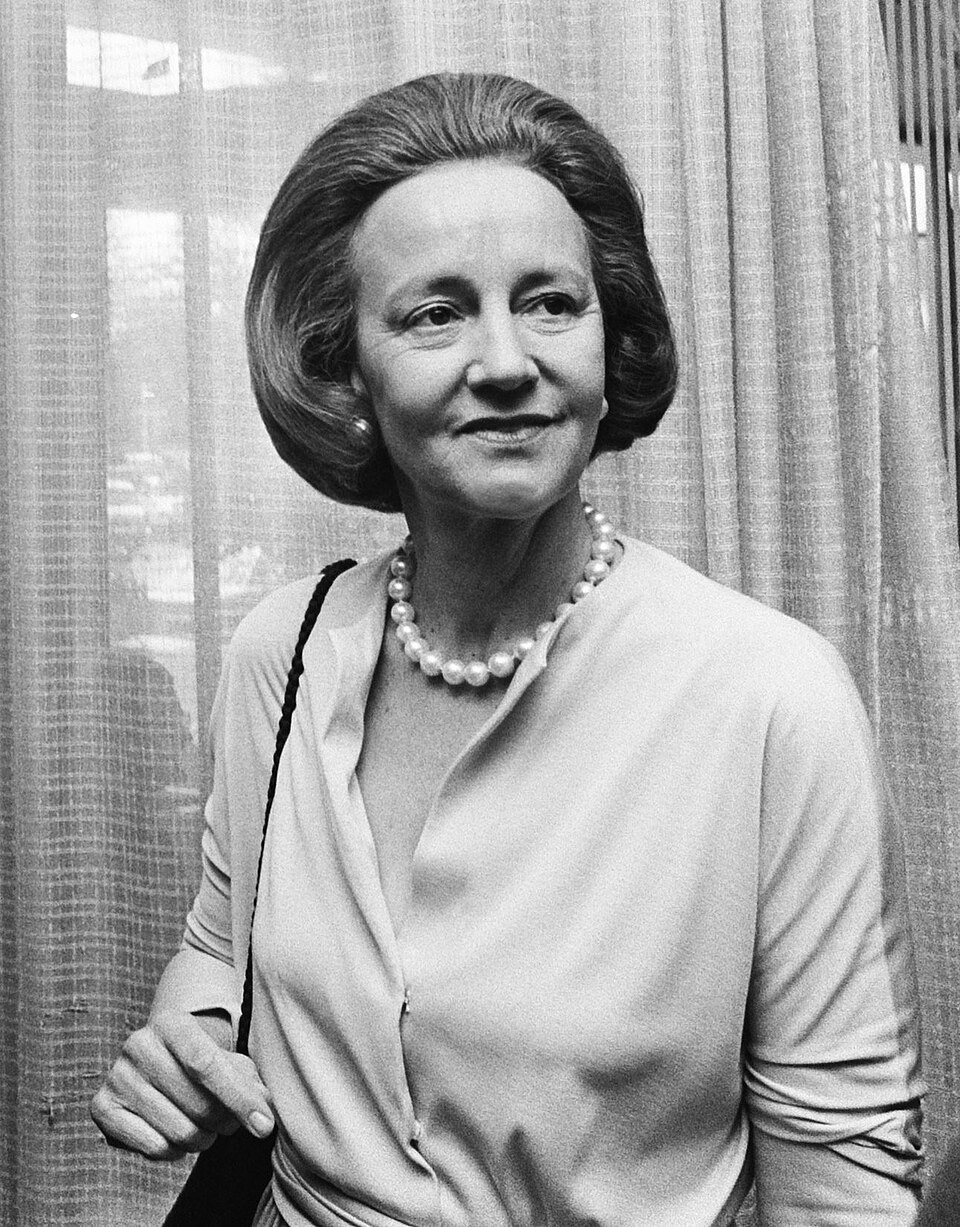
Photo of Katharine Graham
Photo: File:Katharine Graham 927-9432 (cropped).jpg: Unknown / Anefo derivative work: Der Angemeldete · CC0 · via source

Author profile

Katharine Graham

Katharine Graham was an American newspaper publisher and memoirist whose candid autobiography, Personal History, recounts her life and her leadership of The Washington Post.

1 published book 0 published articles

About Katharine Graham

Katharine Graham (1917–2001) was an American newspaper publisher and memoirist. The daughter of Washington Post owner Eugene Meyer, she worked briefly in journalism before joining the family newspaper. After her husband, Philip Graham, died in 1963, she assumed leadership of the Washington Post Company, later serving as publisher of the newspaper and as the company’s chief executive.

Her writing is rooted in autobiography, journalism and institutional history. Personal History follows her sheltered upbringing, marriage and unexpected entry into corporate leadership. Graham writes candidly about insecurity, grief and the restrictions placed on women of her generation, while showing how experience gradually altered her understanding of authority and responsibility.

The memoir’s public history is equally important. Graham recounts the Post’s decision to publish the Pentagon Papers in 1971, its Watergate reporting and the bruising pressmen’s strike of 1975. Published by Alfred A. Knopf in 1997, Personal History received the 1998 Pulitzer Prize for Biography.

New readers should begin with Personal History, the book listed on WebToTell. It is both Graham’s central literary achievement and an unusually close account of decisions that shaped modern American journalism. Her perspective as publisher gives the familiar stories of the Pentagon Papers and Watergate a different focus: the risks borne by the institution, and the person required to make the final call.

Published books

Author

Personal History

Katharine Graham’s Personal History joins family memoir, corporate history, and an eyewitness account of twentieth-century American journalism. Graham traces her emotionally isolated childhood in a wealthy, politically connected household; her marriage to the charismatic and troubled Philip Graham; his mental illness and death by suicide; and her unexpected succession to leadership of the Washington Post Company. The professional story follows her movement from self-doubt toward authority as the Post confronted the Pentagon Papers, investigated Watergate, and endured a destructive labor conflict. Graham does not present this development as an inevitable triumph. Instead, she records hesitation, dependence, mistakes, and the slow acquisition of judgment. The result is both an autobiography of personal transformation and an insider’s examination of how ownership, editorial independence, business risk, government pressure, and workplace power converge inside a major news institution.

View book