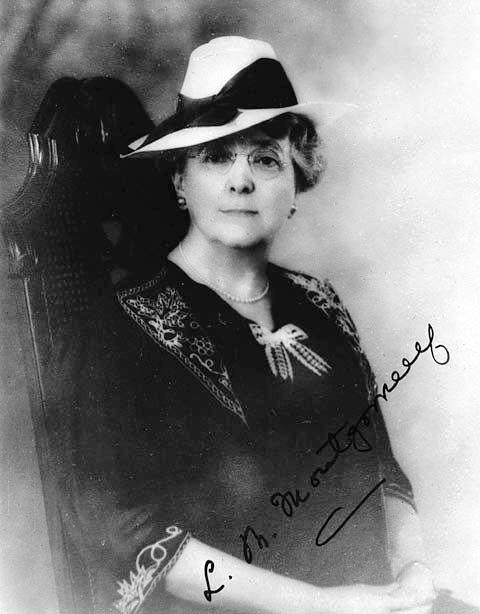
Lucy Maud Montgomery, who published as L. M. Montgomery, was born in 1874 in Clifton, Prince Edward Island. After her mother's death she grew up in Cavendish, on the island's north shore, with her Macneill grandparents. Farms, shoreline, woods and a family of talkers surrounded her. She taught school, sold poems and stories to magazines, and had her first poem printed at fifteen. Later in life she lived in Ontario and died in Toronto in 1942.
Her fiction stays close to Island life: small communities and their gossip, the weather and the sea, and girls whose imaginations get them into trouble and then out of it. She drew on her own girlhood for much of this. In the early 1920s she created Emily of New Moon, a heroine who is openly autobiographical and who wants, above all, to be a writer. Besides novels, she produced hundreds of short stories and two poetry collections.
Anne of Green Gables came out in 1908, after some publishers hesitated over it. It was an immediate success and has stayed in print ever since. The Canadian Encyclopedia reports translations into at least 36 languages and dozens of adaptations. Montgomery was made an Officer of the Order of the British Empire, was the first Canadian woman admitted to the British Royal Society of Arts, and was named a Person of National Historic Significance in Canada.
Start with Anne of Green Gables. It is her best-known book, and it shows her habits at their clearest: a spirited orphan, a rural community, comedy that turns tender. If you finish it wanting more of her, try Emily of New Moon (1923) for a darker, more personal take on a young writer. Or try The Blue Castle (1926), which was not written as part of the Anne series.